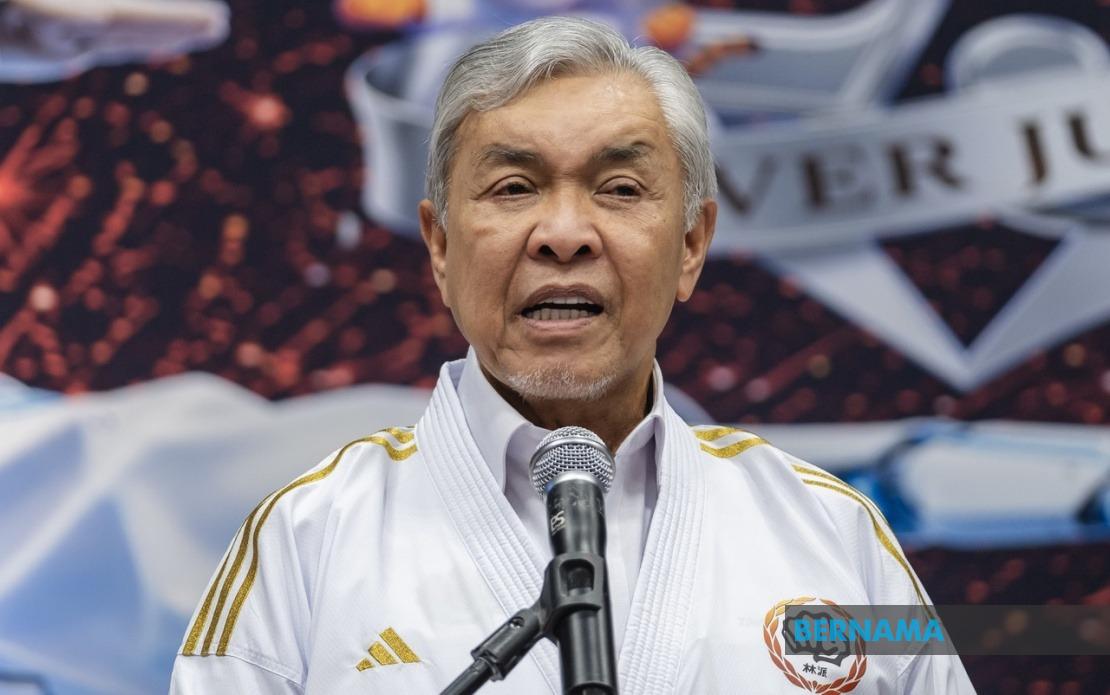
The Malaysian government is moving closer to formally recognising karate as a school sport, with Deputy Prime Minister Datuk Seri Dr Ahmad Zahid Hamidi signalling that a Cabinet proposal to include the discipline in the Malaysian Schools Sports Council (MSSM) championships will be tabled in the coming week. Speaking after opening the International Open Karate Championship 2026 at Titiwangsa Stadium in Kuala Lumpur on June 26, Ahmad Zahid, who chairs the Cabinet Committee on Sports Development, indicated that Education Minister Fadhlina Sidek would be consulted on the matter as part of the formal decision-making process.
The timing of this development comes as karate establishes itself as an increasingly mainstream school activity across Malaysia. The International Open Karate Championship 2026, now in its 25th consecutive year, drew participation from more than 1,850 competitors representing 17 countries, underscoring both the sport's international standing and its growing domestic profile. This level of engagement suggests that karate has moved beyond niche participation to become an activity with significant appeal among young athletes and their families.
Putrajaya Karate Association president Datuk P. Thiagu, who organised the championship, has been actively campaigning for formal inclusion of karate within school sporting structures. His appeal reflects a strategic understanding that MSSM recognition would fundamentally transform karate's trajectory in Malaysian education. By gaining a place on the official school sports calendar, the martial art would move from extracurricular status into the mainstream competitive framework that schools recognise and resource.
The push for inclusion responds to observable demand. Thiagu noted that karate has already achieved considerable popularity within Malaysian schools, with many institutions fielding teams and supporting student participation. However, this grassroots enthusiasm lacks the institutional backing that MSSM status would provide. Currently, interested schools must develop karate programmes independently, often with limited funding and logistical support compared to established MSSM sports.
From a grassroots development perspective, MSSM inclusion would create a structured pathway for talent identification and progression. Schools competing in an official MSSM framework typically invest more substantially in training, coaching, and competition opportunities for their teams. This institutional infrastructure is particularly important for martial arts, where technical instruction and consistent practice are essential for skill development. Young athletes would benefit from standardised coaching standards and access to regional and national competition tiers.
The proposal also addresses Malaysia's broader strategy for sporting development. By expanding MSSM to include karate, the nation would diversify its athletic base and provide more young people with opportunities to compete in organised sports. Karate offers particular value as a discipline that develops discipline, focus, and physical conditioning—attributes that contribute to overall youth development beyond sporting achievement itself. The inclusion would signal government commitment to recognising non-traditional sports alongside conventional offerings.
International context strengthens the case for inclusion. Karate's presence at the Olympic Games, having been contested at Tokyo 2020 and Paris 2024, elevates its status as a legitimate competitive discipline worthy of institutional support. Many Southeast Asian nations have recognised this shift and are investing in karate development at school level. Malaysia's potential inclusion in MSSM would position the country competitively within a regional trend toward greater karate participation.
Education Minister Fadhlina Sidek's role in the Cabinet deliberation process will be crucial. The Education Ministry oversees MSSM operations and must balance the interests of competing sports seeking recognition with practical considerations around scheduling, facilities, and coaching resources. Her evaluation will likely consider whether existing school infrastructure can accommodate karate programmes, whether qualified coaching personnel are available, and how karate's inclusion aligns with the ministry's broader educational objectives.
The Cabinet's decision will carry administrative implications that extend beyond simple approval. Should karate be admitted to MSSM, the sporting body would need to establish competition formats, regional divisions, qualifying procedures, and potentially age categories. The process of formalising karate's place within school sports requires detailed logistical planning to ensure fair competition and equitable access across Malaysia's diverse regions.
For Malaysian karate enthusiasts and practitioners, MSSM inclusion represents validation of their discipline's educational and developmental value. Young athletes currently practising karate in school settings would gain access to official recognition, standardised championships, and pathways toward representative honours that carry significant prestige within Malaysia's secondary school system. Parents and educators would benefit from greater clarity about karate's status within the formal school sports structure.
The proposal also reflects changing attitudes toward what constitutes valuable school sports. While traditional team sports continue to dominate MSSM calendars, growing recognition of individual martial arts disciplines aligns with evolving definitions of physical education and athletic development. Karate's emphasis on personal improvement and self-discipline resonates with contemporary educational philosophy that values holistic development.
The coming Cabinet decision will indicate whether the government views karate's expansion in Malaysian schools as a strategic priority worthy of institutional support. If approved, the formal inclusion of karate in MSSM would represent a significant milestone in the sport's development trajectory within Malaysia. Beyond sporting implications, the decision will shape how thousands of young Malaysian athletes engage with martial arts training, competition, and personal development through organised school frameworks.

