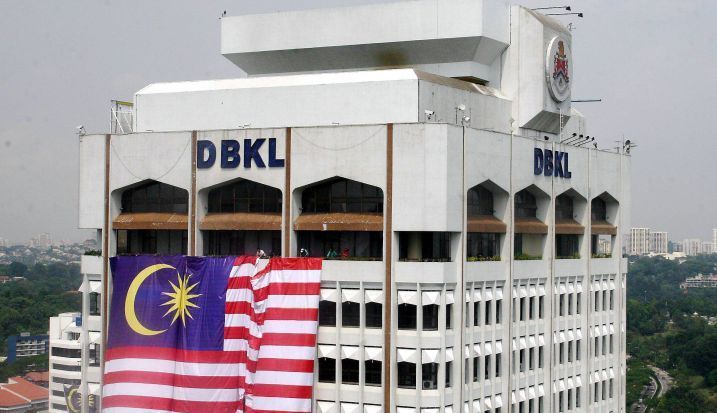
The Malaysian Cabinet has signalled a measured approach to reforming Kuala Lumpur's municipal administration, directing the Federal Territories Department to prioritise strengthening internal governance and accountability mechanisms at DBKL before pursuing any amendments to the Federal Capital Act 1960. The decision follows a comprehensive feasibility study that examined whether legal reform was necessary to address governance challenges within the city authority, ultimately concluding that many operational problems stem from procedural gaps rather than legislative deficiencies.
Minister in the Prime Minister's Department (Federal Territories) Hannah Yeoh announced the Cabinet's position after the Federal Territories Department presented findings from a four-month study conducted by International Islamic University Malaysia. The research, completed between December 2023 and March 2024, involved extensive consultations with Kuala Lumpur's seven Members of Parliament and senior DBKL management, assessing administrative structure, decision-making processes, service delivery mechanisms, enforcement capabilities and institutional capacity. This rigorous examination provided the foundation for the Cabinet's determination that administrative improvements should precede any consideration of legislative amendments.
The IIUM study rejected a proposal from several Kuala Lumpur MPs to establish a City Council comprising the seven federal representatives to advise the mayor, finding that introducing a councillor system would create unnecessary bureaucratic layers and accountability confusion. Researchers warned that overlapping responsibilities between such a council and existing administrative structures could obscure lines of responsibility and weaken accountability rather than strengthen it. This assessment directly challenged ongoing parliamentary interest in formalising greater legislative input into municipal governance, suggesting that political representation and administrative authority require clear separation to function effectively.
Similarly, the study examined and declined to recommend a proposal from the Prime Minister's Policy Advisory Committee to restructure the mayor's office through establishment of a Supreme Council. Instead, the research identified weaknesses in how existing institutions operate—specifically the absence of clear internal guidelines, standardised operating procedures and formalised protocols governing meetings and decision-making. These operational gaps, rather than statutory limitations, appeared to account for most documented administrative problems. The findings suggest that DBKL's challenges are addressable through management discipline and institutional hygiene rather than constitutional restructuring.
The study recommended strengthening DBKL's existing Advisory Board by introducing a comprehensive governance framework that would establish transparent criteria and quotas for appointing professional and non-governmental organisation representatives. This framework would formalise meeting procedures, standardise how proposals are presented and considered, clarify reporting requirements and explicitly define working relationships between the board, the mayor, the Federal Territories minister and DBKL management. By professionalising these existing structures rather than creating new ones, the proposed approach offers a pathway to enhanced governance without the complexity and unintended consequences of legislative reform.
Kuala Lumpur MPs would retain significant oversight capacity under the study's recommendations, though through consultative channels rather than formal administrative powers. Regular consultation meetings, monitoring committees with defined scope and frequency, budget review processes and formal mechanisms for residents to raise concerns would strengthen parliamentary engagement without blurring the distinction between political representation and municipal administration. This distinction proves crucial given Kuala Lumpur's status as both national capital and Federal Territory, roles that require clear governance demarcation to function properly.
The Federal Capital Act 1960 vests legal authority in the office of the mayor as a "corporation sole" rather than in a council with executive or voting powers. Introducing councillors with formal authority could fundamentally transform Kuala Lumpur from its current governance model into a conventional local authority operating under the Local Government Act 1976. Such a change carried implications extending beyond administrative convenience, potentially affecting Kuala Lumpur's constitutional standing as the seat of federal government and its 1974 agreement with the Federal Government. The study's caution reflected awareness that municipal reform in the capital city involves national constitutional considerations that demand careful consideration.
JWP and DBKL are now developing a comprehensive transformation plan addressing decision-making improvements, internal checks and balances, and overall management enhancements. The Cabinet will receive periodic updates on reform progress, establishing a monitoring mechanism for administrative improvements. This staged implementation approach allows for measured evaluation of whether procedural and structural changes within current legal frameworks adequately address documented governance concerns, providing evidence before entertaining more substantial legislative amendments.
For Malaysian municipal governance broadly, this decision emphasises that legal frameworks often prove adequate when backed by rigorous internal administration and professional management. The study's findings apply lessons potentially valuable across federal territories and local authorities navigating tensions between political accountability and administrative efficiency. By establishing clear governance protocols, transparent decision-making procedures and explicit accountability mechanisms within existing statutory authority, institutions can often achieve reform objectives without legislative complexity. The emphasis on administrative solutions reflects growing understanding that good governance depends as much on institutional discipline and procedural clarity as on legislative structure.
The approach also demonstrates institutional humility regarding the limits of structural reform. Creating new bodies or formalising additional oversight rarely automatically improves outcomes; success requires consistent implementation of clear procedures, professional management and stakeholder engagement. DBKL's path forward tests whether sustained attention to governance fundamentals can address longstanding municipal challenges, offering lessons for other federal territories and large local authorities throughout Malaysia confronting similar questions about authority structure, accountability and effectiveness.
Longer-term implications for Malaysian local government may emerge from how successfully DBKL implements these administrative reforms. If strengthening internal governance frameworks demonstrably improves service delivery, accountability and stakeholder confidence, the model could influence approaches across other federal territories and larger municipal authorities. Conversely, if significant governance gaps persist despite administrative improvements, the case for legislative amendment might strengthen. The Cabinet's decision essentially establishes a performance benchmark, determining that only evidence of administrative improvement's inadequacy would justify legislative change—a principled approach grounded in evidence rather than political preference.

