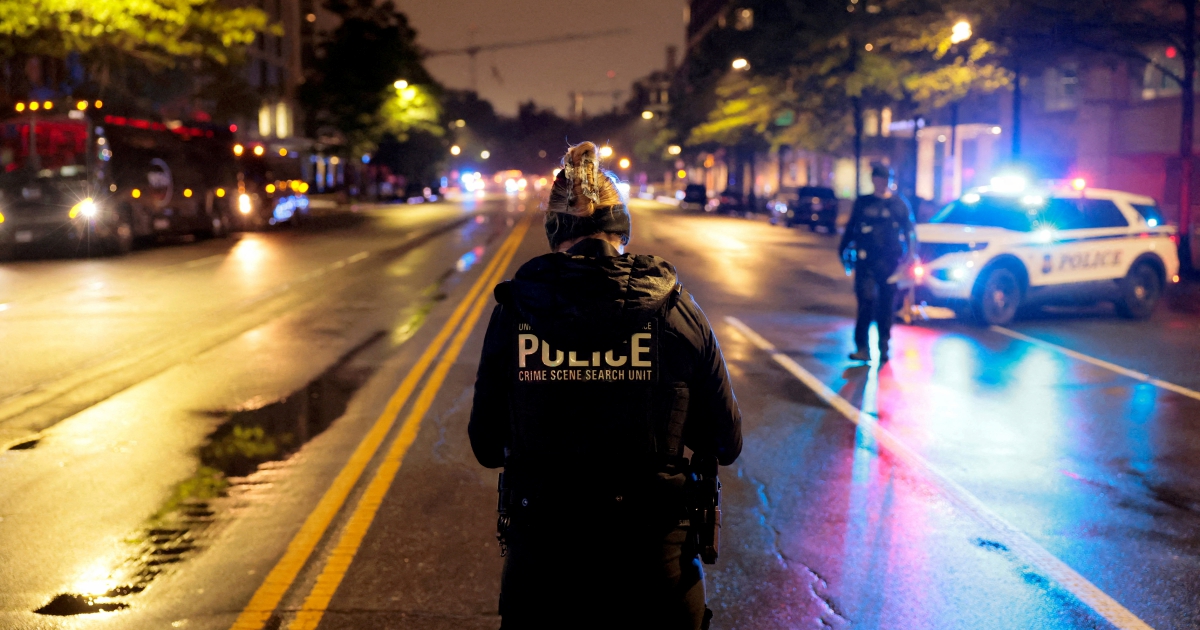
A person caught in crossfire during a May confrontation outside the White House is preparing to take legal action against the US Secret Service, according to statements from their legal representatives in Washington. The lawsuit filing, which was scheduled for Tuesday, represents a significant development in what became a high-profile incident at one of America's most heavily protected locations.
The shooting occurred when Secret Service officers engaged an armed individual in the vicinity of the White House compound. During the exchange of gunfire, a bystander who happened to be in the area sustained injuries. The incident immediately raised questions about operational protocols, public safety procedures, and the agency's responsibility toward civilians caught in dangerous situations during security operations.
Legal experts observing the case note that lawsuits against federal agencies, particularly those responsible for presidential security, are complex undertakings. The government typically asserts sovereign immunity protections, though certain exceptions exist that allow injured parties to pursue claims. This particular case will likely hinge on whether the Secret Service can be shown to have acted negligently or recklessly in managing the threat while civilians remained in the vicinity.
For Malaysian readers and Southeast Asian observers, this incident underscores ongoing debates about balancing security operations with public safety—a concern that resonates across the region as governments worldwide grapple with managing threats in public spaces. How American courts handle such matters often influences legal thinking and policy discussions globally, particularly regarding accountability mechanisms for law enforcement and security agencies operating in civilian areas.
The timing and circumstances of the incident became immediately controversial because the White House remains one of the world's most secured and controlled environments. Questions emerged about why an armed individual was able to approach the perimeter and create a situation requiring a shooting response, and why protective measures did not adequately separate civilian foot traffic from the developing emergency.
Attorney representation for the injured bystander has characterised the incident as preventable, suggesting that better coordination, communication, or evacuation procedures might have prevented civilian harm. These arguments will likely form the core of the forthcoming legal challenge, pushing the Secret Service to defend its operational decisions during the confrontation.
The Secret Service, tasked with protecting the President and senior government officials while also managing public access to high-security locations, maintains that its personnel followed established protocols during the encounter. The agency has historically defended its security decisions by emphasizing the inherent dangers of protecting prominent government figures and facilities in open societies.
This lawsuit arrives amid broader national conversations about police use of force, civilian safety during security operations, and government accountability. Similar incidents in other American cities have prompted legislative reviews and procedural reforms, establishing precedent that such cases carry implications extending beyond individual compensation.
From a regional perspective, how this case unfolds—particularly regarding court decisions on federal agency liability and damages awards—may inform policy discussions in countries that must similarly navigate balancing security imperatives with public safety. Several Southeast Asian nations manage high-threat environments around government institutions and face comparable tensions between protective cordons and maintaining civic spaces accessible to ordinary citizens.
The personal injury lawsuit framework typically requires demonstrating that the Secret Service owed a duty of care to the bystander, that this duty was breached, and that the breach directly caused quantifiable harm. Legal complexities arise because the shooting itself involved a genuine security threat, meaning attorneys must show negligence in how that threat was managed rather than merely proving that harm occurred.
Experts anticipate this case will generate significant precedent regarding whether federal security agencies can be held liable for collateral civilian injuries during legitimate protective operations. The distinction between unavoidable accidents during necessary security responses and preventable harm from inadequate precautions remains legally contested territory.
As the litigation proceeds, both the plaintiff's legal team and the Secret Service will present evidence and arguments addressing operational decisions made during the May incident. The case promises to illuminate how American courts weigh public protection responsibilities against individual compensation rights—a balance that continues to evolve through case law and legislative action.

