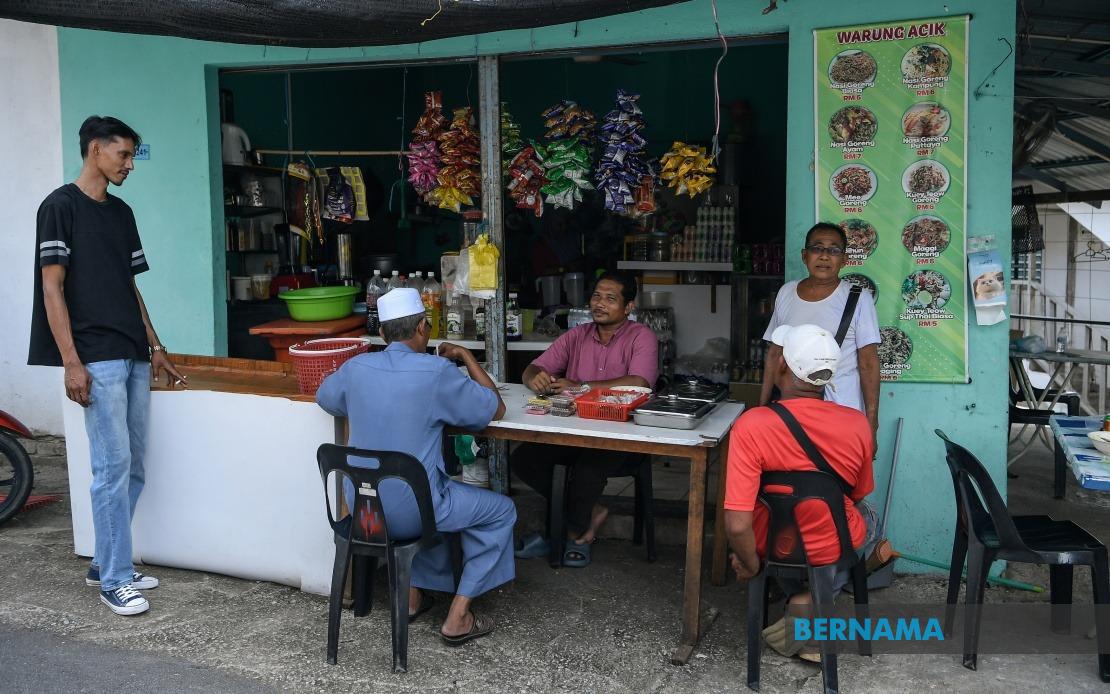
The Bukit Malut community in Langkawi is mounting a determined campaign to dispel what residents describe as deeply entrenched and damaging stereotypes that have haunted their neighbourhood for years. At the centre of this push-back is the persistent claim that the settlement functions as an entry point and base for refugee populations fleeing Myanmar, allegations that residents and local leaders contend lack any factual foundation and have unfairly targeted their area whenever migration-related incidents occur anywhere on the island.
Mohamad Fadzli Abdullah, chairman of the Bukit Malut Neighbourhood Watch, articulated the frustration felt across the community during recent discussions with media representatives. He emphasised that whenever reports emerge of undocumented migrants reaching Langkawi's shores, authorities and public opinion reflexively point to Bukit Malut despite the absence of credible evidence linking the settlement to such arrivals. This pattern of blame, he suggested, has become almost automatic, reflecting assumptions rather than investigative findings and perpetuating a narrative that refuses to acknowledge the reality of daily life in the neighbourhood.
The geographical realities of Bukit Malut's location make the refugee allegation particularly illogical, according to community leaders. The settlement sits in close proximity to operational bases of the Malaysian Maritime Enforcement Agency, the Royal Malaysian Customs Department, and the Royal Malaysian Navy. This constellation of security infrastructure means that suspicious maritime activities in surrounding waters would almost certainly be detected and intercepted before reaching shore, they argue. The presence of these agencies undermines the very premise that the area could function as an undetected landing site for undocumented populations.
Community representatives also dismissed claims that entry to Bukit Malut is restricted or that the neighbourhood poses security risks to visitors. Rather, they describe a place under continuous official supervision, where law enforcement presence is consistent and visible. The negative perceptions, according to Mohamad Fadzli, stem from distorted information rather than observable reality, and function as a form of reputational damage that resists correction despite contradictory evidence.
The demographic composition of Bukit Malut reveals a community fundamentally oriented toward maritime livelihoods and established economic activity. Approximately 85 percent of residents depend on fishing as their primary occupation, whilst others pursue trading, vehicle rental businesses, or maintain employment in government service or security forces. Still others are university-educated professionals working across various economic sectors. This diversity of occupation and professional status presents a picture of economic integration and stability that contrasts sharply with the marginalised, transient profile implied by refugee settlement allegations.
Hasanah Zakaria, a long-term resident with more than two decades of experience living in the community, offered a direct challenge to the narrative that circulates on social media platforms. She invited sceptics to visit Bukit Malut and observe conditions firsthand rather than accepting unverified claims transmitted through online channels. By her account, the settlement functions as an ordinary village community without unusual security incidents or crime patterns, and there exists no rational basis for the fear and avoidance that many Malaysians apparently harbour toward the area.
The psychological toll of persistent stigmatisation extends into family life and educational development within the community. Hasanah described how her child, enrolled at a boarding school elsewhere in Langkawi, encounters prejudicial attitudes rooted in the neighbourhood's damaging reputation. Rather than accepting these stigmatising narratives, she deliberately encourages her child to resist internalising such allegations and to maintain focus on educational achievement. This intergenerational transmission of stigma represents a particularly pernicious consequence of unchallenged false claims, affecting the confidence and horizons of younger community members.
Abas Salam, at 62 years old, represents one of the original settlers who participated in establishing Kampung Tanjung Lembung within Bukit Malut more than three decades ago. Throughout this extended period, he categorically denies ever encountering evidence of Myanmar refugees residing in the neighbourhood. His testimony carries particular weight given his foundational role in the settlement's establishment and his sustained presence throughout its development. Importantly, he rejects attempts to mischaracterise residents as Rohingya or other non-Malaysian populations, instead asserting the grounded identity of community members as Kedah Malay-Muslims holding legitimate Malaysian citizenship.
The early history of Bukit Malut reflects the self-reliant, community-driven development that pioneering settlers like Abas undertook with minimal external support. Residents collectively constructed not only their homes but also religious and educational infrastructure including mosques and Islamic schools, establishing the foundations for a stable, institutionally mature community. This historical narrative of self-directed development contradicts the suggestion that the settlement functions as a transient refuge for undocumented populations, instead positioning it as a deliberately constructed and deliberately maintained community space with deep roots.
The transformation of conditions within Bukit Malut over the past three decades represents meaningful progress by objective measures. Educational opportunities have expanded substantially, with contemporary children and grandchildren of original settlers now able to access formal schooling and professional development pathways. This generational improvement in life prospects underscores the community's trajectory toward greater integration and opportunity within Malaysia's broader economic and social structures, a trajectory fundamentally incompatible with portrayal as a harbouring place for marginal or undocumented populations.
The campaign by Bukit Malut residents to reclaim their community's reputation reflects a broader challenge faced by many Malaysian neighbourhoods that become associated with marginalised populations through rumour, media attention, or political rhetoric. Once stigma attaches to a place, genuine refutation becomes extraordinarily difficult, as false information circulates through social networks faster than correction can reach audiences. The residents' insistence on direct observation and personal verification rather than reliance on filtered narratives represents a reasonable epistemological position that demands recognition of their lived experience and documentary evidence.
For policymakers and enforcement agencies, the Bukit Malut situation raises important questions about the unintended consequences of concentrated security focus and media coverage that designates particular neighbourhoods as sites of concern. When communities become associated with irregular migration or refugee issues, residents bear the cumulative burden of suspicion, avoidance, and stigmatisation that can persist long after security concerns have been addressed or proved unfounded. The feedback loop whereby negative reputation drives both actual scrutiny and social avoidance requires deliberate, sustained effort by authorities and media to counter through transparent communication and factual reporting.

