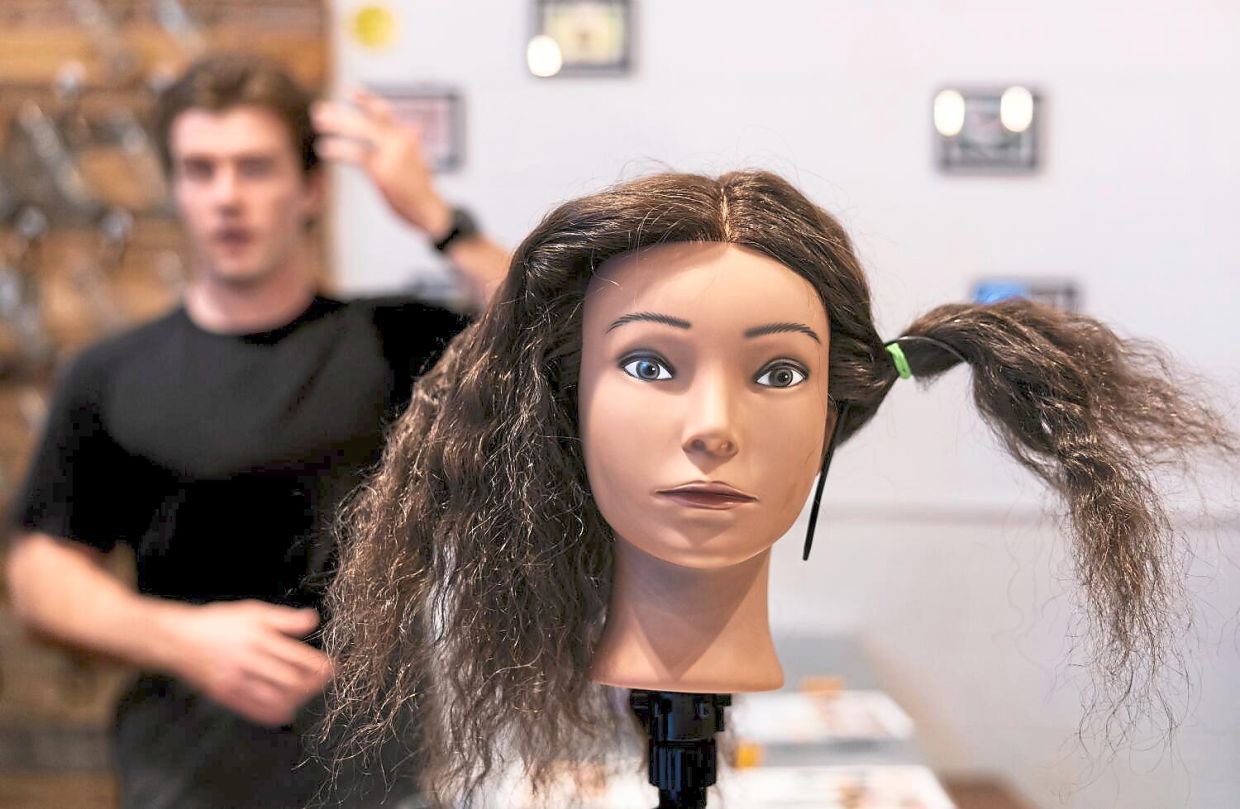
The Santa Barbara Dads group held an unusual gathering at a local brewery in May: fifteen fathers of various ages learning to braid their children's hair from professional stylists. The event, modelled on the viral British concept 'Pints and Ponytails', sold out entirely, revealing genuine appetite among men for spaces where they can develop parenting skills alongside peers facing similar challenges. The founder, Austin Nieves, recognised from his own experience that fathers lacked the structured support systems readily available to mothers, prompting him to create a community addressing this gap.
Nieves relocated to Santa Barbara from California's Orange County, where he had established the Orange County Dads club just months earlier. His decision to create these groups stemmed from a stark realisation after his son Hudson was born: his social circle and leisure time shifted dramatically, leaving him isolated from friends who could not relate to his new responsibilities and priorities. While his wife quickly joined multiple mothers' groups offering advice, training, and companionship, Nieves found himself with limited support beyond his own brothers who had children. This disparity prompted him to investigate whether other fathers faced similar isolation.
Academic research validates Nieves' instinct that paternal involvement in active parenting correlates with measurable declines in men's wellbeing. A 2006 study published in the Journal of Family Issues by researchers Chris Knoester and David J. Eggebeen demonstrated that engaged fatherhood leads to reduced feelings of personal satisfaction and withdrawal from social participation as men dedicate time previously spent with friends to child-rearing duties. Clinical psychologists Hillary Halpern and Maureen Perry-Jenkins documented that the transition into fatherhood frequently triggers emotional volatility and adjustment difficulties. Similarly, researchers from Stockholm's Karolinska Institute found in 2021 that men benefit significantly from structured support during their transition to parenthood.
The Karolinska Institute study identified father-centred groups as particularly effective interventions, noting that participants reported improved confidence in parenting, enhanced relationships with both partners and children, and notably decreased loneliness. These evidence-based findings support what Nieves discovered intuitively: men transitioning to active parenting experience measurable psychological strain requiring deliberate community responses. The research suggests that informal gatherings specifically designed for fathers can meaningfully improve mental health outcomes and family dynamics.
Nieves structured his groups to combine practical learning with social connection. In Orange County, the original gatherings took place at coffee shops and zoological parks, supplemented by holiday celebrations featuring live music and training in CPR certification. These settings deliberately avoided formal classroom atmospheres, instead creating the 'bros' ethos that removes perceived barriers to participation. Nieves recognised that many fathers might feel uncomfortable attending conventional parenting classes that carry associations with mothers' groups, making the brewery setting particularly strategic for attracting attendees who might otherwise avoid seeking support.
The Santa Barbara iteration expanded rapidly despite the group's newness. Nieves established the chapter within weeks of relocating in April 2025, scheduling the first meetup for May and committing to monthly gatherings. The immediate uptake, including the sold-out hair-braiding event, suggests genuine unmet demand for such spaces. One member, Austin Jones, discovered the group through Instagram and emphasised the difficulty of balancing multiple demanding roles—husband, father, and business professional—while receiving minimal acknowledgment or support for the emotional labour involved. Jones noted that finding peers navigating identical life stages provided immediate validation and practical assistance.
The hair-braiding event exemplified how these groups address authentic parenting challenges. Jones, father of a two-and-a-half-year-old daughter with textured, curly hair, had struggled with hair care routines lacking guidance. Professional stylists trained attendees using salon mannequins, progressively building confidence in techniques fathers could immediately apply at home. By the evening's end, Jones had developed sufficient capability to attempt styles with his daughter, expanding his parenting competence in a specific, concrete domain. This practical outcomes-orientation distinguishes the groups from purely social gatherings.
The role of spouses in growing these movements deserves recognition. Although the Santa Barbara Dads group explicitly maintains a fathers-only membership policy, Nieves acknowledged that wives and partners significantly amplify reach by sharing social media content with their husbands. This suggests that mothers recognise value in supporting their partners' social connections and emotional development, understanding that fathers' wellbeing directly impacts family dynamics. Mikhail Alfon, whose social media involvement brought him to multiple Orange County meetups with his son Santos, articulated this perspective in his observation that finding peers at identical life stages transforms the parenting experience from isolating individual struggle into shared communal journey.
The implications of this movement extend beyond immediate participant benefits. As cultural expectations increasingly encourage paternal involvement in daily child care—a shift largely positive but simultaneously demanding—infrastructure supporting men's psychological adjustment has lagged substantially behind maternal support systems. These fathers' groups represent recognition that men require deliberate community structures, not generic parenting advice, but specifically designed spaces acknowledging their distinct emotional and social needs during major life transitions. The success of groups like Santa Barbara Dads, replicating a model Nieves already proved viable in Orange County, suggests emerging understanding that supporting fathers ultimately strengthens families.
Looking forward, the movement offers particular relevance for Southeast Asian contexts where traditional gender roles in parenting remain more entrenched than in Western countries. As regional economies modernise and dual-income households become increasingly common, fathers across Malaysia, Singapore, and neighbouring nations may experience similar isolation when assuming greater parenting responsibilities. The American model—informal, practical, peer-driven community support rather than clinical intervention—provides a template that could adapt effectively to local contexts, creating spaces where fathers normalise active parenting engagement while building genuine social connection. The Santa Barbara example demonstrates that such groups require minimal formal structure but considerable intentionality in recognising fathers' legitimate needs for community support.

