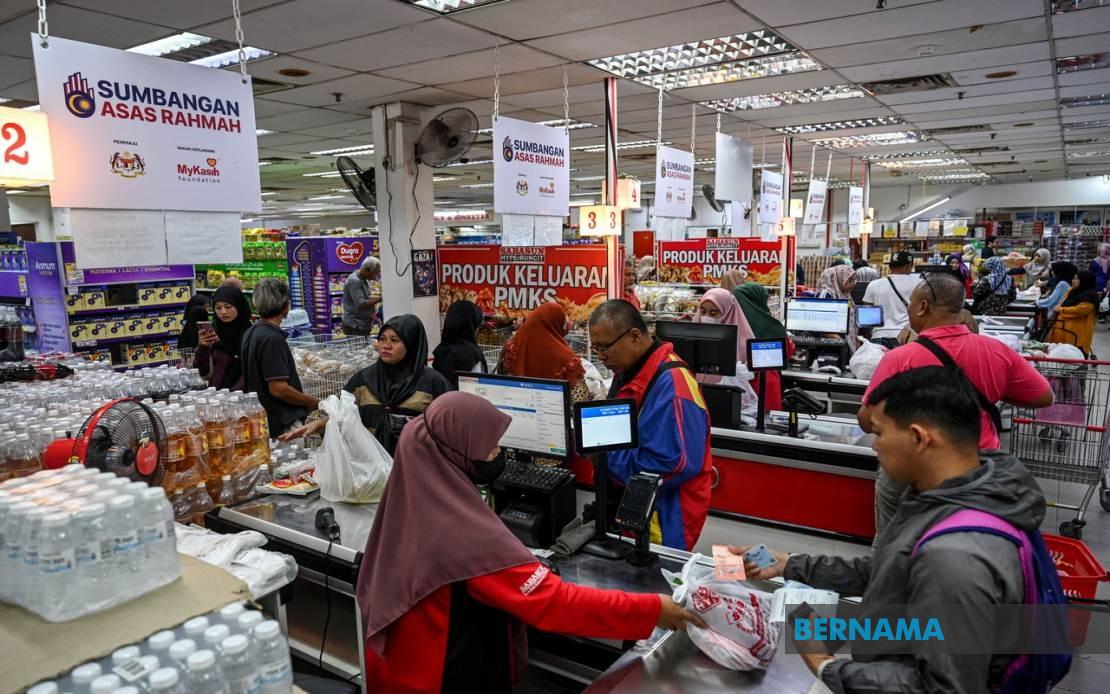
Prime Minister Datuk Seri Anwar Ibrahim has signalled the government's willingness to enhance financial assistance to ordinary Malaysians through expanded welfare payments, contingent on sustained economic improvement. Speaking during a community engagement programme in Ipoh, Anwar indicated that discussions had already begun with senior Treasury officials regarding the feasibility of increasing allocations under both the Sumbangan Tunai Rahmah (STR) and Sumbangan Asas Rahmah (SARA) schemes ahead of the forthcoming Budget presentation.
The announcement represents a measured response to ongoing pressure on household finances, with millions of Malaysian families continuing to navigate economic headwinds. As both Prime Minister and Finance Minister, Anwar adopted a cautiously optimistic tone, explicitly linking any expansion of welfare payments to improvements in the nation's macroeconomic fundamentals. This conditional framing reflects the government's balancing act between addressing immediate citizen welfare needs and maintaining fiscal prudence in an uncertain global environment.
Anwar revealed that substantive discussions took place with Treasury secretary-general Tan Sri Johan Mahmood Merican regarding the scope for elevating assistance levels. Rather than offering definitive commitments, the Prime Minister framed the matter as an ongoing priority requiring careful examination during the Budget formulation process. His remarks suggest that the government has already commissioned technical analysis on the fiscal implications and feasibility of enhancement schemes, indicating serious internal deliberation on the issue.
For recipients currently drawing STR and SARA benefits, Anwar's statement offers tentative hope of improved support, though without firm guarantees. The STR and SARA schemes represent cornerstone elements of the government's social safety net, delivering monthly cash transfers to vulnerable households and pensioners. Any meaningful increase would directly boost the purchasing power of millions of Malaysians, particularly those in lower income brackets disproportionately affected by inflation in essential goods and services.
Beyond welfare expansion, Anwar used the Ipoh gathering to emphasise government commitment to supporting security personnel who shoulder extraordinary burdens during crises. He specifically highlighted the Malaysian Volunteer Corps Department (RELA), a civilian security force that mobilises during disasters and security emergencies. The acknowledgement reflects recognition of these personnel's sacrifice and the political imperative to ensure adequate support for front-line responders.
The government has committed RM3 million for RELA member welfare this year, maintaining last year's allocation despite stated reservations that current funding remains insufficient. Anwar's admission that RM3 million is inadequate signals potential future budget discussions on security personnel compensation, though immediate expansion appears limited. This constraint underscores the broader fiscal pressures facing policymakers attempting to address multiple competing priorities simultaneously.
The timing of Anwar's remarks carries significance for Malaysian economic sentiment. Public discussion of potential welfare increases, even when explicitly conditional, can signal government confidence in economic prospects and demonstrate responsiveness to household concerns. Conversely, linking improvements to economic conditions provides political cover should global circumstances or domestic factors force postponement of enhancements. This rhetorical strategy allows the government flexibility while maintaining credibility with beneficiaries.
For Malaysian households, the implications extend beyond immediate cash transfers. Expanded STR and SARA payments would provide modest but meaningful relief amid persistent concerns about cost-of-living pressures, particularly regarding food, utilities, and transportation. The schemes have proven politically popular with lower-income constituencies and represent targeted interventions preferable to broad-based subsidies in achieving distributional objectives.
Regionally, Malaysia's evolving approach to welfare provision reflects broader Southeast Asian trends toward direct cash transfers as poverty alleviation mechanisms. Countries including Indonesia, Thailand, and the Philippines employ similar schemes, though design and generosity vary considerably. Any Malaysian expansion would continue this trajectory while maintaining focus on fiscal sustainability.
The Budget announcement will ultimately determine whether Anwar's Ipoh statements translate into tangible improvements for welfare recipients. Economic indicators, revenue forecasts, and spending pressures across defence, health, and infrastructure will shape final allocation decisions. Nevertheless, the Prime Minister's public commitment to exploring enhancement possibilities signals that welfare expansion remains on the government's active policy agenda, even if implementation remains uncertain and conditional.

