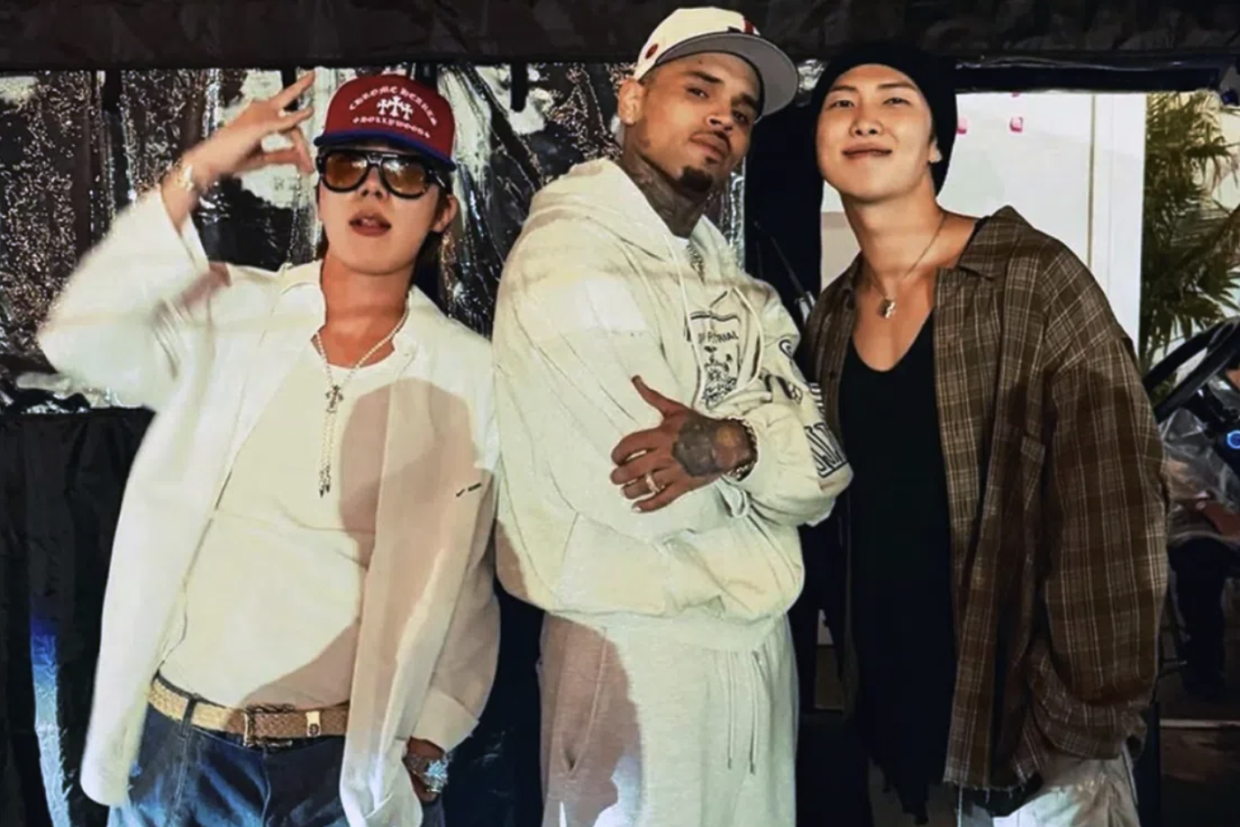
The global K-pop phenomenon BTS found itself embroiled in controversy this August when two of its most prominent members were photographed at a Chris Brown concert in Canada. The incident, which came to light through a social media post by Brown himself on August 13, has ignited a fierce debate within the fanbase about celebrity responsibility, moral accountability, and the wider implications of seemingly casual professional interactions.
Chris Brown's troubled legal history formed the crux of fan concerns. The American R&B artist's past includes a 2009 domestic violence conviction stemming from an assault on his then-girlfriend Rihanna—a case that remains one of the most widely recognized instances of intimate partner violence involving a major recording artist. The incident serves as a reference point for many discussions about accountability in the entertainment industry, particularly because Brown's career trajectory afterward demonstrated how public figures can sometimes recover from serious criminal convictions with relative ease.
Beyond the initial conviction, Brown's legal entanglements have continued to accumulate over the years. In 2016, he was arrested in Los Angeles on charges of threatening a woman with a firearm at his residence, though he was released on bail pending further proceedings. Two years later, he faced serious accusations of sexual assault in conjunction with guests at his home, though these charges were eventually dismissed following a settlement agreement. The pattern of allegations suggests ongoing behavioral concerns that extend well beyond an isolated incident from over a decade ago.
The catalogue of allegations continued to grow. During a 2019 incident in Paris, a woman accused Brown of rape, leading to his temporary detention by French authorities. Ultimately, prosecutors declined to pursue the case and charges were dropped. Most recently and dramatically, Brown faced accusations in 2022 that he had drugged and sexually assaulted a woman aboard a yacht in Miami. The alleged victim, identified in court documents only as Jane Doe, expressed serious fear for her personal safety during the encounter. Additionally, a Los Angeles civil jury determined in 2023 that Brown bore financial responsibility for injuries sustained when his dog attacked his housekeeper's sister, ordering him to pay USD12.9 million in damages.
When BTS members RM and J-Hope—two of the group's most visible and influential figures—appeared publicly with Brown, fans experienced what many described as a profound sense of betrayal. The backlash revealed deep fractures within the fanbase regarding questions of ethics, complicity, and what it means to support artists whose personal conduct contradicts values many fans hold dear. Several members of the ARMY, as the fanbase collectively identifies itself, expressed that the appearance represented an implicit endorsement of Brown's behavior.
One particularly moving response came from a fan who disclosed that she had experienced sexual assault herself. She articulated a powerful perspective that transcended fandom, asserting that her identity as a woman necessarily took precedence over her identity as a devoted follower of BTS. This framing introduced a moral dimension that complicated the discussion—for some fans, the incident raised uncomfortable questions about whether it was possible to remain a loyal supporter of the group while maintaining consistent ethical standards regarding abuse and violence against women.
The response from other portions of the fanbase demonstrated the fractures within the community. Many fans rushed to defend RM and J-Hope, offering various justifications for their concert attendance. Some argued that celebrities deserved the same personal freedoms as anyone else and that attending another artist's performance carried no inherent moral implications. Others suggested that the controversy represented an overreach of fan expectations regarding artists' private choices and social circles.
Critical voices on social media platforms, particularly X, directly challenged these defensive positions with pointed observations about the consequences of such reasoning. Commentators noted that when massive celebrities with enormous global influence—BTS commands a dedicated following numbering in the tens of millions—choose to publicly associate with figures credibly accused of serious crimes, such actions send powerful cultural messages. The concern extended beyond individual choice to encompass collective responsibility. One user specifically highlighted how public defenses of the members, while ostensibly directed at absent celebrities unlikely to read social media posts, actually reached vulnerable audience members who had personally experienced domestic violence or abuse. Such posts, the user suggested, effectively told survivors that their trauma was less important than loyalty to idols.
The discourse evolved to examine broader questions about silence and complicity in the face of documented abuse. Several participants in the online discussion articulated how maintaining neutrality toward abusers or those who associate with them represents a form of tacit support, particularly when such neutrality comes from those with significant platforms and influence. The responsibility became even heavier, according to this perspective, for global superstars who millions of young people view as moral guides.
One striking example emerged from past statements by Swedish pop artist Zara Larsson, who had previously collaborated with BTS. When asked in an interview which artists she would never listen to, Larsson matter-of-factly replied that she maintains a lengthy blocklist of abusers on her music streaming accounts, explicitly naming Chris Brown as a prime example. Larsson's clear position on the matter stood in stark contrast to the BTS members' apparent willingness to share social space with him, raising questions about different ethical frameworks within the entertainment industry.
This incident arrived amid other controversies affecting the group's public perception. Shortly before the concert controversy erupted, BTS had launched a collaborative advertisement with Google's artificial intelligence platform Gemini, marking an expansion into technology partnerships. The campaign, designed to explore creative intersections between art and artificial intelligence, was itself criticized by fans who raised environmental concerns about the resource-intensive nature of large-scale AI systems. These cumulative controversies suggested that BTS was navigating an increasingly complex landscape of stakeholder expectations regarding not only artistic choices but also ethical partnerships and public comportment.
The broader implications of the Chris Brown concert attendance extend beyond BTS alone to encompass fundamental questions about how global entertainment influencers navigate moral accountability in an interconnected world. For Malaysian and Southeast Asian audiences who comprise significant portions of the K-pop fanbase, the incident reflects international debates about celebrity responsibility and the tension between personal freedom and the influence that comes with massive cultural reach. The controversy ultimately underscores how contemporary celebrity operates within a far more scrutinized and accountable environment than existed in previous generations, where past conduct and associated figures are permanently archived and accessible to millions worldwide.

