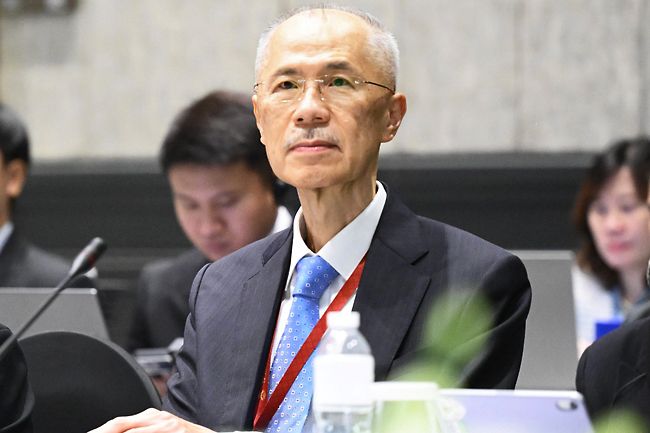
Chief Justice Dato Seri Paduka Steven Chong has signalled Brunei Darussalam's unwavering commitment to fortifying the rule of law and expanding judicial partnerships throughout Asean. Speaking during the opening of the 13th Meeting of the Council of Asean Chief Justices in Bangkok from July 21 to 23, Chong outlined how Southeast Asia's judiciaries are recalibrating their institutional frameworks to address the region's most pressing contemporary legal questions. The gathering brought together chief justices and senior judicial leaders from across the ten-member bloc, underscoring the significance Asean places on coordinated legal development.
The transformation of the judicial landscape stems from forces reshaping society at an unprecedented pace. Artificial intelligence, cryptocurrency and blockchain-based digital assets, and litigation arising from climate change and environmental degradation represent novel categories of disputes that traditional legal frameworks were never designed to address. As courts grapple with questions about algorithmic accountability, the regulation of decentralised finance, and the liability frameworks for environmental harm, individual member states have recognised the limitations of proceeding in isolation. Chong's remarks reflected a broader institutional awakening within Asean's judiciary that transnational problems require transnational solutions.
In response, the Council of Asean Chief Justices has launched several coordinated initiatives to build regional capacity and harmonise approaches to these emerging domains. The body has prioritised the development of court technology infrastructure and established governance frameworks for artificial intelligence applications within judicial systems. Simultaneously, it has expanded the CACJ E-Learning Portal, creating a digital repository through which judges across the region can access training materials, share jurisprudential insights, and engage in professional development without geographical constraints. These investments in institutional knowledge represent a deliberate pivot toward building what Chong characterised as an adaptive, innovative, and resilient regional judicial architecture.
Particularly significant has been Asean's proactive engagement with climate justice as a distinct legal field. As the world's largest archipelagic region and home to some of the planet's most vulnerable populations to climate-related impacts, Southeast Asia confronts litigation scenarios that blend environmental law, property rights, compensation mechanisms, and questions of intergenerational equity. By establishing dialogue platforms on climate justice within the CACJ framework, judges from across the region can exchange experiences from domestic cases, develop common interpretive approaches, and begin articulating principles that might eventually cohere into something resembling regional jurisprudence.
Equally important to the Asean judiciaries' work has been their emphasis on human-centred justice delivery. While technological innovation and legal harmonisation dominate headlines, Chong stressed that the actual beneficiaries of judicial systems—the people whose lives are shaped by legal decisions—must remain central to any reform agenda. This commitment manifests through several concrete programmes. Judicial education and training initiatives ensure that judges across the region possess the skills necessary to adjudicate complex modern disputes. Judicial wellbeing programmes acknowledge that judicial officers themselves experience significant psychological and professional stress that can impair decision-making quality. Most poignantly, specialized training in victim-sensitive approaches to trafficking in persons cases reflects recognition that certain categories of litigants require the justice system to operate with particular sensitivity and care.
Brunei itself demonstrated this commitment through hosting the Second Asean Multilateral Judicial Knowledge Exchange on Victim-Sensitive Adjudication of Trafficking in Persons Cases earlier this year. Trafficking remains endemic throughout Southeast Asia, with criminals exploiting porous borders, economic disparities, and inadequate legal protections to move vulnerable populations across the region for sexual exploitation and forced labour. By convening judges from across Asean to share methodologies for handling these cases in ways that protect victims from re-traumatisation while gathering sufficient evidence for prosecution, Brunei contributed to building regional judicial capacity in a domain where individual countries cannot succeed alone.
The bilateral dimension of judicial cooperation also advanced during Bangkok. Chief Justice Steven Chong held a dedicated meeting with Singapore's Chief Justice Sundaresh Menon, an engagement that reflects the deepening intensity of Brunei-Singapore judicial relations. Both senior judges affirmed their commitment to strengthening cooperation between their respective judiciaries. Given Singapore's prominence as a financial and legal hub for Southeast Asia, and its sophisticated judicial infrastructure, such bilateral ties create channels through which Brunei and other Asean states can access expertise and build institutional relationships.
The CACJ's thematic working groups and special interest groups demonstrate the impressive breadth of contemporary judicial cooperation within Asean. Beyond the headline areas of AI and climate, the council maintains focused dialogue on judicial education, civil procedure harmonisation, case management methodology, and court technology infrastructure. Other working groups address cross-border disputes involving children—a category that intersects family law, immigration, child protection, and international law—alongside insolvency procedures and intellectual property adjudication. This comprehensiveness suggests that Asean's judiciaries have embraced a capacious interpretation of judicial cooperation, recognising that harmonisation and knowledge-sharing across multiple domains strengthen the entire regional legal ecosystem.
The creation of specialised meetings alongside the main CACJ forum illustrates this granular approach. During the Bangkok gathering, parallel sessions convened insolvency judges for dialogue on restructuring, receivership, and creditor coordination across borders. Intellectual property judges and practitioners similarly assembled to discuss patent infringement, trademark disputes, and the enforcement of intellectual property rights in an era when digital piracy and counterfeit goods flow seamlessly across Asean's digital and physical spaces. These focused conversations generate practical solutions to recurring problems that individual judges encounter in their domestic courts.
At the conclusion of the Bangkok meeting, participating chief justices and heads of delegations formalised their collective commitment by signing the Bangkok Declaration. While the specific contents of this declaration have not been widely circulated, such documents typically articulate shared principles, establish work programme priorities for the coming year, and commit signatories to specific cooperative measures. The declaration's adoption signals consensus among Asean's judicial leadership on the direction of regional cooperation and provides a political foundation for implementing concrete initiatives throughout the coming months.
For Malaysia and other Southeast Asian economies with sophisticated legal sectors, these Asean-wide judicial developments carry significant practical implications. As Asean economies deepen their integration through trade arrangements, digital commerce, and capital flows, the predictability and coherence of the region's legal environment directly influence investment decisions and business confidence. Malaysian companies operating across Asean benefit when disputes can be resolved through mechanisms that operate according to broadly shared principles, when intellectual property receives consistent protection, when insolvency procedures follow recognisable frameworks. Similarly, Malaysian judges benefit from access to the regional knowledge commons that these judicial cooperation mechanisms create.
The commitment to strengthening judicial cooperation also carries geopolitical dimensions. As Asean navigates complex relationships with major powers and seeks to maintain centrality in regional affairs, a robust, professional, and well-resourced judiciary constitutes soft power. Judicial systems that deliver justice fairly, transparently, and efficiently enhance state legitimacy, facilitate commerce, and attract investment. Conversely, judiciaries perceived as corrupt, inefficient, or captured by political elites undermine state capacity and drive capital and talent away. By coordinating improvements in judicial capacity, AI governance, and specialised jurisprudence, Asean's judiciaries strengthen their individual member states while advancing the collective project of regional institutional development.
The initiatives unveiled at the Bangkok meeting suggest that Asean's judicial establishment has recognised the stakes involved in managing legal change across a region of over 600 million people with extraordinary economic, cultural, and institutional diversity. Rather than allowing technological disruption and emerging legal questions to fragment judicial approaches, the Council of Asean Chief Justices has chosen an integrative path that builds capacity, shares knowledge, and creates the conditions for harmonised solutions to genuinely transnational problems.

