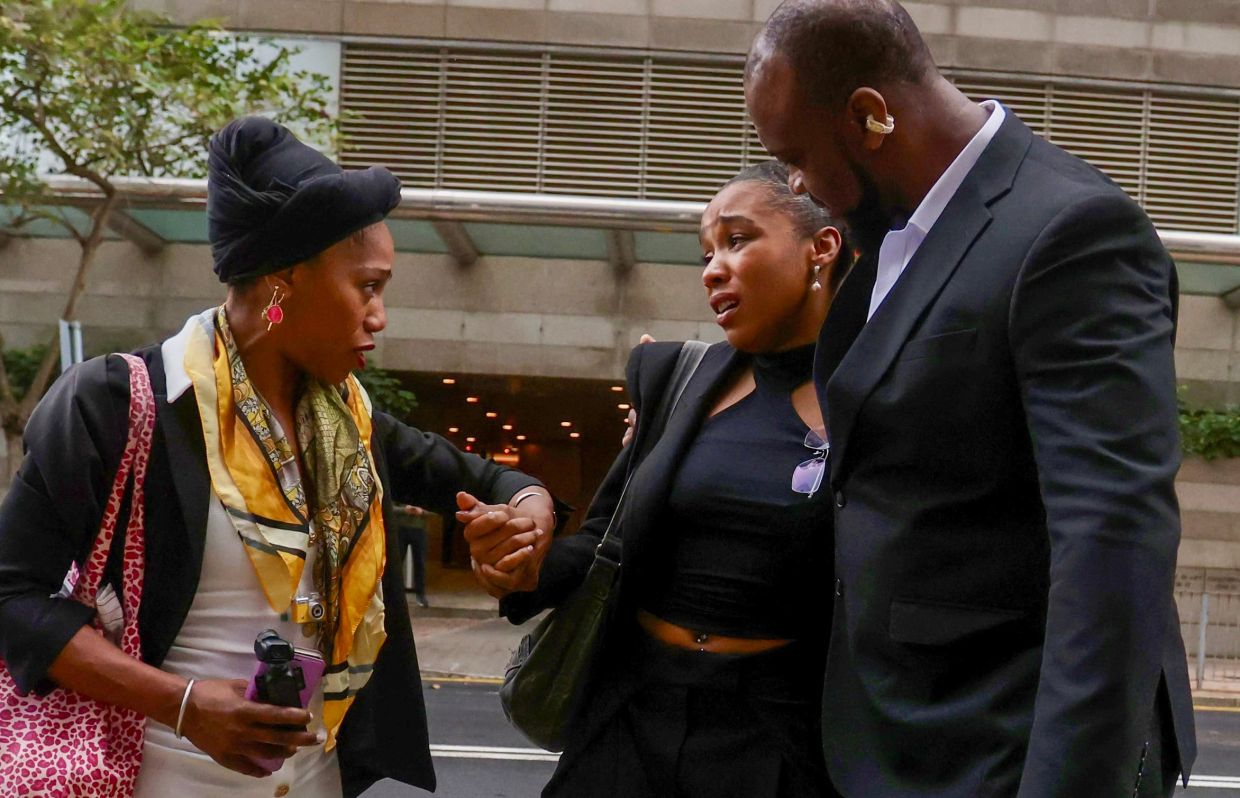
A Hong Kong court has handed down a six-year prison sentence to a British woman convicted of using false rape allegations as leverage to extort £100,000 from a fellow Briton. The District Court ruling represents a significant legal precedent in cases involving fraudulent sexual assault claims weaponised for financial gain, a category of offence that poses complex challenges for judges balancing protections for genuine victims against accountability for deliberate fabrication.
Isabel Anonia Barbra Eudora Rose, 26, a London-based event management professional, was found guilty on two counts: blackmail and perverting the course of public justice. Judge Adriana Noelle Tse Ching handed down the sentence on Wednesday after determining that Rose had deliberately constructed false allegations to extort money from a man she had recently met. The case highlights the potential for malicious prosecution and raises questions about how authorities in Hong Kong and beyond distinguish between legitimate complaints and opportunistic fraud masquerading as sexual assault.
The chain of events unfolded rapidly after Rose arrived in Hong Kong on January 31, 2024. She had travelled to the city specifically to visit a man she had encountered during a previous trip to Thailand in December 2023. Rose claimed that upon arriving at his Central apartment that evening, the man sexually assaulted her. However, the court's examination of contemporaneous communications between the pair revealed a sharply different narrative. Rather than the immediate distress one might expect following a traumatic incident, the messages exchanged the next day showed discussions about compensation and reimbursement that contradicted the severity of her allegations.
The digital record proved decisive in Tse's assessment. When Rose wrote "You basically raped me," the man's response—"That is not what I'm into at all and I feel sick"—along with subsequent messages discussing his alleged misreading of signals and apologising for "rushing her," created a framework that undermined the blackmail charge. The man stated he had requested oral sex, which Rose declined, and that he later apologised for his behaviour. Rose's own messages, in which she questioned whether he was annoyed at her refusal and received reassurance that he was impressed by her restraint, presented an inconsistency that Judge Tse found incompatible with a genuine rape complaint. A forensic examination discovered bruising on Rose's neck but notably found no genital injuries, further weakening her account of penetrative assault.
What transformed the situation from a disputed intimate encounter into a criminal extortion scheme was the escalating financial demand that followed. Discussions initially centred on reimbursing Rose for accommodation and travel costs. The man agreed to pay £2,000 when she requested it, demonstrating willingness to compensate her for expenses. However, Rose then increased the demand to £5,000, accompanied by messages that shifted the tone from reimbursement to punishment: "You've given 10 per cent of what I'm owed, 100 per cent of my soul gone." The dramatic increase signalled a fundamental change in intent, moving from practical compensation to what the judge characterised as deliberate exploitation.
The most damaging aspect of the prosecution's case involved establishing that Rose had demanded £100,000—an amount that did not appear explicitly in text message records but which Judge Tse concluded had been communicated through since-deleted messages or voice communications. The man's response in the recovered messages was revealing: "But I don't have £100k, I have no way of paying you that," to which Rose replied with instructions to send half the sum immediately and the remainder the following day. This exchange demonstrated calculated pressure and a specific financial target. The judge found that Rose had imposed a deadline for payment, threatening to report him to police if her demands were not met. Within 48 hours of arriving in Hong Kong, Rose had allegedly progressed from guest to alleged victim to blackmailer.
Judge Tse's sentencing remarks were particularly scathing about Rose's apparent motivations and conduct. The judge stated that Rose had committed a "cruel and evil" offence and suggested that her primary objective from the outset was financial gain rather than justice. Tse noted that Rose had deliberately exploited the man's "kindness, naivety, friendship and romantic interest" to further her demands. The judge set the starting point for the blackmail charge at five years' imprisonment and ordered the sentence for perverting the course of justice to be served consecutively, resulting in the six-year total. Tse characterised Rose as "an author of her own wrongdoing" and condemned her police report as "vengeful and wicked behaviour," reflecting her assessment that Rose had weaponised the justice system to punish the man for refusing to capitulate to her financial extortion.
The case carries broader implications for sexual assault prosecutions and victim credibility in jurisdictions across Asia and beyond. False allegations that are subsequently proven, while statistically rare, can have profound effects on public trust in sexual assault victims and potentially discourage genuine complainants from coming forward. For Hong Kong's legal system and enforcement agencies in similar jurisdictions, the case illustrates the critical importance of rigorous investigation and the reliance on contemporaneous evidence—particularly digital communications—to establish the true sequence of events and underlying motivations. The decision also underscores judicial willingness to pursue perverting justice charges when complaints are determined to be fabricated rather than simply unproven.
Rose's response to the conviction has been defiant and contradictory. When the guilty verdict was delivered in March, she reportedly wept in the dock and was remanded in custody. Subsequently speaking to the South China Morning Post, she expressed disbelief at the outcome, stating that she could not comprehend what had transpired. She claimed that officers told her they would prioritise the blackmail allegations over the rape complaint, suggesting she felt abandoned by authorities. Her statement—"I reported the rape. But within 24 hours, there was no rape any more"—reflects her apparent view that the system had conspired against her rather than accepting the court's factual findings. She described her situation philosophically, remarking that as a tourist who arrived in Hong Kong, she now faced imprisonment and had to "suck it all up," a phrasing that, taken alongside the evidence before the court, invited questions about whether she grasped the gravity of her own conduct.
The implications of this case extend to Southeast Asia's broader legal landscape, where increasing urbanisation and tourism create frequent encounters between foreign nationals and local or expatriate communities. Hong Kong's handling of the Rose case demonstrates how courts in the region are prepared to examine financial motivations underlying sexual assault allegations and to pursue robust prosecutions of false reporting when evidence warrants it. For Malaysian and regional stakeholders, the case serves as a cautionary study in how fabricated allegations weaponised for extortion damage the credibility of genuine victims, undermine public confidence in law enforcement, and ultimately harm the administration of justice. The six-year sentence reflects the seriousness with which Hong Kong's judiciary regards such misconduct, establishing a deterrent for potential offenders while simultaneously highlighting the critical distinction courts must draw between disputed consent and deliberate criminal fraud.

