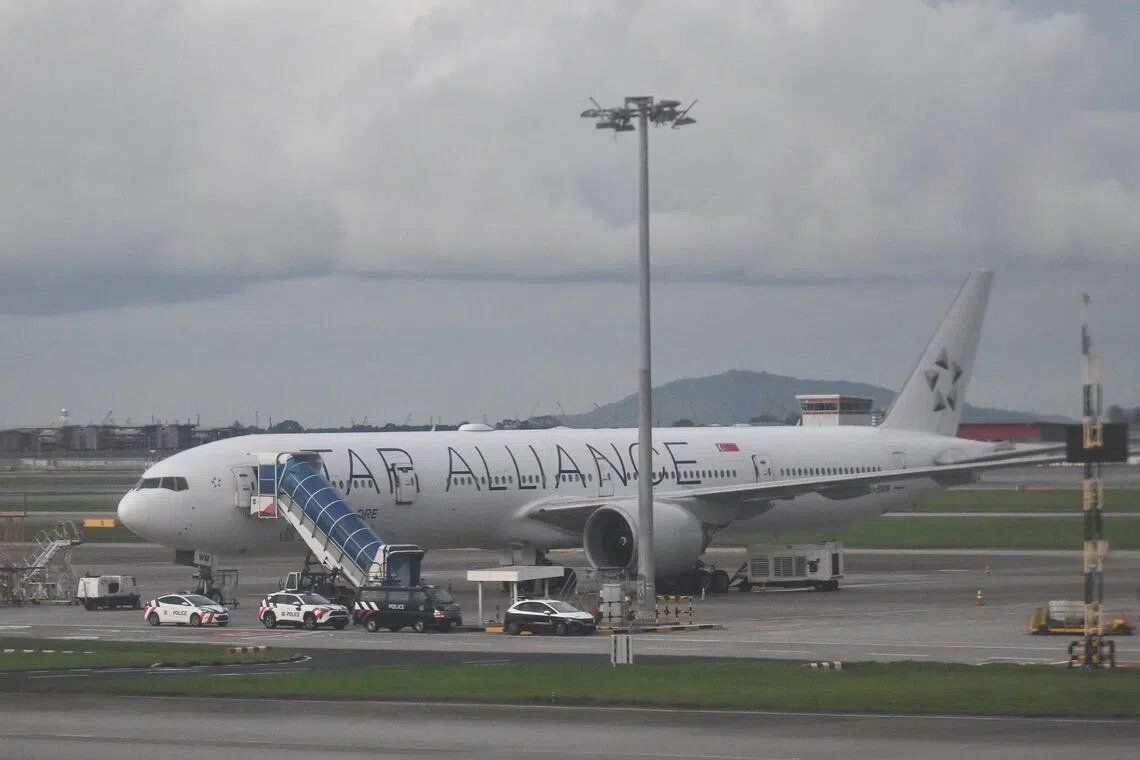
Linda Kitchen, 74, has initiated a lawsuit against Singapore Airlines in Britain's High Court, seeking compensation following a catastrophic turbulence incident that claimed her husband's life and left her with severe spinal injuries. The case represents one of several legal actions being pursued by passengers and crew affected by Flight SQ321, which experienced a dramatic atmospheric disturbance while travelling from London to Singapore on May 21, 2024, over Myanmar.
The incident unfolded suddenly during what should have been a routine morning meal service. Witnesses described how the aircraft plunged more than 54 metres in just five seconds, a violent movement that sent passengers, crew, and loose objects hurtling through the cabin. Geoffrey Kitchen, 74, a theatre director with whom Linda had shared 52 years of marriage, was thrown onto his wife with such force that he crushed her against the armrest. The impact resulted in her fracturing her back, an injury requiring ongoing specialist medical treatment and support that forms the basis of her compensation claim.
Geoffrey Kitchen's condition deteriorated rapidly during the emergency response. Other passengers helped move him to allow medical intervention, and a physician travelling on board immediately initiated cardiopulmonary resuscitation. However, his efforts proved unsuccessful. The aircraft, carrying 211 passengers and 18 crew members, was diverted to Suvarnabhumi Airport in Bangkok for an emergency landing. Altogether, 79 people sustained injuries of varying severity, making this one of the most serious aviation incidents in recent Southeast Asian history.
Linida Kitchen endured a harrowing ordeal in the aftermath. She spent ten days hospitalised in Bangkok before being airlifted to Bristol in the United Kingdom. The journey itself proved agonising due to her injuries, and once discharged in Britain, she required substantial assistance with daily activities. Perhaps most cruelly, she remained unaware of her husband's death until two days after the incident. In a statement reported by British media, she described the moment she learned of his passing as "absolutely devastating," emphasising that despite preparing herself mentally when the incident occurred, nothing could have adequately prepared her for the reality of his loss.
Linada Kitchen's legal team, headed by Anthe Korelidou, a specialist aviation lawyer, has framed the lawsuit not merely as a compensation claim but as part of a broader quest for accountability and transparency. Korelidou stated that the family harbours persistent questions about what occurred and whether additional preventive measures could have mitigated the injuries sustained. The filing of High Court proceedings represents a significant milestone in their effort to secure comprehensive investigations into the incident and provide the family with the answers they believe they deserve.
The legal action initiated by Kitchen is one of several filed by affected passengers. Court records indicate that Bradley Richards, Jack Jenkins, Hannah Fullerton, Andrew Dawood, Bryan Matthews, and Pauline and Michael Rainey have also commenced legal proceedings against Singapore Airlines. This coordinated legal response suggests a pattern of dissatisfaction among survivors and the families of those who died, particularly regarding the adequacy of initial investigations and compensation offers.
Singapore Airlines has maintained a cautious public stance regarding ongoing litigation. When approached by The Straits Times in August 2024, the airline declined to comment, citing the pending court proceedings. However, the airline did acknowledge its responsibility for the incident during the immediate aftermath. It issued a formal apology, stating: "We sincerely apologise to all passengers and crew members on board Flight SQ321 for their traumatic experience. The safety and well-being of SIA's passengers and staff are our top priority."
The airline offered financial compensation to affected passengers through a differentiated scheme. Those who sustained minor injuries received US$10,000, while passengers suffering serious injuries requiring long-term medical care received advance payments of US$25,000. Additionally, SIA provided full refunds of airfares to all passengers on the flight. Despite these measures, the fact that multiple legal actions have been filed suggests that many claimants believe the compensation falls short of covering their medical expenses, ongoing care requirements, and losses incurred from the incident.
Investigations conducted by Singapore's Transport Safety Investigation Bureau provide important technical context. The TSIB report concluded that storm clouds responsible for the severe turbulence escaped detection by the aircraft's onboard weather radar, thereby surprising the captain. This finding raises critical questions about aviation safety protocols and whether additional redundancies in weather detection systems could prevent similar incidents. The report, however, remains inconclusive as to whether the weather radar itself contained technical deficiencies, leaving open the possibility of further investigation and debate.
The incident carries significance far beyond the immediate parties involved. Aviation professionals and safety regulators across Southeast Asia have examined the circumstances surrounding Flight SQ321 to extract lessons applicable to regional carriers. The fact that sophisticated aircraft equipped with advanced weather detection systems can still encounter undetected storm activity highlights inherent limitations in current technology and procedures. For Malaysian aviation operators and regulatory bodies, the incident underscores the necessity of maintaining rigorous safety standards and investing in continuous technological improvements.
The case also raises broader questions about airline liability in cases involving severe weather phenomena. While turbulence remains an occupational hazard of air travel, incidents of this magnitude resulting in fatalities create complex legal and ethical dimensions. The pending litigation will likely establish important precedents regarding carrier responsibility, the adequacy of compensation for serious injuries, and the standards expected of airlines in preventing and responding to in-flight emergencies.
As Linda Kitchen pursues her case through the British legal system, her experience serves as a sobering reminder of aviation's inherent risks and the profound impact such incidents have on survivors and bereaved families. The lawsuit represents not only a financial claim but a demand for transparency and accountability from one of Asia's major airlines. The outcome may influence how Singapore Airlines and other carriers throughout the region address passenger safety, investigate serious incidents, and compensate those affected by unexpected catastrophes at altitude.

