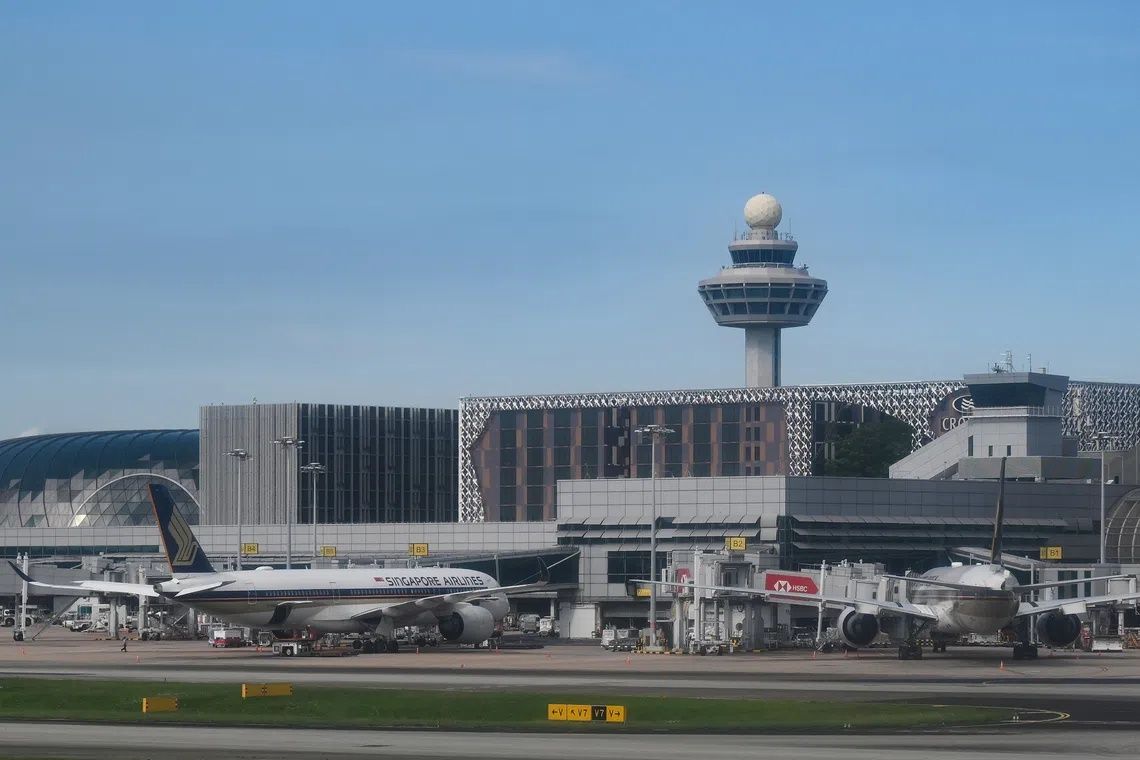
A British national aged 25 is set to appear in Singapore court facing multiple charges stemming from a disruptive incident that unfolded at Changi Airport's Terminal 1 on July 20. The man, who was believed to have been intoxicated at the time, allegedly created a significant disturbance at a boarding gate, ultimately preventing an aircraft bound for Kuala Lumpur from departing on schedule. The incident, which Singapore police responded to in the late afternoon at around 4.05pm, exemplifies the tensions that can arise when travel delays combine with passenger intoxication in the high-pressure environment of airport terminals.
According to a police statement released on Tuesday, August 11, officers received a report of a passenger behaving disruptively at the boarding gate in Terminal 1. Witnesses described the man as speaking and shouting loudly while awaiting departure for the Malaysian capital, behaviour that caused considerable irritation to fellow passengers waiting to board the flight. The repeated disruptions drew the attention of airline staff who attempted to address the situation through standard protocol, approaching the passenger to defuse the escalating commotion.
The situation deteriorated rapidly when airline personnel intervened. The British man responded to their approach with visible anger, directing vulgarities at one of the staff members who had attempted to manage the disturbance. His hostile response and continued intoxication led the airline to make the decision to remove him from the passenger manifest entirely. Airport regulations permit such actions when a passenger's state or conduct poses a risk to the safety and comfort of those aboard an aircraft.
What transpired after the offloading decision reveals the severity of the incident. Rather than accepting the airline's determination, the man allegedly became increasingly aggressive and forcefully pushed past the airline staff in an attempt to re-enter the aircraft. In doing so, he crossed into a protected security area of the airport terminal without any authorisation whatsoever—a serious breach of airport regulations that exist to prevent unauthorised access to sensitive zones. During this alleged confrontation, one female staff member fell to the ground and sustained injuries to her left arm and wrist, indicating the physicality of the encounter.
The disruption continued as the man persisted in his aggressive behaviour, directing further vulgarities at airport security personnel who had responded to the escalating emergency. The combination of physical aggression, repeated verbal abuse, and unauthorised entry into restricted zones created a security incident that required intervention from multiple airport staff layers. The entire sequence of events, from the initial disturbance through to the security breach, resulted in a substantial delay of 45 minutes to the aircraft's scheduled departure time.
The charges the man faces reflect the seriousness with which Singapore authorities treat such incidents. He is expected to be prosecuted on three separate counts: causing annoyance while intoxicated in a public place, using threatening, abusive or insulting words or behaviour, and unauthorised entry into a protected place within the airport. Each charge carries distinct legal consequences that underscore different aspects of his conduct throughout the incident.
Conviction on the charge of causing annoyance while intoxicated carries a potential fine of up to S$1,000, imprisonment for up to six months, or both sanctions imposed together. This provision exists to address public behaviour that disrupts the functioning of shared spaces and annoys other users, particularly when alcohol has impaired judgment. The second charge, concerning threatening and abusive language, attracts a maximum fine of S$5,000, addressing the verbal component of the confrontation and the disrespect shown to airline staff.
The most serious charge—unauthorised entry to a protected place—carries substantially steeper penalties, reflecting the heightened security concerns at modern airports. A conviction on this count could result in a fine reaching S$20,000, imprisonment of up to two years, or both. This charge addresses the breach of airport security protocols and the physical aggression displayed in forcing entry past staff members into areas where only authorised personnel should be present.
For Malaysian readers, the incident holds particular relevance given that Kuala Lumpur was the intended destination and given Southeast Asia's increasing focus on airport security and passenger conduct standards. The case demonstrates how quickly a situation can escalate when intoxication combines with frustration in travel settings, and the serious legal consequences that jurisdictions like Singapore enforce to maintain order in critical infrastructure. The injuries sustained by the airline staff member also highlight the physical risks that aviation workers face when managing difficult passengers, an issue gaining greater recognition across the region.
The incident also underscores the pressures on Changi Airport, one of Asia's busiest aviation hubs, where any disruption creates cascading effects for other flights and passengers. Singapore's consistent enforcement of strict standards for passenger conduct at airports reflects the nation's approach to maintaining operational excellence and security at this critical transport node. As air travel continues to recover and intensify across Southeast Asia, such incidents prompt wider conversations about passenger responsibility, the role of alcohol in travel, and how airports should balance accessibility with security.

