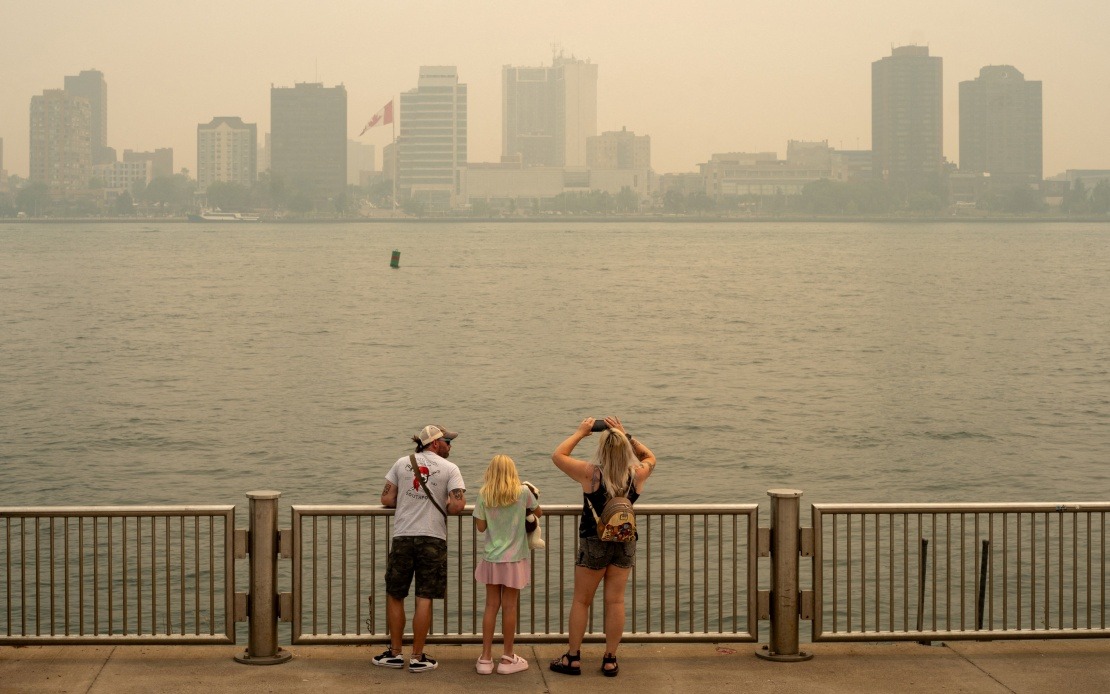
A raging wildfire consuming vast swathes of British Columbia continues to defy containment efforts despite some signs that its rapid progression is beginning to slow, authorities confirmed on Sunday. The inferno has already charred more than 100 square kilometres of the province, prompting one of the region's largest emergency evacuations with more than 20,000 residents forced to abandon their homes and possessions. The scale of displacement underscores the severity of the crisis gripping Canada's westernmost province as summer temperatures spike and dry conditions persist across the region.
Emergency responders are now directing their focus toward the town of Summerland, a community of approximately 12,000 people where homes on the outskirts remain in immediate danger. Authorities have maintained evacuation orders affecting roughly 10,000 properties throughout the wider region, creating a humanitarian challenge that extends far beyond the immediate fire zone. Residents in affected areas are still grappling with uncertainty about whether they will be able to return to their properties, with some having fled with minimal warning as the fire advanced with frightening speed in its initial phases.
A critical turning point came when the fire front reached Okanagan Lake, a natural geographic barrier that has effectively slowed the wildfire's devastating march across the landscape. This development represents a temporary reprieve for communities located further east, though officials remain cautious about declaring any part of the situation under control. The lake's intervention has provided firefighting crews with slightly more breathing room to establish defensive perimeters and protect remaining structures in vulnerable areas, but the underlying threat persists as long as active flames continue burning across the blackened terrain.
The human toll of the disaster has been substantial and tragic in places. Emergency services successfully extracted more than 50 individuals by helicopter after they became trapped by advancing flames, a dramatic rescue operation that highlighted both the peril facing residents and the dedicated response from first responders. Police are also investigating reports of at least one potential fatality, though confirmation has not yet been officially established. These casualties and narrow escapes serve as sobering reminders of how rapidly wildfires can outpace evacuation efforts, particularly in areas where escape routes become blocked by flames.
Government authorities at multiple levels have mobilized resources to address the humanitarian dimensions of the crisis. Canada's federal government has committed specific assistance measures, including providing temporary housing for the tens of thousands of people displaced by the evacuation orders. Eleanor Olszewski, Canada's Minister of Emergency Management, announced on social media platform X that a formal aid request submitted by British Columbia had been approved, signalling federal recognition of the province's overwhelming need for support. This commitment reflects the scale of recovery and relief operations that will be required once the immediate fire threat subsides.
Combating the blaze has proven extraordinarily challenging due to environmental conditions that actively hinder firefighting operations. Persistent hot, dry weather continues to fuel the flames and create ideal conditions for rapid fire spread, while dense smoke restricts visibility and makes aerial firefighting operations more difficult. The combination of elevated temperatures, low humidity, and strong winds creates what firefighting professionals describe as a perfect storm for wildfire behaviour, allowing even contained sections of the fire to reignite or spread in unexpected directions. These atmospheric conditions will likely persist through the remainder of the summer season, raising concerns about additional fire outbreaks across the province.
International cooperation has become essential to managing the crisis, with firefighting support arriving from multiple countries across the Pacific region. Mexico, Australia, and New Zealand have all contributed resources and personnel to assist British Columbia's emergency services, demonstrating the global recognition of the wildfire threat and the principle of mutual aid in disaster response. This international dimension reflects how severely Canadian authorities are stretched, necessitating external support to bolster local and provincial firefighting capacity. The involvement of distant nations underscores how modern wildfire management requires coordinated continental and international responses.
British Columbia officially declared a state of emergency on Saturday in response to the proliferation of uncontrolled fires across the province. Current records indicate more than 100 separate wildfires are currently active throughout British Columbia, with nearly half of these blazes classified as out of control by authorities. This alarming statistic reveals that the Summerland-area fire, though the most prominent in recent media coverage, is merely one component of a much broader ecological and emergency management crisis unfolding across the entire province. The concentration of simultaneous fires stretches emergency services to their absolute limits and raises the prospect of multiple concurrent disasters competing for limited firefighting resources.
The wildfire crisis extends beyond British Columbia's borders, as other major Canadian provinces are simultaneously contending with significant fire activity. Both Ontario and Quebec have experienced major wildfires during the current year, suggesting that Canada faces a nationwide surge in fire intensity and frequency. This continental pattern points toward underlying climatic and environmental shifts that are creating conditions favouring larger and more intense wildfires. For Southeast Asian observers and policymakers monitoring global environmental trends, the Canadian wildfire season offers concerning evidence of how climate change is fundamentally altering fire behaviour and emergency response requirements in developed nations with substantial resources for disaster management.

