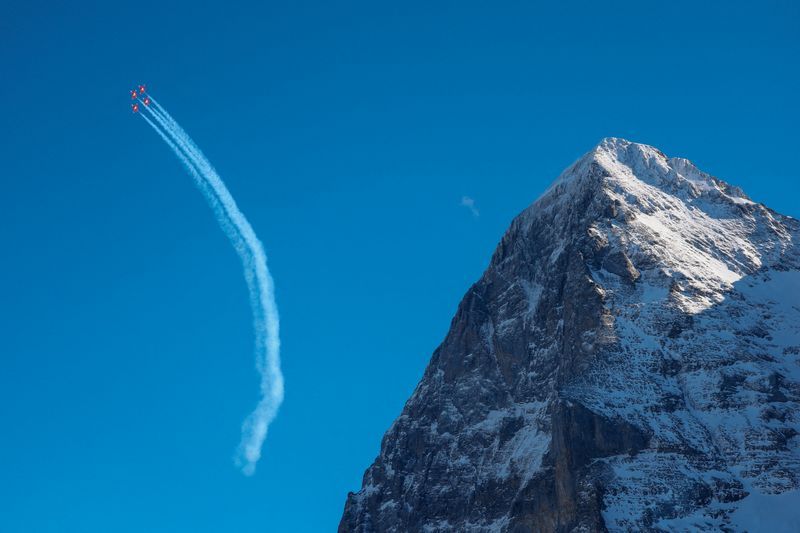
Fay Manners, a 39-year-old British alpinist, has etched her name into Eiger history by accomplishing what no British woman had done before: establishing an entirely new climbing route on one of the world's most formidable alpine faces. Working alongside Swiss climbing partner Roger Schaeli, Manners spent 13 gruelling days high on the Eiger's North Face during the summer, meticulously plotting and securing a previously unclimbed line they named "Solar Eclipse." The route spans 2,952 feet across 33 pitches of exposed rock and ice, representing not merely a personal triumph but a symbolic breakthrough in a sport long dominated by male pioneers.
The Eiger North Face, situated in the Swiss Alps, commands respect from mountaineers worldwide. Its approximately 5,800-metre vertical expanse presents climbers with relentless exposure to severe weather, rockfall, and unpredictable ice conditions. The face's sinister reputation was forged through numerous fatal attempts before a German-Austrian expedition achieved the first successful ascent in 1938, an accomplishment that established the route as one of mountaineering's most coveted objectives. For decades afterward, the North Face remained the exclusive domain of the world's most accomplished climbers, with each new route opening representing years of collective expertise and extraordinary risk-taking.
Manners' journey to this achievement began four years earlier when she first tackled the North Face via the established Heckmair Route. That experience transformed her perspective entirely. Rather than viewing the face as a checklist destination to be ticked off, she became captivated by its geology and possibilities. She spent considerable time researching the wall's features, studying photographs and accounts, and contemplating where an original line might exist. This obsessive preparation distinguished her intention from the outset: she would not simply repeat what others had done, but create something entirely new.
The fundamental difference between repeating an established climb and opening a new route cannot be overstated. When mountaineers follow established paths, they benefit from accumulated knowledge about difficulty ratings, protection points, rock quality, and proven sequences. Route-openers enter genuine uncertainty. Manners articulated this distinction with clarity: "You don't know how hard it's going to be, you don't know the sort of protection that you'll need to put in, you really don't know if you're going to be able to make it to the top." This uncertainty extends beyond physical danger; it encompasses the possibility of investing weeks of effort only to discover the line is impossible or unsafe to pursue further.
Beyond the technical achievement, Manners perceives profound significance in the creative act of route-opening itself, particularly for women in mountaineering. She observes that climbing guidebooks represent a historical record of who has shaped the sport's development. When page after page displays exclusively male names alongside first ascents, an implicit narrative forms: men pioneer, men innovate, women follow. This representation problem extends beyond mere symbolism. Manners argues that visibility matters because young women assimilate these subtle messages about their own capacity and belonging. "If you're looking in the guidebook and every single name of the person that's opened a route is male, somehow that's telling you that men are opening routes and women aren't," she explained, articulating how passive exclusion from historical records reinforces contemporary barriers.
Women have contributed to the Eiger's climbing history longer than many recognise. In 1964, Daisy Voog became the first woman to successfully climb the North Face, an accomplishment shadowed by contemporary accounts revealing her prior rejection from a mountaineering club that excluded women despite her qualifications. Five years later, Japanese climber Michiko Imai participated as the sole woman among six team members establishing the "Japanese Summer Direttissima" route. These predecessors navigated institutional resistance alongside physical challenges, yet their contributions remain comparatively obscure within popular mountaineering narratives. Manners' achievement gains additional resonance because it builds upon this largely forgotten foundation.
Manners attributes some of her own initial hesitation about climbing's viability to internalised gender assumptions absorbed throughout her life. She reflects on how casual comments—suggestions that she lacked physical capacity, or that women faced limited career prospects in sports—accumulated into self-doubt. "Maybe if I never grew up with someone saying to me, 'You can't carry as much as me, so I'll carry more,' maybe if it was just always equal from the beginning, then you just never have that doubt in your mind," she mused. She recognises that gender stereotypes operate subtly, often escaping conscious notice even while shaping decisions and self-perception profoundly.
Her professional journey illustrates these institutional obstacles tangibly. Growing up in England surrounded by athletic pursuits, Manners imagined a sports career. However, people she trusted counselled against it, emphasising the sport industry's limited opportunities for women. Consequently, she pursued data science, a conventional professional path offering security and clear advancement. While working as a data consultant, she eventually relocated to Chamonix, France, where she could engage climbing more seriously. Her breakthrough arrived unexpectedly when The North Face approached her about sponsorship, initially permitting her to balance data work with climbing. Within a year, she abandoned data science entirely to commit fully to mountaineering. "I really only realised that it was possible when it was happening," she reflected, "because I still had in my mind that there was no way that a female could have a career in sports."
Manners' achievement carries particular significance for Southeast Asian mountaineers and athletes observing from the region. Malaysia, Indonesia, and neighbouring countries have produced accomplished alpinists and outdoor enthusiasts, yet gender disparities in expedition leadership, route-opening, and sponsorship opportunities persist across Asia. Manners' insistence on recognising representation gaps and the importance of women actively shaping their sport's direction resonates beyond European alpine contexts. Her experience demonstrates that systemic barriers—from childhood messaging to institutional gatekeeping to media invisibility—operate across continents, affecting how ambitious women internalise possibilities.
Looking forward, Manners envisions her route serving as an inspiration and practical resource for future climbers. Her ultimate aspiration transcends personal achievement entirely: she dreams of witnessing all-female teams attempting to repeat "Solar Eclipse," collectively experiencing the route she and Schaeli established. This vision reflects a deeper understanding that legacy in mountaineering involves not just reaching summits or opening routes, but creating pathways enabling others to follow. By establishing this new line, Manners has contributed concretely to climbing literature while simultaneously challenging the sport's demographic narrative.
The implications extend beyond mountaineering specifically. Manners' achievement illustrates how representation gaps persist across ostensibly meritocratic pursuits. Whether in alpine climbing, technology, academia, or business, women frequently encounter subtle systematic assumptions about capability and belonging that accumulate into professional barriers. Her explicit articulation of these dynamics and her deliberate effort to alter the historical record through her own accomplishments model an approach applicable across sectors. By naming the problem, refusing to accept it as inevitable, and taking concrete action to create alternative narratives, Manners demonstrates that individual achievement and systemic change operate in tandem. As mountaineering continues evolving, her route on the Eiger North Face stands as both a literal climbing achievement and a metaphorical marker that women claim space in traditionally masculine domains not merely as participants but as pioneers shaping the sport's future.

