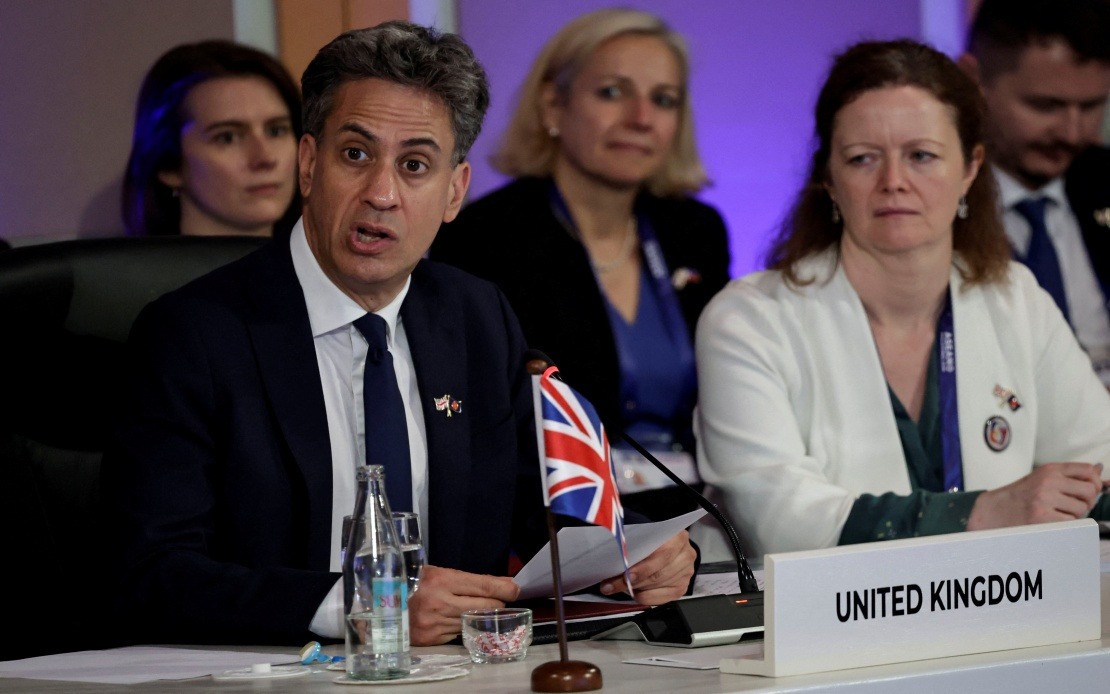
Britain's foreign secretary Ed Miliband is using his first official visit to continental Europe to signal renewed commitment to deepening UK-EU relations, with planned stops in France and Spain on Wednesday. The diplomatic tour underscores the new Labour government's determination to reset Britain's relationship with its European neighbours following years of tension since Brexit. Rather than remaining on the sidelines of European affairs, Miliband's journey demonstrates an intention to position Britain as an engaged stakeholder in addressing shared continental challenges and opportunities.
The timing of the visits carries particular significance given both nations are grappling with unprecedented environmental catastrophes. France and Spain are currently battling some of the most severe wildfires in recent memory, forcing the evacuation of approximately 330,000 people across the two countries. These disasters have created humanitarian emergencies that demand immediate international co-operation and support. By making this trip amid the crisis rather than postponing, Miliband signals Britain's readiness to stand alongside its European partners during emergencies, offering concrete solidarity beyond mere words of sympathy.
Beyond expressions of concern for the immediate disaster, Miliband intends to use the wildfires as a launching point for broader discussions about the climate emergency. The devastating fires represent a tangible manifestation of climate change's escalating impacts on Europe, providing common ground for substantive dialogue about how nations must collectively accelerate their responses to environmental threats. This framing allows the UK to position itself not as a bystander but as a committed participant in Europe's shared struggle against climate instability, an important repositioning after years of perceived British detachment from continental affairs.
In Paris, Miliband will engage with French Foreign Minister Jean-Noël Barrot to address multiple layers of European security architecture. The conversation will centre on how Britain and France can collaborate in defending European security interests at a moment of considerable geopolitical tension. Ukraine remains a critical focus, with ongoing military conflict requiring sustained international support and strategic co-ordination. Britain's provision of weapons and military training has made it a significant contributor to Ukrainian resistance, and these discussions will likely assess how bilateral and multilateral efforts can be sustained and strengthened.
The Paris agenda extends beyond Ukraine to encompass Middle Eastern stability and West Asian security arrangements. The region remains volatile, with multiple conflict flashpoints demanding careful diplomatic navigation. Britain's involvement in regional affairs has historical roots and contemporary strategic importance, making Franco-British alignment on Middle Eastern policy valuable for both nations. Additionally, migration pressures affecting both France and Britain will enter these conversations, as managing irregular cross-Channel movements remains a persistent bilateral friction point requiring sustained diplomatic effort.
Miliband will subsequently travel to Madrid for substantive engagement with Spanish Foreign Minister José Manuel Albares. One significant agenda item concerns the UK-EU Gibraltar treaty, a complex agreement that addresses the sovereignty and governance of the disputed territory. Gibraltar has historically complicated British-Spanish relations, and successfully implementing the treaty framework will require ongoing bilateral dialogue and trust-building. The agreement represents an opportunity for Britain to demonstrate that post-Brexit arrangements can be negotiated cooperatively with European partners, establishing productive precedent for future negotiations.
Security collaboration features prominently in the Madrid discussions as well, reflecting Spain's strategic location in European security frameworks. Spain's proximity to North Africa gives it particular relevance to migration flows, counter-terrorism efforts, and maritime security concerns affecting the wider European neighbourhood. British engagement with Spain on these issues underscores how security is no longer a purely national concern but increasingly requires coordinated regional and continental responses. The visit allows both nations to identify practical areas where defence and security capabilities can be better integrated.
Climate change will emerge as a unifying theme across both bilateral meetings, reflecting how environmental crisis has become central to contemporary foreign policy discussions. The ongoing wildfires provide urgent illustration of why European nations must prioritise climate mitigation and adaptation strategies. Britain's climate commitments and technological capabilities position it as a potential partner in European environmental efforts. The discussions will likely explore how British expertise and resources can contribute to European climate resilience while advancing mutually beneficial clean energy transitions.
Miliband's inaugural European tour signals a strategic recalibration in British foreign policy. Rather than viewing Europe primarily through a security or trade lens, the new government appears committed to embedding Britain within European affairs through multiple channels. This approach seeks to rebuild institutional relationships damaged during Brexit debates while positioning Britain as a constructive European power capable of contributing solutions to shared challenges. For Southeast Asian observers, this recalibration matters significantly, as Britain's engagement with Europe influences its global availability and strategic focus, potentially affecting Indo-Pacific commitments and regional partnerships that Malaysian stakeholders value.

