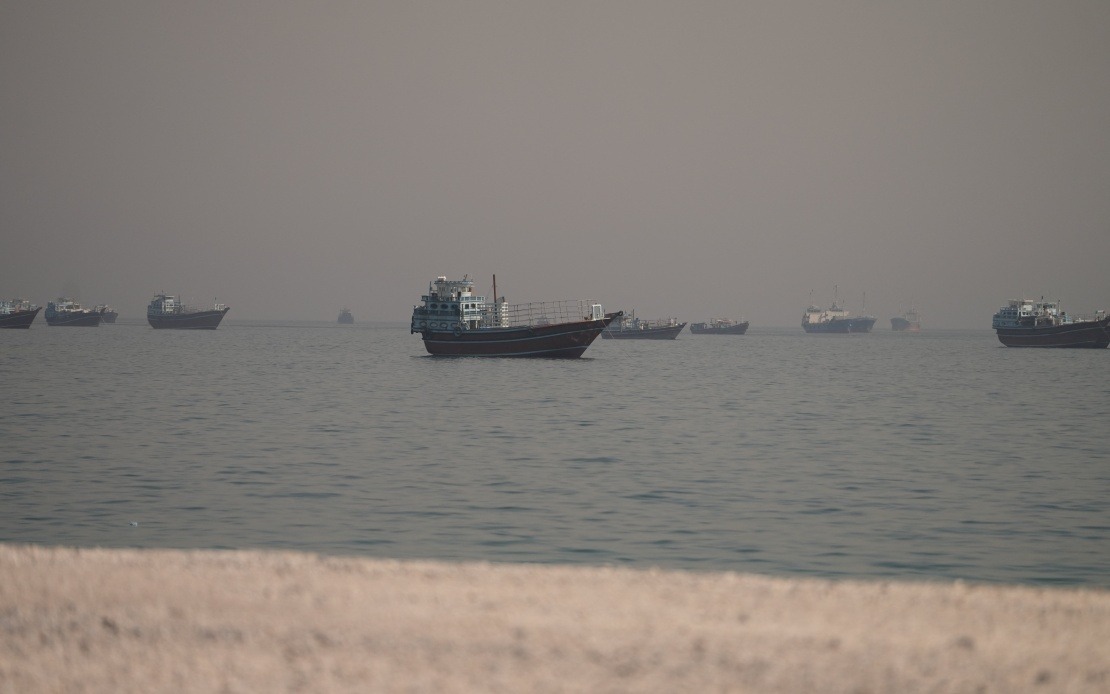
Britain and France have signalled their willingness to establish a multinational military presence in the Strait of Hormuz, one of the world's most strategically vital maritime passages, as they seek to maintain open shipping lanes in the face of mounting regional instability. The announcement, made jointly by Prime Minister Keir Starmer and President Emmanuel Macron on Friday, represents a coordinated European response to challenges facing international maritime commerce in the Middle East, though it has provoked predictable resistance from Tehran.
The Strait of Hormuz stands as one of global commerce's most critical chokepoints, with approximately one-fifth of the world's traded oil passing through its relatively narrow waters annually. Any disruption to transit through this channel—whether through accidents, security incidents, or deliberate blockades—carries immediate consequences for energy markets and supply chains far beyond the Middle East. The joint British-French statement explicitly framed the issue in these terms, emphasizing that restoring reliable passage for vessels of all nations constitutes a matter requiring international attention and coordinated response.
The European leaders underscored their commitment to upholding international law, regional stability, and respect for state sovereignty whilst advocating for freedom of navigation. Their statement reflected the delicate balancing act Western powers must perform: demonstrating resolve to protect maritime interests without appearing to impose external control over waterways that neighbouring states claim authority over. This diplomatic positioning acknowledges the legitimate security concerns of littoral nations whilst rejecting unilateral Iranian assertions that foreign military activity in the region constitutes unwelcome interference.
Oman's agreement to cooperate with Britain and France provides crucial political and operational legitimacy for any multinational effort. As a Gulf state with direct access to the Strait of Hormuz and traditionally warmer relations with Iran compared to some regional neighbours, Oman's willingness to facilitate international maritime security operations signals that support for maintaining open shipping lanes extends beyond Western capitals. This Omani backing complicates Iranian arguments that foreign involvement in the strait represents purely extra-regional power projection divorced from regional concerns.
Iran has consistently and vehemently opposed foreign military deployments in what it considers its strategic backyard. Iranian officials have repeatedly asserted that maritime security in the Strait of Hormuz should remain the exclusive responsibility of littoral states—a position rooted in historical grievances regarding Western naval presence in the Persian Gulf and contemporary anxieties about military encirclement. The Iranian government views external military missions in the region as violations of its sovereignty and potential precursors to hostile action, regardless of stated intentions regarding freedom of navigation.
The timing of the British-French announcement reflects broader geopolitical tensions that have accumulated over Iran's ballistic missile development, its nuclear programme, and its support for various non-state actors across the Middle East. The Strait of Hormuz has previously served as a flashpoint for these tensions, with Iranian threats to disrupt shipping and occasional incidents involving Revolutionary Guard vessels and international shipping. Western maritime security initiatives thus represent efforts to deter Iranian actions that could severely disrupt global trade and energy supplies.
For Southeast Asian nations including Malaysia, developments affecting the Strait of Hormuz carry substantial economic and strategic implications. The region depends significantly on Middle Eastern oil and gas supplies, and any instability affecting the strait reverberates through Asian energy markets and shipping costs. Malaysian ports and shipping companies maintaining substantial interests throughout the Gulf region face operational and commercial risks when maritime security becomes uncertain. Regional powers therefore have compelling interests in ensuring international shipping routes remain functional, even when they prefer to avoid taking overt positions in Middle Eastern disputes.
The proposed multinational approach also reflects recognition that Western nations lack the unilateral capacity or legitimacy to police the strait effectively without local cooperation and broader international participation. Framing the initiative as multinational rather than exclusively British-French or Western allows participating nations to present their role as protecting universal interests in maritime commerce rather than advancing narrower geopolitical agendas. This framing matters considerably for legitimacy both within the region and among international audiences.
However, the fundamental tension remains unresolved: Iran views any significant foreign military presence in the strait as inherently threatening, whilst maritime powers consider their operational freedom through international waters as non-negotiable. The British-French initiative represents an effort to manage this contradiction by coupling military readiness with diplomatic language emphasising international law, sovereignty respect, and regional cooperation. Whether this approach can bridge the gap between Western interests in maintaining open shipping lanes and Iranian determination to resist foreign military activity in adjacent waters remains uncertain.
The success of any multinational maritime security mission will likely depend on whether participating nations can maintain sufficient coordination, secure willing partners among regional states, and establish rules of engagement that minimise the risk of escalatory incidents. Iran's response to this initiative—whether through diplomatic channels, escalatory rhetoric, or operational measures affecting shipping—will significantly influence how the situation develops over coming months. For regional observers and nations with economic stakes in Gulf stability, the unfolding diplomatic and military manoeuvres warrant close attention.

