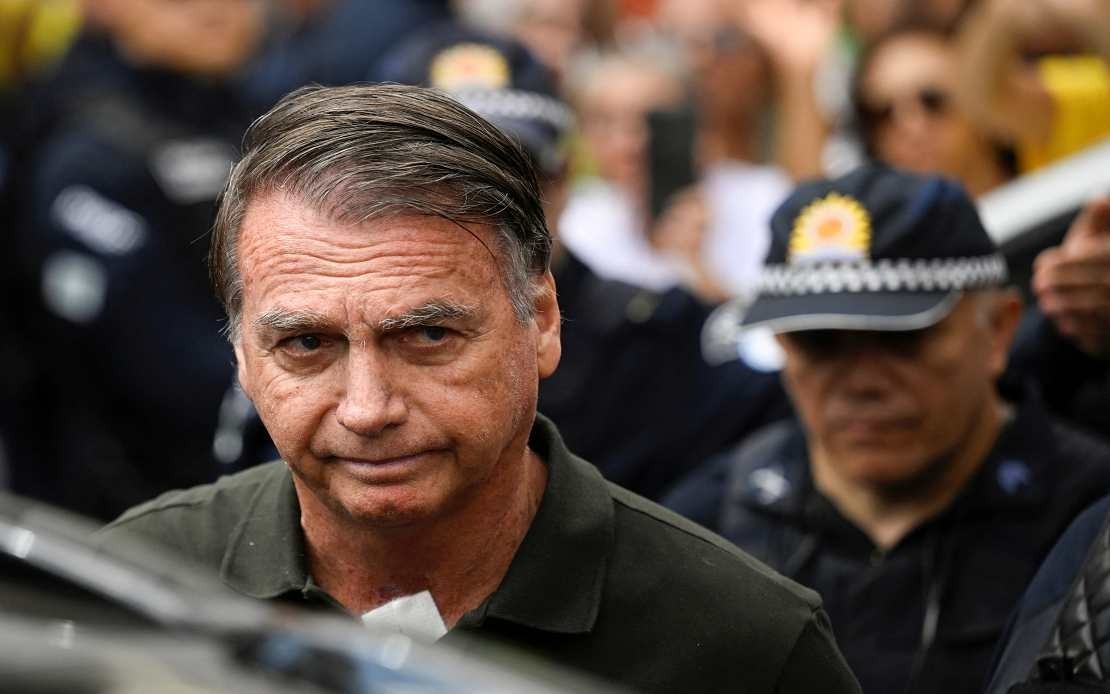
A Brazilian court has prevented Argentine President Javier Milei from visiting former Brazilian President Jair Bolsonaro at his Brasília residence, in a ruling that underscores the judicial constraints binding one of South America's most influential right-wing political figures during a critical election period. Judge Alexandre de Moraes rejected the request on July 19, denying what would have been a high-profile meeting scheduled for July 25 between two of the region's most prominent conservative leaders.
Bolsonaro, who served as Brazilian president until 2022, remains under house arrest following a conviction on charges related to an alleged coup attempt, for which he was sentenced to more than 27 years imprisonment. Rather than serving his full sentence in custody, he has been permitted to remain at his home on account of health considerations, an arrangement that comes with strict conditions governing his conduct and communications. The court's decision to block Milei's visit reflects the judiciary's determination to enforce these restrictions with particular vigilance as Brazil approaches its October presidential election.
The timing of the court's intervention is significant. Just one day before Moraes rejected the planned meeting, the judge issued a sweeping tightening of Bolsonaro's house arrest conditions, which explicitly prohibits him from receiving visits of a political or electoral character until after the presidential election concludes. The restriction also forbids him from disseminating political messages through intermediaries—a provision that became directly relevant when his son Flávio's handwritten letter supporting Flávio's own presidential bid was published on social media, allegedly breaching the existing terms.
The trigger for the heightened restrictions originated from Bolsonaro's own written communication expressing backing for his son's candidacy, which Flávio shared publicly. The court determined this action violated the conditions of the former president's house arrest, prompting Judge Moraes to act decisively in reinforcing those constraints. By characterizing Milei's requested visit as "moot" in his dismissal, the judge effectively signalled that no exception would be granted for diplomatic or personal meetings involving political figures, regardless of international stature.
Milei had announced his Brazilian trip with the explicit intention of demonstrating solidarity with Flávio Bolsonaro's presidential aspirations. The Argentine leader, who has cultivated close ideological alignment with Bolsonaro and represents a similar strain of right-wing populism in the region, viewed the visit as an opportunity to bolster his ally's campaign credentials. Such a meeting would have carried symbolic weight across South American conservative movements, potentially energizing supporters in both countries and signalling international backing for the Bolsonaro family's continued political ambitions.
Flávio Bolsonaro's presidential candidacy presents a compelling storyline within Brazilian politics, as it represents the Bolsonaro family's attempt to maintain political relevance following the father's 2022 electoral defeat. However, he faces formidable opposition from incumbent President Luiz Inácio Lula da Silva, who is expected to seek re-election. The rematch between the centre-left Lula and the right-wing Bolsonarist movement will shape Brazil's political trajectory through the remainder of this decade, with significant implications for economic policy, democratic institutions, and regional leadership dynamics across South America.
For Malaysian and Southeast Asian observers, the Brazilian court's actions illustrate broader patterns of judicial intervention in high-stakes political contests within established democracies. The restriction on Bolsonaro's communications and associations represents a form of judicial activism aimed at preserving electoral integrity by constraining a convicted figure's ability to influence ongoing campaigns. This approach raises questions about the balance between accountability for political misconduct and the preservation of meaningful political participation, debates that resonate across democratic societies grappling with polarization and institutional strain.
The decision also highlights the precarious position of Bolsonaro himself, whose continued confinement to his residence despite his high profile underscores judicial determination to hold powerful figures accountable. Unlike in some jurisdictions where wealthy or politically connected individuals might escape consequences, Brazil's courts have demonstrated willingness to impose meaningful restrictions on a former president, suggesting institutional resilience despite various pressures and controversies surrounding individual judges and their decisions.
Milei's blocked visit represents a setback for right-wing internationalism in South America, as it prevents a symbolic demonstration of solidarity between two ideologically aligned leaders across the continent. The Argentine president has sought to position himself as a regional voice for market-oriented conservatism and anti-establishment politics, and closer association with Bolsonaro would have reinforced this positioning. The court's action therefore has diplomatic dimensions beyond Brazil's borders, affecting the ability of conservative networks to coordinate and demonstrate mutual support.
Looking ahead, the court's enforcement of these restrictions suggests that Bolsonaro will remain significantly constrained in his ability to campaign for or publicly support his son's presidential bid through the election period. This judicial posture reflects confidence among Brazil's institutional actors that democratic outcomes depend partly on limiting the organizational capacity of figures convicted of serious crimes, even when those figures retain substantial political followings. Whether this approach succeeds in maintaining electoral legitimacy or instead generates grievances within Bolsonaro's base remains an open question as Brazil approaches the October vote.

