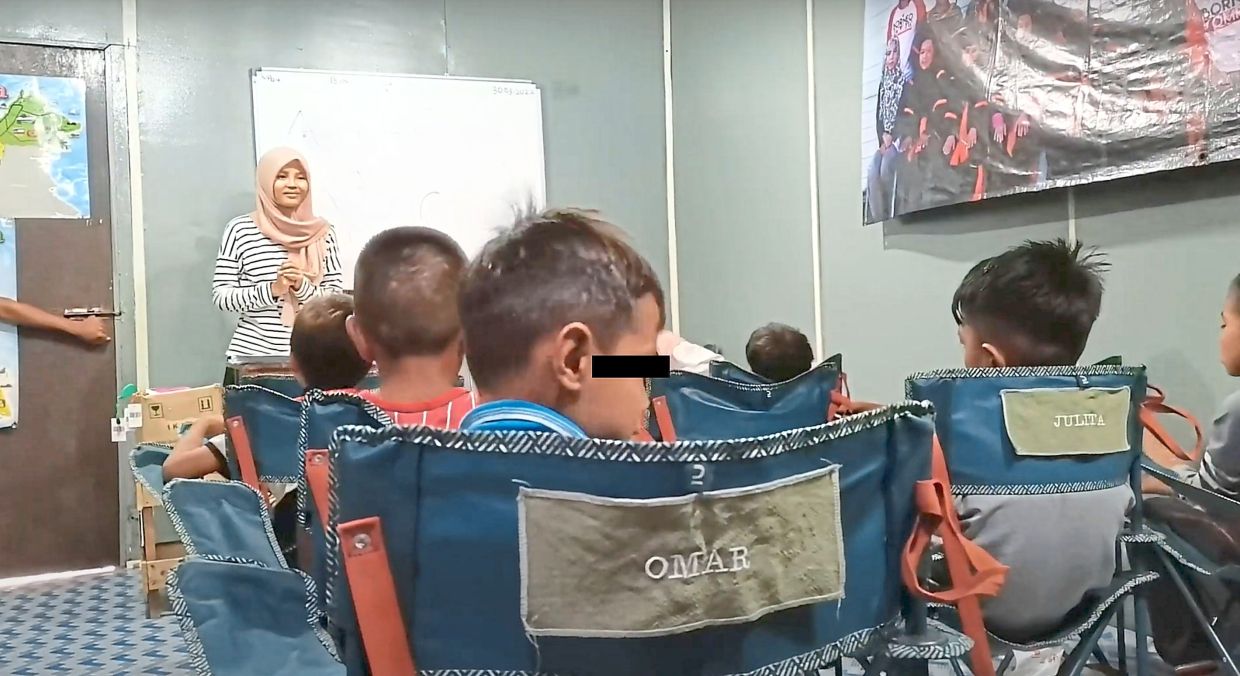
Children born in Malaysia to Malaysian fathers and foreign mothers, but outside legal marriage, have been denied Malaysian citizenship following a Court of Appeal ruling—a decision that has prompted serious questions about whether the nation's constitutional framework adequately serves the interests of young people with no connection to any country but this one. The cases involved minors who had grown up entirely in Malaysia, attended Malaysian schools, formed friendships here, and considered this country their only home. Yet because their parents never married, and their mothers subsequently departed, the courts determined that these children must follow their mothers' nationality despite DNA confirmation establishing their biological ties to their Malaysian fathers.
The constitutional provision at issue dates from Malaysia's founding era and treats unmarried parentage as a decisive factor in determining nationality. Under this framework, a child born outside wedlock acquires citizenship through the mother rather than the father, regardless of who has primary custody or where the child actually resides. The Court of Appeal's interpretation reflected a strict reading of this century-old provision, one drafted when DNA testing was impossible and societal attitudes toward unmarried births differed sharply from today. Yet the practical consequences of this interpretation fall entirely on children who had no voice in their parents' decision to remain unmarried.
What makes this situation particularly troubling is the disconnect between modern reality and legal doctrine. In the cases before the court, the mothers had abandoned their children while still young. The children possessed no meaningful connection to their mothers' home countries of Indonesia and the Philippines—no family networks, no linguistic fluency, no cultural roots, no practical ability to build lives there. Meanwhile, they had spent their entire formative years rooted in Malaysia, embedded in Malaysian society, educated in Malaysian institutions. From a child's perspective, the distinction between a legal marriage certificate and a committed partnership seems abstract and irrelevant compared to the tangible reality of where they belong.
Child rights advocates and civil society organisations have condemned both the ruling and the constitutional structure that enables it. Development of Human Resources for Rural Areas, a respected NGO focused on human rights, notes that Malaysia ranks among only two countries globally where constitutional provisions prevent fathers from conferring citizenship in such circumstances. This places Malaysia on the wrong side of an international trend spanning several decades. Most nations have abandoned distinctions based on marital status as unjust and incompatible with modern understandings of child welfare. The consensus among human rights bodies holds that a child's legal status should not hinge on choices made exclusively by adults before the child's birth.
The fundamental problem lies in conflating two entirely separate legal concepts. Marriage serves as a contractual relationship between consenting adults, establishing mutual rights and obligations. Citizenship, by contrast, determines a child's fundamental legal identity and their relationship to a state—consequences that will shape their entire life trajectory. A child never consents to their citizenship; it is conferred upon them. To argue that citizenship should be withheld because parents declined marriage is to punish the child for an adult's personal choices. When society enforces laws against adults—whether traffic violations, tax evasion, or criminal conduct—the consequences attach to the adults involved. Yet in these nationality cases, the lasting burden falls exclusively on the child who possessed zero agency in the matter.
The evolution of global legal systems offers instructive lessons. Historical societies commonly treated children born outside wedlock as lesser beings, denying them inheritance rights, legitimate surnames, and social standing. These stigmas reflected older moral and patriarchal frameworks. Over recent decades, however, democracies have recognised that children should not inherit the consequences of parental conduct beyond their control. Modern family law has progressively moved toward treating all children equally regardless of whether their parents married, separated, or never formalised their relationship. Malaysia itself acknowledged this principle in 2024 when Parliament amended the Constitution to allow Malaysian mothers to automatically transmit citizenship to children born overseas—a reform that explicitly recognised the outdated nature of previous restrictions.
The practical consequences of statelessness extend far beyond abstract questions of legal identity. Children without citizenship face concrete, devastating barriers throughout their lives. They cannot reliably access formal education, obtain healthcare through standard channels, secure lawful employment, open bank accounts, acquire driving licenses, or obtain housing through conventional means. These restrictions condemn stateless individuals to marginalisation and poverty, confining them to informal economies and precarious conditions. Rather than producing outcomes that strengthen Malaysia or protect the nation, such policies create vulnerable populations trapped on society's periphery, unable to contribute fully or participate in civic life. From both a humanitarian and pragmatic perspective, this serves no national interest.
Similar issues have surfaced repeatedly throughout Malaysian society, though they often receive inadequate public attention. Foundlings and children with unclear birth registrations, offspring born in remote indigenous communities where birth registration infrastructure remains weak, and offspring of migrant workers all face analogous predicaments. Each involves a child caught in legal limbo through circumstances entirely beyond their control. The underlying pattern recurs: young people without secure nationality, without clear legal status, facing an uncertain future in the country they call home. These are not exceptional edge cases but symptoms of a legal framework poorly calibrated to contemporary demographic and social realities.
The case for reform rests on a straightforward ethical proposition: nationality law should answer the practical question of whether a child belongs here, rather than serving as a moral judgement on parental conduct. When a child has spent their entire life in Malaysia, speaks Malaysian, studied in Malaysian schools, formed friendships and connections throughout Malaysian society, and maintains no meaningful ties to any other nation, logic and justice both suggest that Malaysia should provide that child with citizenship. DNA science has resolved the paternity question with certainty, eliminating the informational ambiguity that might have justified restrictive rules in previous eras. Constitutional provisions can and should evolve when they produce outcomes that fail to serve the nation's or children's interests.
Parliament's willingness to amend the Constitution in 2024 to address gender discrimination in citizenship transmission demonstrates that reform is politically feasible when the case for change proves compelling. The principle underlying that amendment—that citizenship laws should reflect contemporary realities—applies equally to the marital status question. Children should not begin life encumbered by legal uncertainties and statelessness because of decisions made before their birth. Malaysia prides itself as a developing nation committed to regional stability and human development. Extending citizenship to Malaysian-born children with established Malaysian fathers would represent a straightforward alignment of law with justice, recognising that every child deserves the basic security and belonging that comes with a country to call home.

