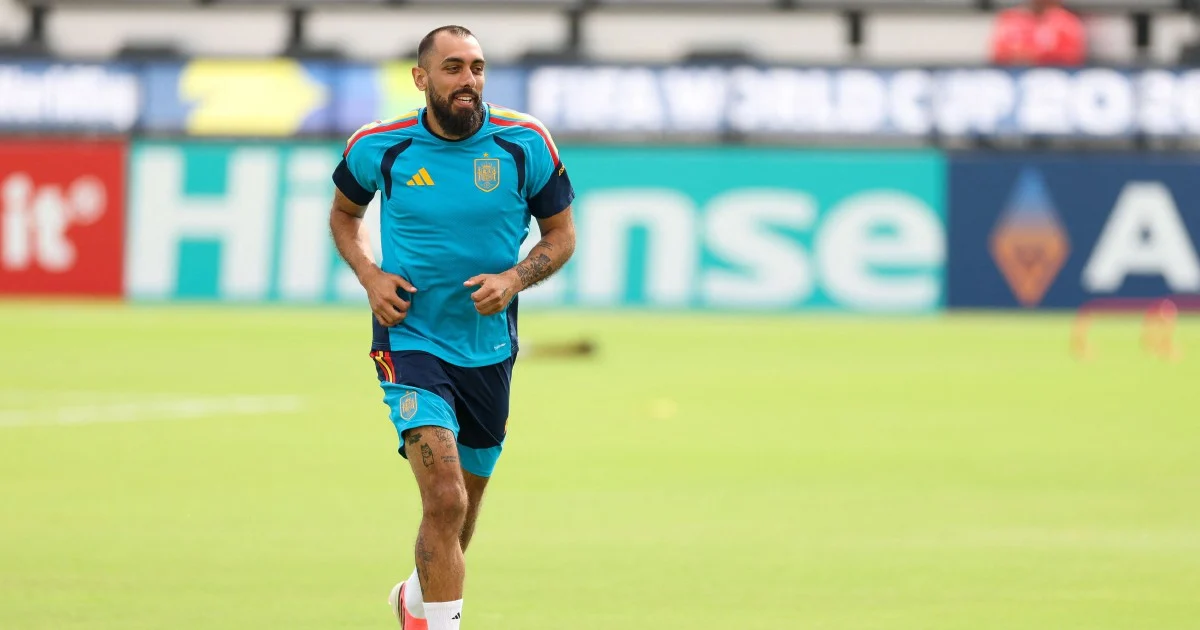
Borja Iglesias, Spain's World Cup striker, has emerged as one of football's most unconventional figures, leveraging his platform as a professional athlete to address pressing social and political issues with a directness that sets him apart from his peers. Based in Chattanooga, Iglesias has cultivated a public presence characterised by authenticity and willingness to engage with controversies that many footballers avoid, from the conflict in Gaza to discrimination within sport itself.
The Spanish forward's approach to self-expression—which includes painting his nails—serves as a visible manifestation of his broader philosophy of rejecting conformity within professional football. This sartorial choice, seemingly minor in isolation, represents a deliberate statement against the rigid conventions that have long governed footballer image and behaviour. By normalising such personal expression, Iglesias challenges unwritten rules that have historically dictated how elite athletes should present themselves to the public.
Iglesias's outspokenness on Gaza has positioned him within a growing subset of athletes who view their prominence as a responsibility to address geopolitical issues. Rather than confining his commentary to football matters, he has articulated positions on Middle Eastern conflict that reflect a willingness to engage with complex international affairs. This approach distinguishes him from the majority of professional players who maintain studied silence on controversial topics, fearing commercial or professional consequences.
His advocacy regarding homophobia within football addresses a persistent structural problem affecting the sport globally. Despite increasing LGBTQ+ representation in society, professional football remains an environment where many players conceal their sexual orientation or gender identity, fearing ostracism or career damage. Iglesias's public stance on this issue contributes to shifting cultural norms, even incrementally, by demonstrating that male athletes can express support for LGBTQ+ rights without compromising their sporting credibility.
The epithet "alien of football" reflects how significantly Iglesias deviates from established norms within professional sport. Rather than accepting this label as criticism, he appears to embrace it as recognition of his refusal to conform. The designation itself indicates the extent to which the football establishment expects players to operate within narrow parameters of acceptable behaviour and discourse. Iglesias's willingness to challenge these boundaries suggests a maturation in athlete activism, moving beyond symbolic gestures toward substantive engagement with real-world injustices.
For Malaysian and Southeast Asian readers, Iglesias's example carries particular relevance given regional complexities around freedom of expression, political discourse, and social progression. His approach demonstrates how individuals within privileged professional positions can utilise their platforms responsibly, a lesson applicable across Southeast Asian contexts where public figures often face pressures to remain apolitical. The question of whether athletes should engage with social and political issues remains contested globally, but Iglesias's career trajectory suggests that audiences increasingly value authenticity over calculated image management.
The Spanish footballer's model of activism differs markedly from corporate-sanctioned charitable initiatives or carefully vetted social media campaigns that characterise much athlete engagement with social causes. Instead, Iglesias demonstrates unmediated, personal conviction in his statements and choices. This authenticity resonates particularly with younger audiences who have grown sceptical of performative activism from public figures, preferring those who risk genuine professional or reputational consequences for their beliefs.
His position within Spanish football, a nation with its own significant social and political divisions, adds another dimension to his public stance. Spain's complex recent history, including ongoing regional autonomy debates and generational divisions over historical memory, creates a context where political speech from public figures carries particular weight. Iglesias's willingness to engage across these fault lines, rather than restricting himself to non-controversial territory, reflects confidence in the legitimacy of his perspectives.
The phenomenon of Iglesias being simultaneously celebrated and criticised for his outspokenness illustrates broader societal tensions regarding celebrity and responsibility. Traditional sports media and conservative segments of football's establishment view such interventions as inappropriate diversions from athletic performance, while younger audiences and progressive communities regard them as essential expressions of moral agency. This generational and ideological divide will likely intensify as younger athletes increasingly view their public roles as encompassing social responsibility.
Looking forward, Iglesias's career will serve as a measuring stick for how football institutions and mainstream sports media adapt to athletes who refuse compartmentalisation between their professional identities and their convictions. His example may embolden other players across Europe and beyond, including within Southeast Asia, to recognise that playing football and engaging with social injustice need not be mutually exclusive endeavours. The question is not whether professional sport should accommodate such voices, but whether institutions can evolve sufficiently to respect athlete agency beyond the pitch.

