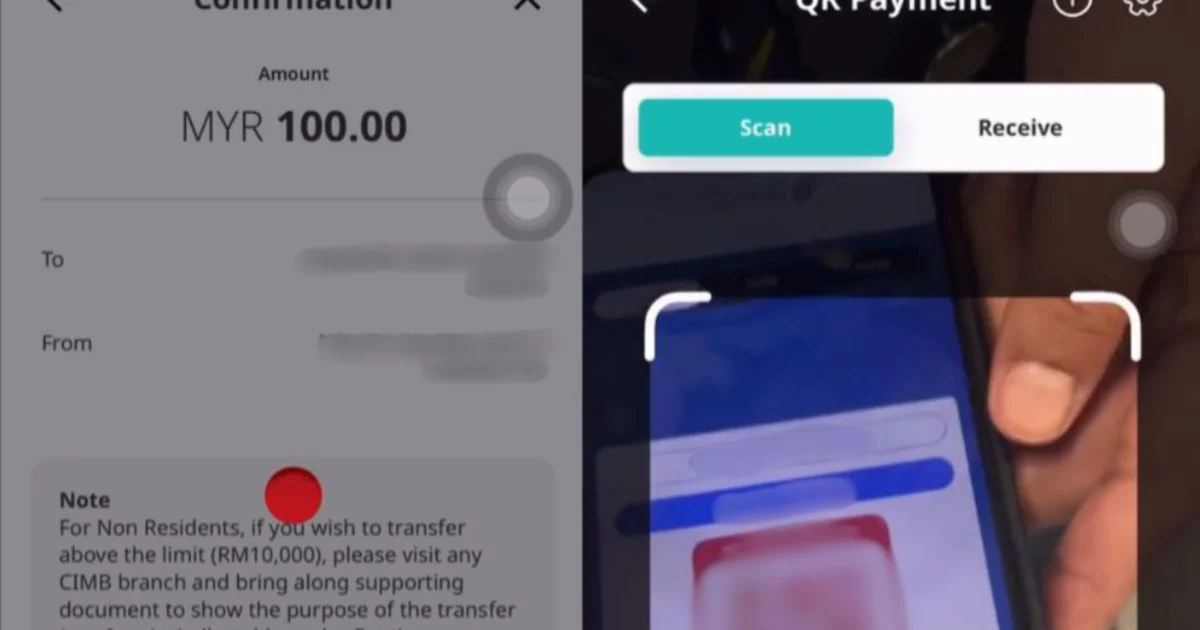
The Malaysian Border Control and Protection Agency (MCBA) has initiated a formal inquiry into allegations that one of its officials at Kuala Lumpur International Airport's Terminal 2 received an unauthorised RM100 cash payment made via personal quick response code. The incident marks another chapter in a series of integrity concerns at Malaysia's primary aviation gateway, where the convergence of high passenger volumes and border procedures creates vulnerabilities to misconduct.
The allegation centres on the use of digital payment infrastructure to circumvent official channels, suggesting a potential shift in how informal payments may be solicited at the airport. Unlike traditional cash transactions that leave no digital trace, QR code payments on personal platforms such as banking apps or e-wallet services create transaction records while maintaining a veneer of legitimacy through civilian payment systems. This method of payment processing raises questions about how effectively the agency's existing monitoring protocols can detect such infractions in an increasingly cashless economy.
Terminal 2 handles a substantial proportion of KLIA's international passenger traffic, processing millions of travellers annually across numerous airlines and destinations. The facility's high throughput combined with the routine interactions between immigration officers and passengers—including visa queries, documentation verification, and baggage inspections—provides numerous opportunities for such transactions to occur undetected. The sheer volume of daily interactions creates an enforcement challenge for supervisory structures attempting to maintain uniform standards of conduct across hundreds of personnel.
QR-based payment methods have proliferated across Malaysia's service sector, offering convenience to consumers while generating a permanent electronic footprint of transactions. However, their accessibility and ease of use also present risks when officers seek informal payments. Unlike traditional cash exchanges, which officers must physically pocket and subsequently conceal, QR transfers can appear as routine peer-to-peer payments in financial records, complicating detection efforts by compliance teams relying on unusual banking activity indicators. This technological adaptation may represent an evolution in how corrupt practices adapt to digital infrastructure.
The MCBA's decision to launch an internal investigation signals an institutional commitment to addressing the allegation, though observers of Malaysian governance have noted that investigations into government conduct do not uniformly result in public disclosure or disciplinary action. The agency's investigative capacity and the transparency with which findings are communicated will substantially influence public confidence in KLIA's integrity management. Previous incidents at the airport have occasionally resulted in lengthy investigation periods with limited public reporting, creating perception gaps between alleged misconduct and apparent consequences.
Integrity concerns at KLIA represent a broader challenge facing Malaysia's travel sector. International visitors and returning nationals form perceptions of the country's governance standards partly through their airport experiences. Allegations of informal payments by border officials can deter tourism investment, complicate business travel, and damage Malaysia's standing among regional competitors offering similar connectivity. Singapore's Changi Airport and Thailand's Suvarnabhumi have successfully cultivated reputations for efficient, transparent operations that attract premium positioning in global aviation markets and boost ancillary spending across tourism ecosystems.
The incident also reflects broader patterns in the public sector regarding digital financial literacy and oversight. As e-wallet adoption expands throughout Malaysia—driven by government promotion of cashless transactions for economic development and pandemic safety—regulatory frameworks governing officer conduct must evolve correspondingly. Current accountability mechanisms designed around cash-based malfeasance may prove inadequate when misconduct migrates to digital platforms that generate their own verification trails while obscuring the intermediary step of physical money handling.
Standardised protocols for investigating allegations involving digital payments will become increasingly crucial as Malaysia's financial ecosystem continues modernisation. The MCBA's investigation methodology and findings could establish precedents for how other government agencies approach similar allegations. Training programmes addressing the ethical dimensions of digital payment systems, combined with enhanced monitoring of officer behaviour and traveller complaint mechanisms, may prove essential to maintaining service standards at Malaysia's largest international airport.
The timing of this investigation occurs against a backdrop of ongoing discussions within Malaysian governance circles regarding anti-corruption strategies in high-volume public interfaces. Airports, seaports, and land border crossings have historically served as focal points for integrity concerns, yet technological advancement has created both new vulnerabilities and new opportunities for oversight. Whether the MCBA's response demonstrates genuine capacity to detect and deter misconduct through emerging payment channels will substantially influence confidence in Malaysia's border management apparatus during a period of recovering international travel.

