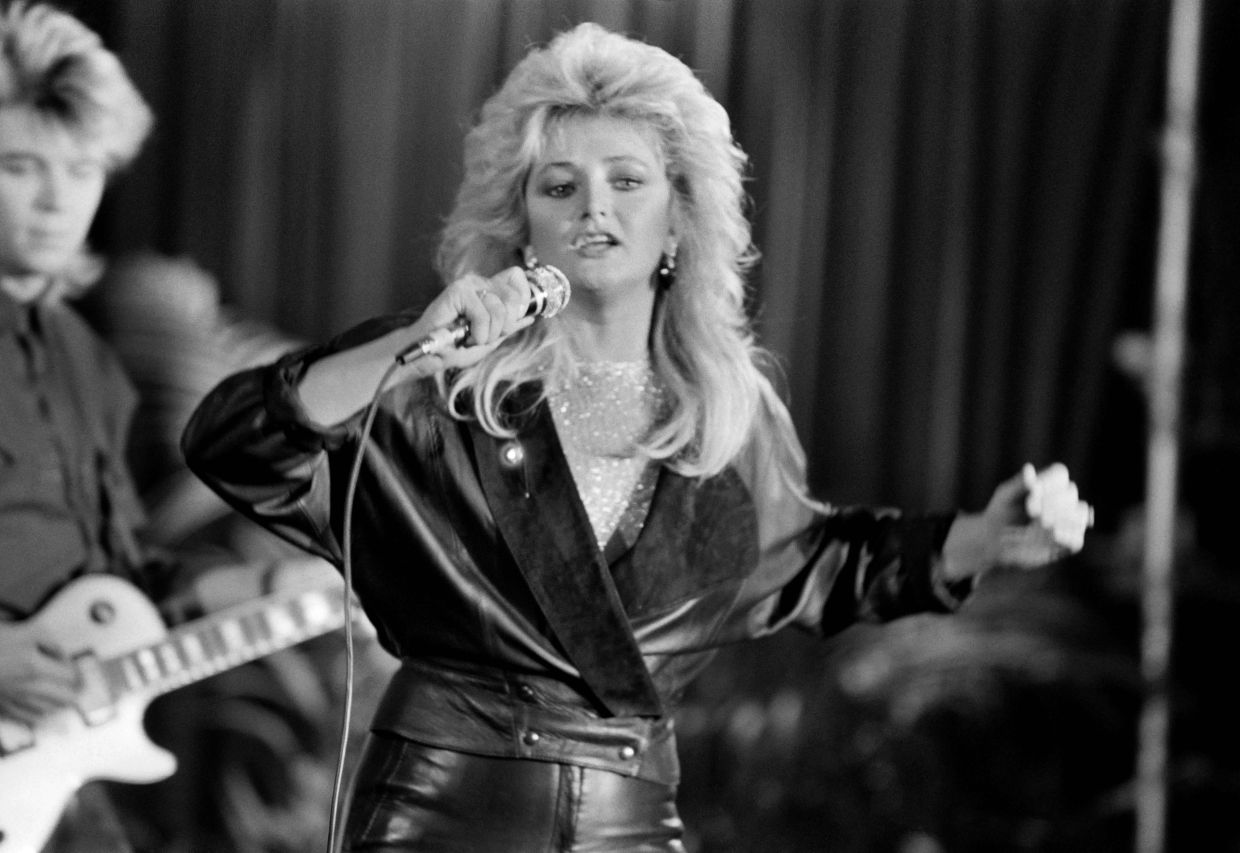
Bonnie Tyler, whose unforgettable baritone delivery transformed "Total Eclipse of the Heart" into one of popular music's most enduring anthems, passed away unexpectedly in a Portuguese hospital where she had been undergoing treatment. The Welsh singer, who was 75, died following complications from the illness that had hospitalised her in May in Faro, where she maintained a residence. Her family announced the loss through her official website, expressing their heartbreak over her sudden death.
The trajectory of Tyler's career was inextricably linked to the extraordinary success of "Total Eclipse of the Heart," the 1983 power ballad that became a four-week chart-topper and accumulated more than one billion streams. The song's cultural staying power proved remarkable—its music video surpassed one billion views, and the track experienced waves of renewed interest during actual solar and lunar eclipse events in 2017 and 2024, introducing the song to audiences who had not yet been born when it originally topped the charts. Music critics and analysts have consistently praised the song's theatrical maximalism; when Stereogum reassessed the track in 2020, the publication characterised it as an "extinction-level event rendered in musical form," highlighting how the composition exemplified pop music at its most bombastic and emotionally overwhelming.
Tyler's achievements extended well beyond commercial success. She earned three Grammy nominations, competed for Britain at the Eurovision Song Contest in 2013—finishing in nineteenth place—and received recognition from the British honours system when Queen Elizabeth II awarded her an MBE in 2023 for her services to music. The longevity of "Total Eclipse of the Heart" as a cultural touchstone became evident through its persistent presence in contemporary media. English singer Nicki French covered the ballad in 1995, Irish group Westlife reimagined it in 2006, and the song appeared in films including "Bandits" (where Cate Blanchett delivered a memorable rendition), "Old School," and the British version of "The X Factor." This sustained presence across decades of popular culture underscored the song's unique resonance with audiences across generations.
Before ascending to international stardom, Tyler emerged from modest working-class origins in Wales. Born Gaynor Hopkins, she grew up as the daughter of a coal miner in public housing in Skewen, near Swansea, sharing her childhood with three sisters and two brothers. Her early passion for music developed through immersion in rock and soul recordings. She particularly admired the Beatles, whose "A Hard Day's Night" became her first album, and at thirteen purchased "Hippy Hippy Shake" by the Swinging Blue Jeans. According to her memoir "Straight From the Heart," she documented her devotion to music by recording episodes of "Top of the Pops" on a reel-to-reel two-track recorder and meticulously transcribing the lyrics of songs she loved. Artists including Janis Joplin, Nina Simone, Tina Turner, Wilson Pickett, and Otis Redding profoundly influenced her artistic sensibilities, and she spent hours practising their songs using a hairbrush as a microphone.
A pivotal moment in her career came in 1976 when Tyler underwent throat surgery to remove nodules, a procedure that permanently altered her vocal characteristics. Rather than diminishing her prospects, the operation established the husky, distinctive vocal quality that would become her signature asset. After performing as Sherene Davis in a soul band, talent scout Roger Bell discovered her and facilitated demo sessions in London. RCA Records eventually signed her, and under her stage name Bonnie Tyler, she released her debut album "The World Starts Tonight" in 1977, which yielded the charting single "Lost in France" and earned her a breakthrough artist nomination at the Brit Awards. Her 1978 hit "It's a Heartache" climbed to number three on the charts, yet her momentum subsequently stalled, prompting her transition to Sony Records.
The creative partnership that transformed her career materialised when Tyler witnessed Meat Loaf perform "Bat Out of Hell" on the BBC and subsequently requested collaboration with Jim Steinman, the song's legendary songwriter and producer. Steinman offered Tyler "Total Eclipse of the Heart," which he had originally written as the opening number for a prospective musical adaptation of "Nosferatu." The famous opening lyric—"Turn around, bright eyes"—actually originated from Steinman's 1969 student musical "The Dream Engine," composed while he attended Amherst College in Massachusetts. Tyler recorded the track for her fifth studio album "Faster Than the Speed of Night," selecting the second take after Steinman's characteristic production methodology of layering multiple elements atop the foundation recording, reminiscent of Phil Spector's famous "wall of sound" approach.
The composition featured contributions from celebrated musicians including Roy Bittan of the E Street Band on piano and Max Weinberg on drums, crafting an arrangement that supported Tyler's powerful vocals throughout the ballad's exploration of romantic loss. The lyrics—"Once upon a time there was light in my life / But now there's only love in the dark"—conveyed melancholic introspection with theatrical grandeur. The accompanying music video, which became iconic during MTV's formative era, was filmed in a Gothic former psychiatric hospital in Surrey, and Tyler recalled that guard dogs refused to enter the basement rooms where patients had previously received electroconvulsive therapy. The visuals incorporated an abundance of theatrical elements: slow-motion sequences of released doves, numerous candles, elaborately choreographed dancers in ninja and greaser costumes, Tyler in exaggerated 1980s shoulder pads, fencers, gymnasts, wind machines, and shirtless performers wearing swimming goggles while being sprayed with water. This aesthetic approach aligned perfectly with the song's operatic emotional intensity.
Despite the Grammy nominations that "Total Eclipse of the Heart" and the album "Faster Than the Speed of Night" generated—though both ultimately lost their respective categories—Tyler established additional commercial footprints through film soundtrack contributions. She provided the vocals for "Holding Out For a Hero" from the 1984 film "Footloose" and sang "Here She Comes" for "Metropolis," also released in 1984. Though she never recaptured the phenomenal commercial heights of her early 1980s output, Tyler sustained her recording career across subsequent decades. Her 2019 album "Between the Earth and the Stars" featured collaborative duets with Rod Stewart, Cliff Richard, and Status Quo guitarist Francis Rossi, demonstrating her continued relevance within the music industry.
Tyler demonstrated artistic versatility by exploring country music production in 2013, recording "Rocks and Honey" in Nashville with contributions from acclaimed country performers including Vince Gill. The album included the collaborative track "What You Need From Me" and the introspective ballad "Believe in Me," written by American songwriter Desmond Child alongside British songwriters Lauren Christy and Christopher Braide. "Believe in Me" received selection as the United Kingdom's Eurovision Song Contest entry for 2013, held in Sweden, where Tyler ultimately finished in nineteenth position. Beyond her recording activities, Tyler maintained an active performance schedule, including a Vatican Christmas concert presentation before Pope Francis in 2019. Her career trajectory demonstrated how a single transformative composition, executed with theatrical conviction and supported by distinctive vocal artistry, could transcend its original era to become a perpetual cultural reference point, resurging whenever celestial events reignited public fascination with its apocalyptic themes.

