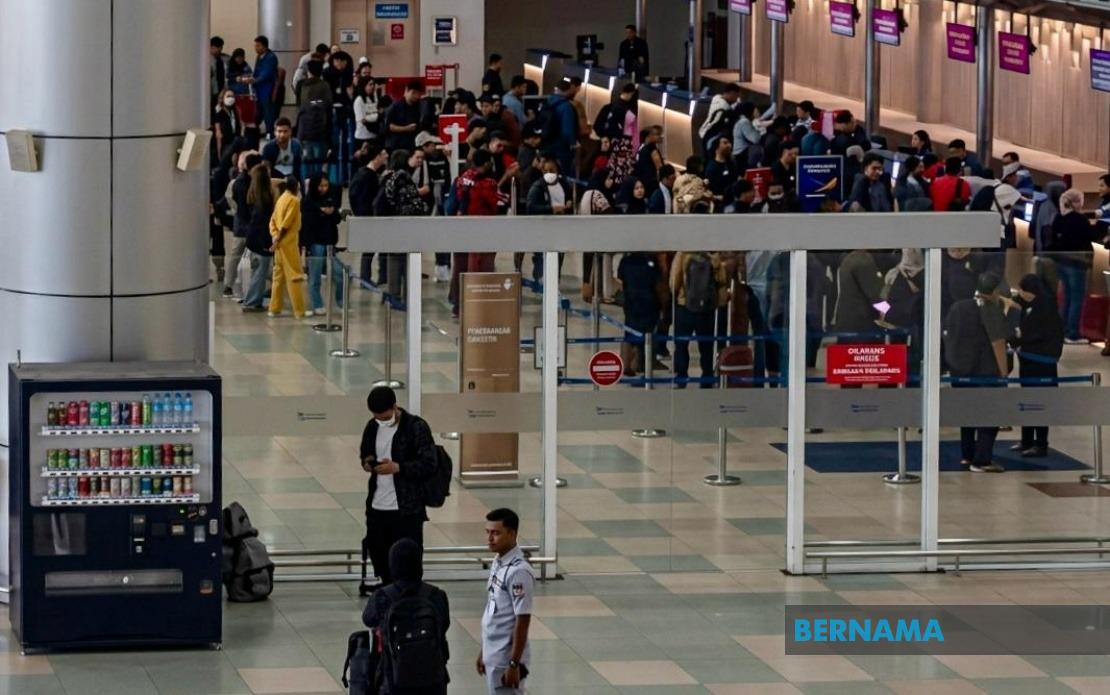
A security alert at Labuan Airport resulted in the closure of its main runway on Wednesday, June 26, disrupting air services to several key Malaysian cities. The Royal Malaysian Air Force (RMAF) issued a Notice to Airmen (NOTAM) at 5pm after the discovery of bombs situated 150 metres from the runway, prompting authorities to halt all flight operations until further clearance could be obtained.
The discovery triggered an immediate joint response from the RMAF and airport management, who initiated comprehensive safety inspections across the affected runway area. This coordinated investigation became the critical prerequisite for any resumption of normal operations, with officials emphasising that the facility would remain closed until all necessary protocols had been completed and formal safety approval issued. The NOTAM, distributed through Malaysia Airport's official channels, effectively grounded the facility and set off a cascade of operational disruptions across the region.
The closure proved immediately consequential for regional connectivity. Flight schedules departing Labuan between 4:05pm and 7:25pm that afternoon suffered direct cancellation, affecting services bound for Kuala Lumpur, Kota Kinabalu, and Miri. Beyond these outright cancellations, numerous other flights faced either diversions to alternative airports or scheduling delays as the aviation network adapted to the sudden loss of the Labuan facility. The ripple effects extended throughout the afternoon and early evening, creating uncertainty across multiple flight corridors in Malaysian Borneo.
Passengers caught in the disruption faced immediate challenges in understanding their options and securing revised travel arrangements. Authorities urged all affected travellers to contact their airlines directly for current information on flight status and rebooking possibilities before heading to the airport. This advisory proved essential given the rapidly evolving situation and the varying responses from different carriers operating from Labuan. Many passengers found themselves stranded with limited real-time information, highlighting the complexity of managing travel disruptions at smaller regional airports.
Labuan Airport serves a critical function within Malaysia's regional aviation infrastructure, connecting the federal territory to major commercial hubs across Sabah and Sarawak. The facility's closure, even temporarily, creates significant operational pressure on the transport network and impacts business connectivity, tourism, and passenger movement across Borneo. Miri and Kota Kinabalu represent major destinations from Labuan, and the interruption of these routes cascaded through the broader transport system as passengers sought alternative routing.
The discovery of ordnance in proximity to an active airport runway underscores the security challenges facing aviation infrastructure in the region. Such incidents demand thorough investigative responses and demonstrate why aviation authorities maintain stringent protocols around explosive devices. The RMAF's rapid mobilisation and the coordination with civilian airport authorities reflected established procedures for managing security threats at Malaysian facilities. However, the public discovery and handling of the situation also raises questions about how such threats are initially detected and reported.
For Malaysia's aviation sector, incidents like this underscore the delicate balance between security imperatives and operational continuity. Labuan Airport, as a smaller regional facility, may face heightened challenges in managing extended closures compared to major international hubs. The brief window of disruption in this instance—occurring during late afternoon and early evening—likely contained the overall impact, but prolonged closures could prove economically significant for the territory and its dependent industries.
The federal territory of Labuan maintains strategic importance as a financial and economic hub, and its accessibility by air remains crucial for business operations and governance. Any extended disruption to air services poses tangible risks to the territory's competitive positioning and investor confidence. Airlines operating from the facility must balance maintaining schedules with accepting the inevitable delays and diversions that security protocols necessitate.
Authorities remained committed to providing updates as the investigation proceeded, though the initial communication indicated that resolution timelines remained uncertain. This opacity, while necessary during active security operations, added to passenger frustration and uncertainty. The situation demonstrated how security incidents at smaller airports can cascade through entire regional networks, affecting not only immediate passengers but also downstream operations at connecting hubs.
The incident serves as a reminder that Malaysia's aviation system, despite its generally strong safety record, remains vulnerable to security threats that can emerge with minimal warning. The coordinated response from multiple agencies indicated established protocols, yet such disruptions highlight the need for continuous refinement of security measures and crisis communication strategies. As regional air travel continues expanding, maintaining both robust security and operational resilience becomes increasingly critical for supporting Malaysia's economic integration and connectivity goals.

