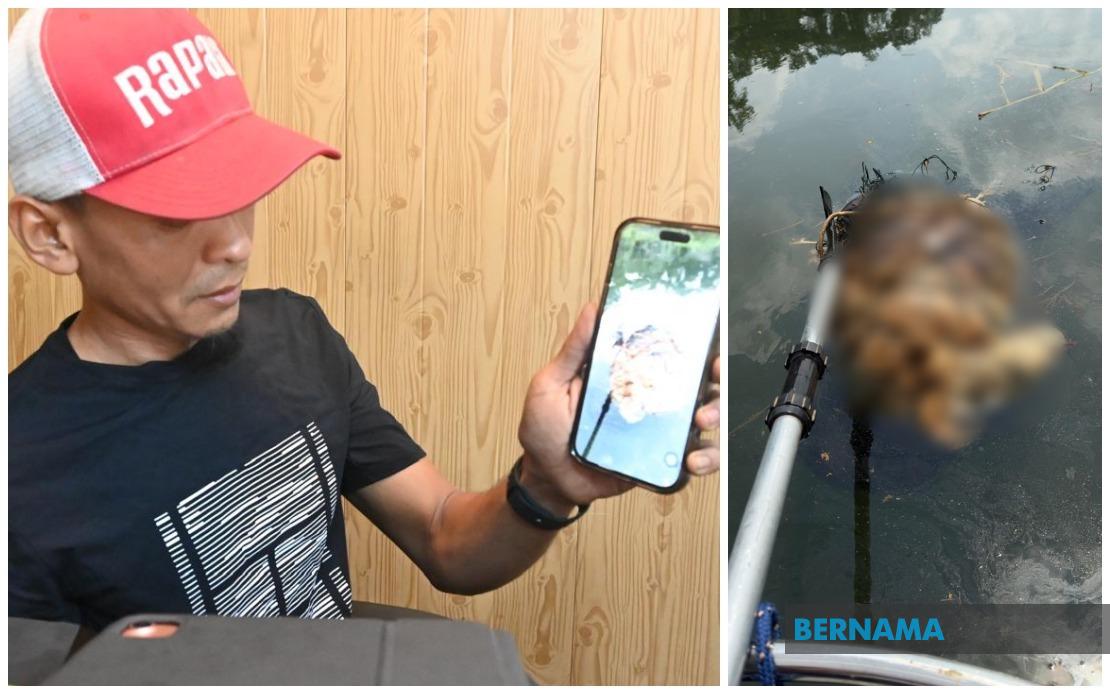
A routine fishing excursion turned into an unexpected discovery when a 33-year-old angler spotted a wrapped body in the waters of Sungai Tanjung Sembrong at Parit Raja, Batu Pahat, Johor yesterday. Muhamad Zul Fikri Borhanodin was attempting to capture social media footage related to his fishing hobby when he encountered the floating object around 11 am, setting off a chain of events that would lead to a major police investigation. What initially appeared to be another animal carcass—a sight the experienced fisherman had grown accustomed to in these waters over more than two decades—soon proved to be something far more serious.
The pivotal moment came when Muhamad Zul Fikri detected a powerful, unpleasant odour emanating from the object, coupled with the distinctive netting that enveloped it. These two details prompted him to investigate more closely rather than dismiss the find as he might have otherwise. Upon spotting what he recognised as a pair of jeans among the wrapping, he immediately understood the gravity of the situation and alerted a friend who was fishing nearby on another boat. The discovery was reported to police at approximately 12.30 pm, triggering a swift response from authorities to secure the scene and begin preliminary investigations.
For Muhamad Zul Fikri, this macabre discovery was not entirely unprecedented. He recounted to Bernama that he had encountered a similar situation years earlier at the same location, when another body recovered from the river turned out to be a victim who had fallen into the water. However, the deliberate wrapping and netting of this latest find suggested circumstances that extended beyond a simple accidental drowning, raising questions about how the body came to be in the river in such a condition.
The police response was immediate and comprehensive. According to Johor deputy police chief DCP Hoo Chuan Huat, three men aged between 26 and 40 were taken into custody around the Batu Pahat area on the same day to aid investigations. The timing of these arrests, coordinated with the body discovery, suggested that police had obtained critical intelligence linking these individuals to the case. The swift apprehension of the suspects indicated that investigators possessed actionable information rather than operating purely on circumstantial grounds.
A significant breakthrough in the investigation came through a missing person report filed by the victim's wife on July 29. The report indicated that her husband had disappeared from Mutiara Rini, Iskandar Puteri, establishing a clear timeline for the disappearance. This connection between the missing person report and the body recovered from Sungai Tanjung Sembrong provided police with crucial leads and helped confirm the identity of the deceased, though official confirmation awaited formal identification procedures.
The incident highlights the vulnerability of waterways in the Klang Valley and Johor regions to becoming disposal sites for criminal activities. Sungai Tanjung Sembrong, though appearing serene to recreational users, has now been marked by tragedy on at least two separate occasions, serving as a grim reminder that criminal elements continue to view such remote or semi-remote locations as convenient places to conceal evidence. The river's accessibility combined with its relatively low surveillance makes it an unfortunate target for such activities.
For the local community and regular users of the waterway like Muhamad Zul Fikri, the discovery underscores the unpredictability of their environment. What should have been a straightforward day of content creation and fishing became an unwitting role in a criminal investigation. The incident also raises broader questions about public safety awareness and the reporting procedures that citizens should follow when encountering suspicious objects in public spaces.
The wrapping of the body in netting suggests a deliberate attempt at concealment, indicating premeditation rather than a crime of passion. The involvement of multiple suspects—three men arrested to date—points to a potential collaborative effort, though the exact nature of their involvement remains subject to ongoing investigations. Police will be examining whether the netting and wrapping materials can be traced to any of the suspects, providing forensic evidence in the case.
As investigations progress, the case serves as a reminder of the effectiveness of public reporting in solving serious crimes. The fisherman's willingness to investigate further and report his findings to authorities rather than dismiss the discovery set in motion a series of events that may ultimately bring the perpetrators to justice. For Malaysian authorities, the incident underscores the importance of maintaining strong connections with communities and encouraging public vigilance in reporting suspicious activities or discoveries.
The implications for Batu Pahat and the broader Iskandar Puteri region remain significant. The discovery indicates that organised criminal activity continues to affect these areas, with violent crimes potentially involving multiple perpetrators. The police's swift action in apprehending three suspects within hours of the discovery demonstrates institutional capacity to respond to serious incidents, though the actual outcomes of investigations and potential prosecutions remain pending further evidence gathering and interrogation.

