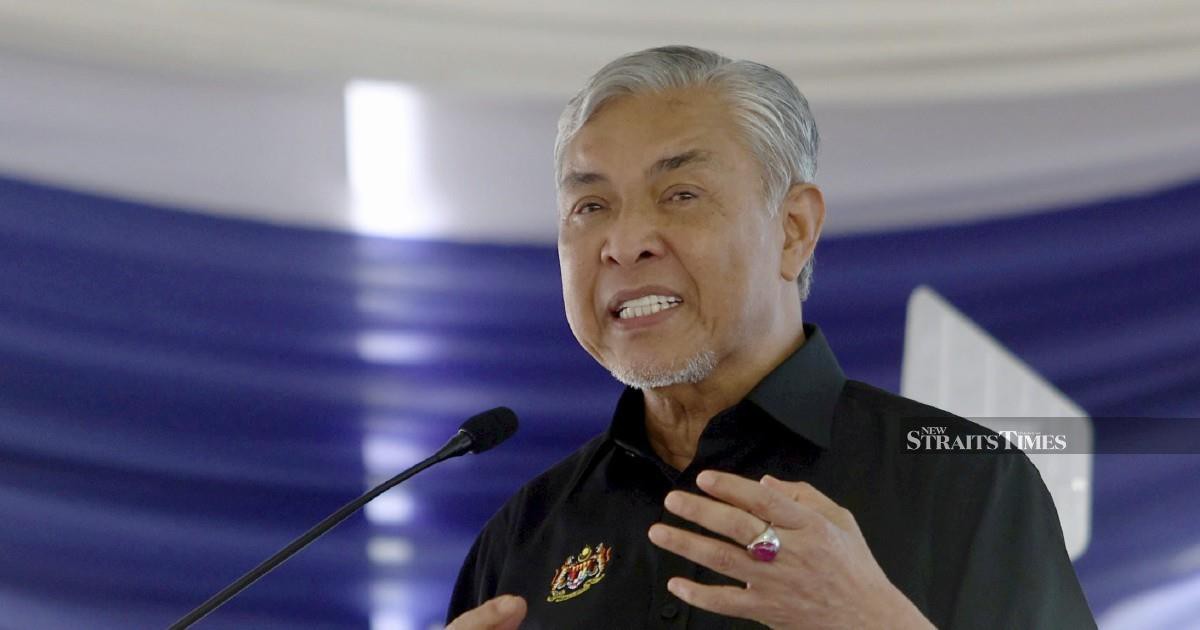
Barisan Nasional's manifesto for the forthcoming Negri Sembilan election represents a grounded approach to economic and social recovery, according to the coalition's chairman Datuk Seri Dr Ahmad Zahid Hamidi, who unveiled the document in Kuala Pilah. The manifesto frames BN's platform around finishing initiatives that stalled after the coalition's loss of state government, presenting voters with continuity and completion rather than entirely new promises.
The emphasis on unfinished business reflects a broader political strategy among established parties seeking to regain ground in peninsular state competitions. By positioning itself as the custodian of interrupted development, BN attempts to distinguish its offering from incumbent administrations and opposition alternatives. This approach particularly resonates in constituencies where infrastructure projects, social programmes, or economic initiatives had visible momentum before political transitions.
Negri Sembilan's political landscape has undergone significant shifts in recent years, with power dynamics influencing resource allocation and project prioritization. The manifesto's focus on restoration of stalled programmes suggests an acknowledgement that voters may harbour frustration over delayed developments. In state politics across Malaysia, such delays often become focal points for electoral messaging, especially when communities can directly observe incomplete schools, health facilities, or commercial zones.
Zahid's characterization of the manifesto as both practical and realistic carries strategic weight. The terminology signals BN's intent to distance itself from what might be perceived as unrealistic campaign promises, instead appealing to voters through evidence-based planning and demonstrated governance experience. This positioning becomes particularly relevant in Negri Sembilan, where voters have demonstrated capacity to shift allegiances based on delivery records rather than party loyalty alone.
The coalition's focus on revival programming touches on persistent concerns across Malaysia's state governments regarding fiscal capacity and implementation timelines. Projects initiated under previous administrations often require continuity in funding, planning personnel, and stakeholder coordination. When political transitions occur, institutional knowledge gaps and competing priorities can derail momentum, creating genuine bottlenecks that extend well beyond campaign cycles.
Unfinished development work carries both practical and symbolic importance in Malaysian electoral contests. Practically, incomplete infrastructure affects daily quality of life and business operations. Symbolically, stalled projects become visible reminders of governance discontinuity, making them powerful campaign tools. The manifesto's emphasis on completion therefore addresses both dimensions simultaneously, offering concrete improvements while implicitly critiquing the current administration's record.
For Negri Sembilan specifically, such messaging likely references initiatives spanning economic diversification, rural connectivity, and urban development. The state has historically pursued balanced growth strategies across its manufacturing, agriculture, and tourism sectors. Any manifesto addressing revival would reasonably encompass these domains, though specific details remain subject to BN's detailed policy rollout during the campaign period.
The timing of manifesto release reflects electoral cycles in Malaysian politics, where state contests typically follow national rhythms. Negri Sembilan's political calendar intersects with broader peninsular dynamics, making state-level campaigns increasingly important for national coalition positioning. Strong or weak performances in individual states influence party leadership perceptions and parliamentary arithmetic, extending consequences far beyond state legislative seats.
BN's strategy of emphasizing practical completion over grand transformation speaks to voter sophistication in contemporary Malaysian politics. Decades of electoral competition have produced electorates increasingly sceptical of revolutionary promises. Instead, constituencies respond to credible narratives supported by track records and feasible implementation timelines. This shift rewards political parties capable of articulate pragmatism over inspirational rhetoric disconnected from resource realities.
The coalition's appeal also carries implications for inter-party dynamics within BN itself. Component parties often negotiate seat allocations and policy priorities through manifesto development. A manifesto framed around practical revival requires consensus on which programmes represent genuine priorities versus secondary commitments. Such negotiations shape not only campaign messaging but also post-election governance arrangements should BN succeed in reclaiming state power.
Regionally, Negri Sembilan's political trajectory influences broader Southeast Asian perceptions of Malaysian governance stability. International investors and regional observers monitor state-level elections for insights into institutional strength and policy consistency. Electoral outcomes and campaign quality therefore carry consequences extending beyond domestic politics, affecting investor confidence and regional assessment of Malaysian political maturity.
For voters in Negri Sembilan, the practical assessment ultimately hinges on whether promised completions align with genuine capability and available resources. Manifesto credibility depends not merely on claims of practicality but on demonstrated mechanisms for achieving stated objectives. The BN campaign period will test whether voters accept the coalition's framing of revival as achievable or demand more specific commitment details regarding timeline, funding, and accountability measures.

