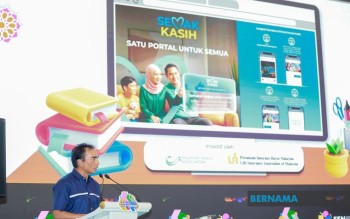
Bank Negara Malaysia has stepped in to address a persistent problem affecting Malaysian families: tens of thousands of insurance policies and takaful certificates remain unclaimed because beneficiaries simply do not know they exist. The central bank unveiled the 'Semak Kasih' portal at the Terengganu Financial Literacy Carnival, creating a digital gateway that allows relatives to check whether their loved ones left behind protective coverage. Deputy Governor Adnan Zaylani Mohamad Zahid explained that the initiative targets a critical gap in the nation's financial protection landscape, where families miss out on critical support during their most vulnerable moments.
The scale of the problem is substantial. Industry estimates from the Malaysian Takaful Association and Life Insurance Association of Malaysia suggest that approximately 50,000 policies involving death benefits remain unclaimed by rightful beneficiaries. These unclaimed benefits represent genuine financial resources that could ease the burden on grieving families struggling with medical bills, housing costs, or emergency expenses. The funds exist but remain inaccessible simply because the beneficiaries lack awareness or a straightforward mechanism to locate them. This represents not merely an administrative oversight but a significant failure in the financial protection ecosystem that the portal aims to rectify.
The digital platform addresses a real challenge that Malaysia's insurance and takaful sectors have grappled with for years. Both industries have attempted various outreach approaches, including sending formal notification letters and deploying agents to contact potential beneficiaries directly. However, these efforts have encountered limitations in identifying and reaching all eligible claimants, particularly in cases where beneficiaries have relocated, contact details have changed, or family communication about financial arrangements has been inadequate. The 'Semak Kasih' portal centralises these verification functions, eliminating the need for families to contact multiple companies individually or wonder whether coverage ever existed.
Deputy Governor Adnan Zaylani emphasised that robust insurance and takaful protection forms a fundamental pillar of household financial security, particularly for Malaysian families navigating rising living costs and economic uncertainty. Insurance and takaful products serve critical functions beyond traditional understanding—they provide essential safeguards during catastrophic events such as serious illness, workplace accidents, or property destruction by fire. For families depending on a single income earner, these financial shields can mean the difference between maintaining stability and falling into crisis. The challenge lies not in the availability of protection mechanisms but in ensuring families understand what coverage exists and can efficiently access benefits when needed.
The portal's launch arrives amid broader central bank efforts to strengthen financial literacy across Malaysia. BNM recognises that financial protection cannot exist in isolation from financial education and prudent decision-making. Adnan Zaylani cautioned that while digitalisation has expanded economic opportunities, it has simultaneously created new vulnerabilities. Research presented at the carnival revealed that approximately 37 per cent of Malaysians engage in impulsive online purchases, whilst 26 per cent carry unsustainable debt burdens. These patterns suggest that Malaysians require not only better financial products but also better financial habits and decision-making frameworks.
Addressing this educational imperative, BNM has implemented several complementary initiatives extending beyond the insurance sector. The Financial Education Forum initiative aims to democratise financial knowledge across all demographic segments, including persons with disabilities who have historically faced barriers to accessing mainstream financial services. A new comprehensive website serving as a one-stop financial education centre will provide accessible resources tailored to diverse learning needs. The central bank recognises that financial inclusion demands more than product availability—it requires education pathways tailored to different communities and abilities.
Small and medium enterprises remain a particular focus of BNM's support architecture, reflecting their critical role in Malaysia's economic resilience. The central bank continues expanding financing schemes accessible to micro, small, and medium enterprises, including microfinancing up to RM100,000 requiring no guarantor or collateral requirements. Additionally, BNM allocated RM5 billion under the SME Stabilisation Relief Facility to assist businesses affected by regional conflicts, making available working capital financing of up to RM750,000. These initiatives acknowledge that financial protection and opportunity-building must extend beyond individual households to the entrepreneurial sector sustaining employment and economic growth.
The iTekad initiative demonstrates measurable impact on household incomes and living standards. More than 14,000 participants nationwide have benefited from this programme, including approximately 600 in Terengganu, through targeted interventions raising earning capacity. This targeted approach to financial empowerment complements broader literacy initiatives by combining education with tangible economic opportunity. When families see direct income improvement from financial management skills, financial discipline becomes not an abstract virtue but a practical pathway to improved circumstances.
Young Malaysians represent a strategic focus for long-term financial culture change. BNM has championed financial education from childhood through initiatives including the MyDuitStory competition and the FEN Proaktif 2.0 Programme, developed in partnership with Universiti Malaysia Terengganu. These programmes position financial management as a foundational life skill essential for navigating modern economic participation. The logic underlying this approach recognises that saving and investment discipline sustained from youth generates compounding returns over decades, fundamentally reshaping lifetime financial security and intergenerational wealth patterns.
Deputy Governor Adnan Zaylani articulated a crucial philosophical point underpinning BNM's initiatives: whilst external economic conditions—global fluctuations, technological disruption, inflationary pressures—remain beyond individual control, the financial decisions made daily by Malaysians remain entirely within their agency. This framing shifts emphasis from passive acceptance of economic circumstances toward active financial stewardship. The 'Semak Kasih' portal exemplifies this philosophy by transforming a previously opaque situation where families remained unaware of available benefits into a transparent system where information becomes readily accessible. Similarly, financial education initiatives empower Malaysians to make deliberate choices about saving, spending, and protection rather than drifting passively through consumption patterns.
The portal's introduction at a regional financial literacy carnival in Terengganu underscores BNM's commitment to geographically distributed financial empowerment rather than concentrating initiatives in major urban centres. Regional implementation ensures that beneficiaries across Malaysia gain equitable access to mechanisms for claiming legitimate benefits. This geographic attention reflects recognition that financial vulnerability and information asymmetries affect Malaysians throughout the country, not merely in Kuala Lumpur or other major cities where institutional density traditionally concentrates financial services.
For Malaysian families, the practical implications are immediate and significant. Those suspecting that deceased relatives may have left insurance or takaful coverage can now verify this through a single accessible platform rather than contacting companies individually or relying on sporadic company outreach efforts. The process shifts from reactive notification to proactive family-initiated verification. This structural change should substantially reduce the currently estimated 50,000 unclaimed policies, returning rightful benefits to families that need them. The 'Semak Kasih' portal represents not revolutionary innovation but rather overdue practical implementation of technological capability to address a longstanding problem affecting household financial security across Malaysia.

