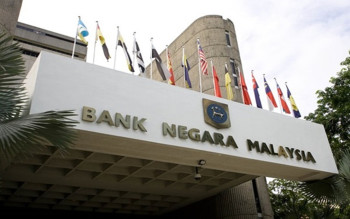
Bank Negara Malaysia formally cautioned Tabung Haji on five separate occasions regarding the divergence between the Islamic pilgrimage savings fund's assets and liabilities, though these warnings went unheeded by institutional leadership, Minister in the Prime Minister's Department (Religious Affairs) Dr Zulkifli Hasan disclosed during parliamentary proceedings. The central bank's repeated alerts, directed at both the TH chairman and the Minister of Religious Affairs, underscored growing concerns that the fund's deteriorating financial position constituted a potential systemic risk to Malaysia's broader financial stability. Speaking during a ministerial briefing on the Royal Commission of Inquiry report into TH's operations, Zulkifli emphasised that the warnings explicitly instructed management to remediate the situation without delay to prevent continued breaches of financial regulations.
The repeated failure to act on BNM's cautionary communications was followed by additional scrutiny from the Auditor-General, who flagged concerns in the 2017 Financial Statements Report. Specifically, the Auditor-General issued an Emphasis of Matter highlighting that TH had altered its impairment policy twice within the same calendar year—adjustments that had the effect of presenting inflated profit figures for 2017. This pattern of oversight failures reflected systemic weaknesses in the institution's governance and internal controls. The accumulating warnings from Malaysia's premier financial regulator suggested that internal management structures had become inadequate for overseeing an organisation managing the savings of millions of Malaysian Muslims preparing for the hajj pilgrimage.
Following the combined pressure from regulatory authorities, TH's newly constituted board took decisive action in 2018 by engaging PricewaterhouseCoopers, one of the world's largest professional services firms, to conduct a comprehensive reassessment of the institution's financial position and operational performance. The international audit firm was tasked with evaluating TH's financial standing against globally recognised accounting standards and best practices. This external review represented a watershed moment in acknowledging that existing internal audit mechanisms had proven insufficient and that independent scrutiny was necessary to restore credibility and transparency to the fund's operations.
The PwC investigation exposed the scale of financial distress at TH with startling clarity. The audit revealed that of the RM4.6 billion in total assets on TH's books, merely RM556 million—roughly 12 per cent—had undergone valuation by qualified professional valuers. The remainder of the asset base had been recorded without proper independent assessment, indicating that historical financial statements had substantially overstated the fund's true economic position. This discovery confirmed that financial manipulation had been embedded into the institution's accounting practices, raising profound questions about the adequacy of TH's internal controls, the competence of its finance team, and the effectiveness of its board oversight during the preceding years.
The institutional failures at Tabung Haji became the subject of a comprehensive Royal Commission of Inquiry, which was formally established in 2021 following sustained public concern over the fund's financial deterioration. The government appointed RCI members on 20 January 2022, tasking the commission with investigating the root causes of TH's problems and identifying systemic weaknesses. The resulting 211-page report, made public on 29 July, provided a detailed examination of governance lapses and operational shortcomings spanning the 2014-2020 period—a critical six-year window during which the institution's financial health had visibly eroded.
The RCI's findings encompassed extensive documentation of mismanagement, inadequate oversight, and control failures across multiple facets of TH's operations. Beyond identifying specific instances of financial irregularity, the inquiry highlighted broader structural vulnerabilities in how the fund was governed and managed. The commission's work represented an effort to move beyond assigning individual blame and instead to understand the systemic conditions that had allowed such substantial breaches to accumulate without adequate corrective action. For Malaysian policymakers and the Muslim community dependent on TH's services, the report provided an unflinching assessment of what had gone wrong.
Among the RCI's most significant outputs were 25 specific recommendations aimed at preventing future lapses and strengthening TH's institutional resilience. As of 30 July, approximately 75 per cent of these recommendations had already been implemented by TH management, suggesting that the fund had begun a genuine transformation process. This implementation rate indicated that the new leadership under the reconstituted board had taken the commission's findings seriously and was pursuing genuine reform rather than defensive posturing. The remaining recommendations yet to be fully executed would require ongoing attention and monitoring to ensure that TH emerged from its crisis as a fundamentally reformed institution.
The formal presentation of the RCI report to the Yang di-Pertuan Agong on 30 August 2022 marked an important procedural milestone, signalling the completion of the inquiry and the transition toward implementation of its recommendations. The parliamentary briefing in which Zulkifli detailed the sequence of regulatory warnings and institutional failures served to place on public record the full timeline of how TH's problems had developed and why existing oversight mechanisms had proven inadequate. By articulating that BNM had issued multiple warnings that were deliberately ignored, the minister underscored the gravity of the governance failures that had necessitated the RCI inquiry.
For Malaysia's estimated 10 million TH depositors—predominantly working-class and lower-middle-class Malaysians saving for hajj pilgrimage and their families' futures—the revelations about financial manipulation and asset overvaluation carried direct implications for the security of their savings. The discovery that only a small fraction of recorded assets had undergone professional valuation raised urgent questions about the true value of individual deposits and the adequacy of TH's capital position to honour withdrawal obligations. The reform programme now underway, informed by the RCI's recommendations and implemented under new leadership, represents an attempt to rebuild institutional trustworthiness and restore confidence among this essential constituency.
The TH situation also carries broader implications for financial regulation and governance across Southeast Asia. Malaysia's experience demonstrates both the dangers of inadequate supervisory follow-through when central banks issue warnings and the importance of independent audits in exposing financial irregularities that internal controls have failed to prevent. The case underscores that even institutions with mandates rooted in religious duty and social obligation require robust governance frameworks, competitive compensation for skilled management, and genuine independence for audit and oversight functions. The implementation of the RCI's 25 recommendations will be scrutinised closely by financial regulators and policymakers throughout the region as a test case for whether major financial institutions can genuinely reform following exposure of substantial governance failures.

