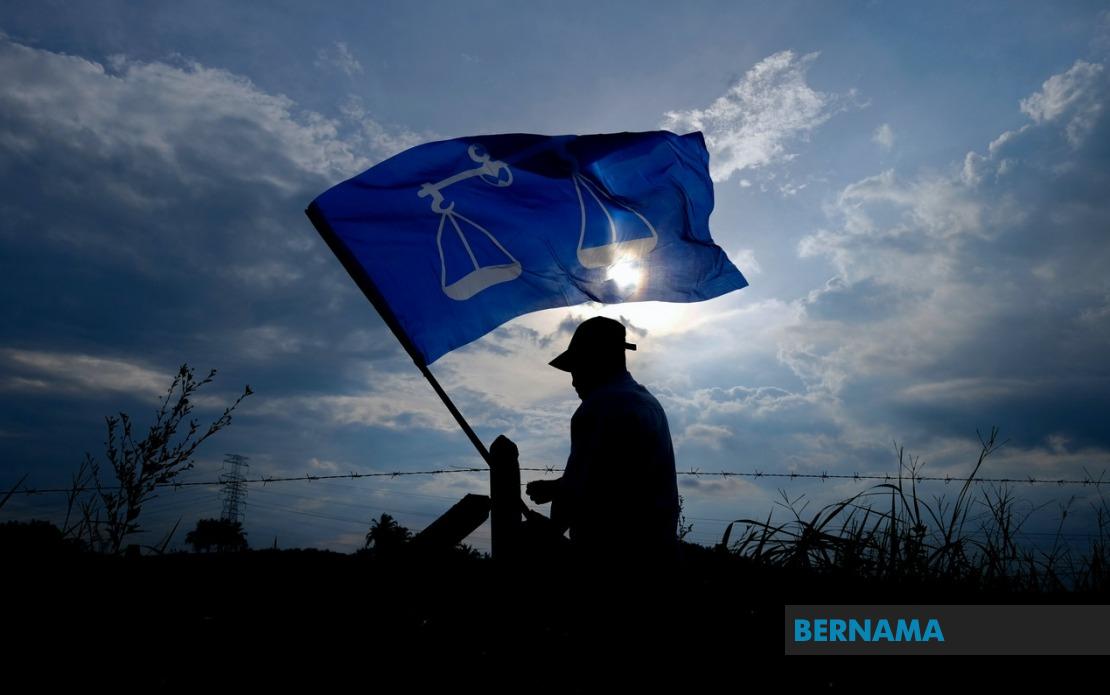
Barisan Nasional's approach to the forthcoming Negeri Sembilan state election will be shaped by the coalition's careful analysis of local demographic shifts and historical voting patterns, according to BN chairman Datuk Seri Dr Ahmad Zahid Hamidi. The Deputy Prime Minister underscored that a one-size-fits-all strategy proves insufficient when competing across Malaysia's diverse state landscapes, each presenting its own political terrain and voter composition. This acknowledgment reflects a maturing recognition within BN that electoral success increasingly depends on granular understanding of specific constituencies rather than reliance on traditional nationwide messaging.
Ahmad Zahid emphasised that Negeri Sembilan presents particular challenges distinct from neighbouring states, requiring BN to recalibrate both its candidate selection methodology and campaign messaging. The state's relatively compact size, combined with its specific population demographics, means that coalition strategists must identify candidates capable of resonating with local voter sensibilities while maintaining party discipline and representing BN's broader policy agenda. The coalition's decision to undertake this customised approach signals acknowledgment that the electoral landscape in Malaysia continues to fragment along multiple lines—economic interest, generational identity, and locality-specific concerns—rather than operating as a unified bloc responsive to central direction.
The timing of candidate announcement, scheduled for the week following Ahmad Zahid's statement, creates urgency around internal BN negotiations. These discussions likely involve not only UMNO but also coalition partners MIC and MCA, each of which traditionally claims certain constituencies within the state. The negotiation process itself can become contentious, as parties within the coalition vie for prominent positions and winnable seats, testing the cohesion that BN has sought to rebuild following the coalition's recovery in Johor earlier in July. Negeri Sembilan therefore represents an important early test of whether BN's recent electoral momentum can be sustained and translated into success in different electoral contexts.
Ahmad Zahid's recent invocation of BN's Johor victory—achieved through what he characterised as "mental resilience and emotional creativity"—provides context for the coalition's current strategic thinking. The Johor result, delivered the previous Saturday, appeared to validate the coalition's renewed organisational efforts and messaging discipline. However, Ahmad Zahid's choice of language around "emotional creativity" suggests BN strategists recognise that winning campaigns increasingly require engagement beyond traditional party machinery and policy presentation. The coalition appears to be explicitly incorporating campaign psychology and voter engagement methodology into its electoral toolkit, moving beyond the perception that BN campaigns rest primarily on incumbent advantages and machinery.
Discussions between BN and PAS regarding the Negeri Sembilan contest introduce another layer of strategic complexity. Ahmad Zahid made clear that no formal agreement has been concluded between the two parties, noting that conversations represent understandings rather than binding commitments. This distinction carries significance: it allows both parties flexibility to adjust their positions if political circumstances shift, while simultaneously maintaining public ambiguity about which arrangement might ultimately be formalised. The proposed chief minister position for a PAS nominee, mentioned in passing, indicates that negotiations have advanced sufficiently to contemplate specific ministerial allocations, yet remain preliminary enough that parties can still retreat from announced positions without severe political damage.
The cautious framing of PAS-BN cooperation reflects deeper complexities within Malaysian coalition politics. Cooperation between UMNO and PAS remains ideologically complicated, as the two parties compete for Malay-Muslim electoral support in many constituencies. Nevertheless, pragmatic alliances have proven necessary at both federal and state levels in recent years. The Negeri Sembilan context offers a relatively contained environment in which such cooperation might be tested, with lower overall stakes than negotiations occurring simultaneously at the federal level within the Unity Government framework. Success or failure in Negeri Sembilan could therefore influence confidence in BN-PAS cooperation models being contemplated elsewhere.
Ahmad Zahid's remarks regarding Housing and Local Government Minister Nga Kor Ming reflect ongoing tensions within the Unity Government coalition at the federal level. The minister's position as DAP deputy chairman and recipient of calls for resignation exemplifies the delicate balance required when coalition partners with significant ideological differences must govern jointly. Ahmad Zahid's defence of Nga Kor Ming—characterised by personal warmth and emphasis on professional cooperation—suggests recognition that the Unity Government's stability depends upon restraint by member parties and resistance to public recrimination. His observation that such calls would be appropriate in opposition but problematic within government articulates a clear boundary between acceptable coalition conduct and destabilising behaviour.
The distinction Ahmad Zahid drew between formal agreements and understandings carries particular relevance for Malaysian political observers, as it illuminates how coalition negotiations actually function at operational levels. Public announcements often present coalitions as more settled and harmonious than they actually are, while private understandings remain fluid and subject to renegotiation as circumstances evolve. By explicitly distinguishing between the two categories, Ahmad Zahid was simultaneously managing expectations—preparing stakeholders for possible adjustments—while maintaining negotiating flexibility. This approach reflects sophistication in coalition management, acknowledging that premature public commitment can complicate rather than facilitate eventual settlements.
For Malaysian and regional observers, the Negeri Sembilan election represents a bellwether for BN's capacity to maintain electoral momentum beyond the significant Johor victory. The state's demographics and voting patterns will test whether BN's renewed organisational discipline and strategic focus can translate into consistent success across different electoral environments. Success would suggest that the coalition has genuinely repositioned itself as a serious contender capable of recapturing state governments previously lost to opposition coalitions. Conversely, a disappointing result in Negeri Sembilan might indicate that the Johor success represented either an anomaly or an outcome driven primarily by Johor-specific factors rather than nationally applicable lessons.
The broader implications extend to federal coalition stability as well. BN's success at state level strengthens the bargaining position of UMNO and its coalition partners within federal arrangements, particularly within the Unity Government. Electoral victories accumulate political capital that can be leveraged in negotiations over ministerial positions, policy priorities, and resource allocation. The timing of Negeri Sembilan's state election within the broader electoral calendar—following recent Johor polling and anticipating potential federal elections in coming years—positions this contest as part of an extended campaign season where parties test messaging, refine candidate selection methodologies, and build momentum toward larger contests.
Ahmad Zahid's emphasis on tailoring BN's approach to Negeri Sembilan's specific characteristics also signals evolution in how Malaysian political parties conceptualise campaign strategy. Rather than implementing centrally designed templates across all states, the coalition is explicitly acknowledging that electoral politics increasingly require local adaptation. This approach promises greater sophistication in candidate selection and messaging, yet potentially complicates party discipline if state and federal leadership develop divergent priorities. The challenge for BN will be maintaining coherent national positioning while simultaneously adapting to diverse local contexts—a balancing act that requires both central coordination and grassroots flexibility.

