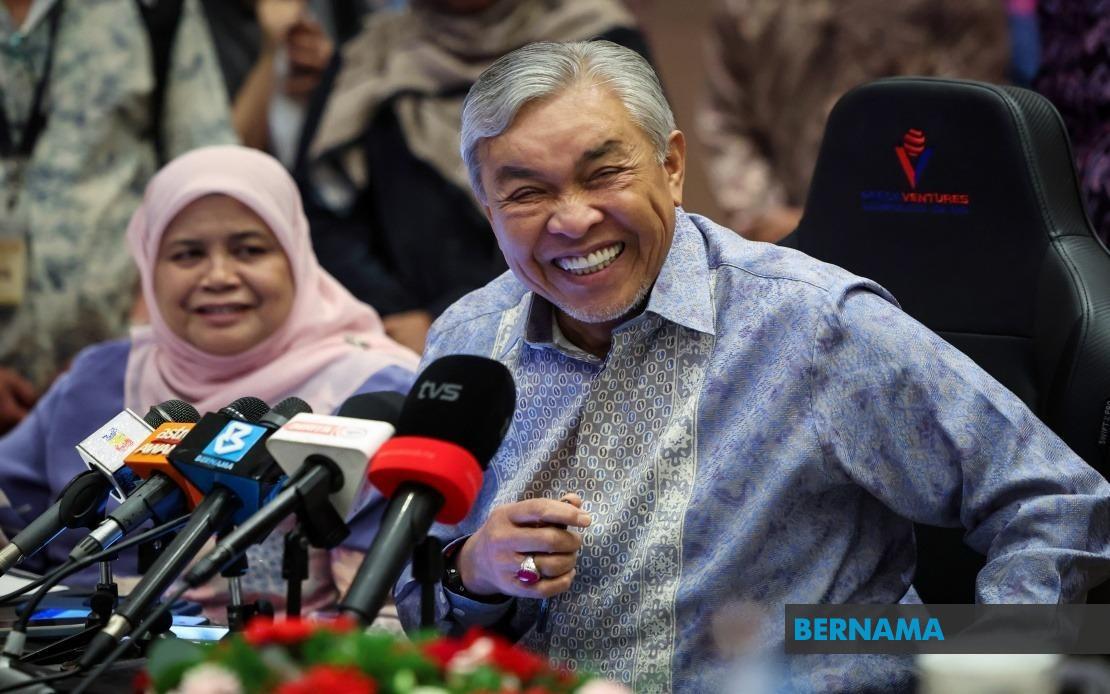
The Barisan Nasional coalition has moved to quash persistent political rumours by publicly recommitting itself to the Unity Government framework, with Deputy Prime Minister Datuk Seri Dr Ahmad Zahid Hamidi issuing an emphatic restatement of the bloc's stability pledge during remarks made in George Town on July 23. Speaking after chairing a coordination meeting on rural development matters, Ahmad Zahid, who also serves as UMNO president, used characteristically colourful language to dismiss speculation about potential destabilization attempts, flatly rejecting references to any "Bangkok Move" or "Dubai Move"—coded political terminology for covert maneuvres to topple administrations.
Ahmad Zahid's emphasis on continuity stems directly from the constitutional framework established following the 2022 General Election, when the Yang di-Pertuan Agong decreed the formation of the Unity Government to provide Malaysia with political stability during a period of fractured parliamentary mathematics. The BN's formal entry into this multi-coalition arrangement was framed as a patriotic response to the Agong's directive, and Ahmad Zahid underscored that this commitment has remained resolute since that moment. By invoking the royal decree explicitly, he grounded the coalition's stance in constitutional legitimacy rather than mere political pragmatism, a rhetorical choice designed to elevate the discussion beyond ordinary partisan calculations.
For Malaysian readers accustomed to volatile coalition politics, Ahmad Zahid's firm language carries particular significance given historical precedents of sudden parliamentary realignments. The explicit dismissal of rumours reflects the persistent whisper campaigns that have dogged Malaysian politics since the Unity Government's inception, with various factions periodically suggesting that BN members harboured doubts about the arrangement with Pakatan Harapan and PKR. By framing the commitment as absolute and placing a figurative full stop at the end of his declaration, Ahmad Zahid attempted to inoculate the government against further destabilization narratives that might erode investor confidence or parliamentary cohesion during the government's mid-term period.
The timing of these remarks proves analytically interesting, emerging as they did during the Negeri Sembilan state election campaign—a context where coalition partners inevitably find themselves competing rather than cooperating. Ahmad Zahid acknowledged this apparent tension explicitly, noting that his cordial relationship with Prime Minister Anwar Ibrahim persists despite their respective sides campaigning against one another at the state level. This ability to compartmentalize state-level electoral competition from federal-level coalition stability represents a maturation of Malaysian coalition politics, suggesting that modern multiparty governments have developed mechanisms to manage internal competition without threatening overall structural integrity.
A practical illustration of coalition tensions emerged in the form of the Klawang polling district centre closure in Negeri Sembilan, which Ahmad Zahid addressed during the same press conference. The operational suspension occurred amid grievances that BN had declined to field a candidate for a particular state seat, prompting local operatives to express their dissatisfaction through administrative action. Rather than dismissing such grassroots discontent, Ahmad Zahid engaged constructively with the issue, stating that he had personally consulted with Negeri Sembilan UMNO leadership and expected resolution within the nine-day window before polling. This hands-on approach suggests that maintaining coalition cohesion requires sustained attention to local grievances rather than relying solely on top-level pronouncements.
The Klawang state seat itself exemplifies the complex three-way contests increasingly characterizing Malaysian electoral contests, with Pakatan Harapan's Bakri Sawir, Perikatan Nasional's Danni Rais, and Bersatu's Muhammad Adib Musa competing for the seat. Such fragmentation across federal coalition and state boundaries reflects the broader reconfiguration of Malaysian politics following the 2022 election, where the traditional two-coalition framework has given way to more fluid arrangements. BN's decision not to field a candidate in certain contests reflects calculated strategic choices about where to concentrate limited resources and electoral capital, though such decisions inevitably generate resentment among grassroots activists denied opportunities.
Ahmad Zahid's remarks also addressed nascent discussions regarding a potential "Perikatan Barisan Nasional (PBN)" alliance, which has circulated in political circles and appeared in campaign rhetoric. His characterization of such proposals as merely rhetorical flourishes rather than subjects of formal negotiation represents a careful positioning designed to avoid antagonizing Pakatan Harapan partners while leaving space for future strategic flexibility. By insisting that no official discussions have occurred and that any such arrangement would require careful deliberation, he signalled that while BN harbours no hostility toward Perikatan Nasional, the coalition's current alignment with the federal government takes clear priority. This calibrated approach allows BN to maintain multiple diplomatic channels without appearing to undertake clandestine negotiations that might undermine federal stability.
The informal exchange of pantun verses between Ahmad Zahid and Prime Minister Anwar Ibrahim, mentioned in his remarks, illustrates how modern Malaysian political leadership navigates serious governance questions through cultural reference and interpersonal warmth. Rather than allowing electoral competition in Negeri Sembilan to poison their working relationship, both leaders employed traditional Malay poetic forms to communicate messages about unity and institutional discipline. This softer rhetorical register, while maintaining fundamental seriousness of purpose, demonstrates that Malaysian political culture continues to value personal relationships and cultural literacy alongside institutional mechanics.
For investors and regional observers monitoring Malaysian political stability, Ahmad Zahid's reaffirmation carries reassuring implications regarding the durability of the current parliamentary arrangement. Whereas some international observers questioned whether the Unity Government could survive competing interests and electoral temptations, such public commitments from major coalition partners suggest that the framework has developed sufficient institutional robustness to weather routine political friction. The federal government's ability to prosecute its legislative agenda while simultaneously managing state-level electoral competition without threatening overall coalition integrity represents genuine political maturation in the Malaysian context.
Looking forward, the trajectory of BN's relationship with both PKR and Perikatan Nasional will bear watching as Malaysia approaches the back half of the 15th Parliament's term. Economic conditions, implementation of major government initiatives, and performance in state elections will all exert pressure on the coalition arrangement. Ahmad Zahid's emphatic restatement of commitment—delivered with full awareness of persistent scepticism—suggests BN leadership understands that casual assurances no longer suffice. Maintaining such commitment will require continuous calibration of interests, careful management of intra-coalition grievances, and demonstration that the Unity Government delivers tangible benefits that justify its inherent compromises and complexities for all participating blocs.

