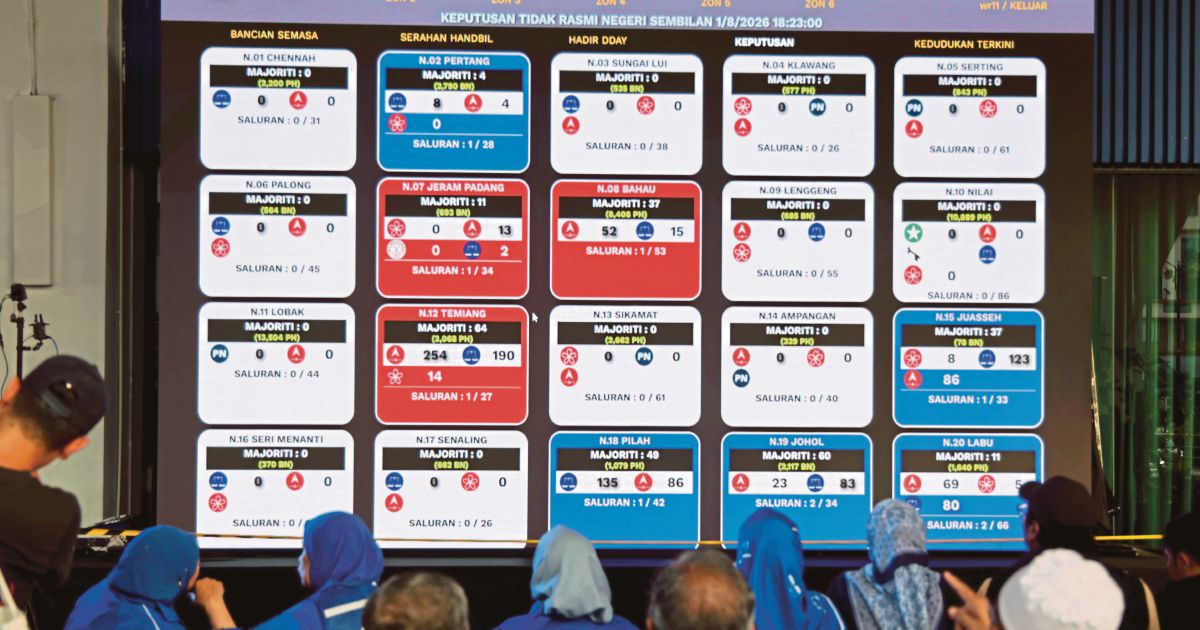
Umno politician Datuk Dr Asyraf Wajdi Dusuki has claimed that the Barisan Nasional and Perikatan Nasional coalition has secured 23 seats in the Negri Sembilan state election, a figure he says is sufficient to command a parliamentary majority and form the next state government. The announcement, made in Seremban, marks a significant development in the peninsular state's political landscape as coalition partners move to establish their administration following electoral contests.
The claim of a 23-seat majority represents a decisive mandate in Negri Sembilan's legislative assembly. With the state assembly comprising 36 seats in total, this would grant the coalition a comfortable working majority of seven seats above the minimum required for government formation. Such a buffer is strategically valuable, as it provides insurance against potential defections or absences during crucial votes on state budgets and legislation. For Malaysian state politics, where coalitions have occasionally faced instability, securing this margin offers relative stability for governing operations.
The partnership between Barisan Nasional, Malaysia's long-established federal ruling coalition, and Perikatan Nasional, an alliance that gained prominence in recent electoral cycles, represents a pragmatic consolidation of political forces in Negri Sembilan. This type of coalition arrangement has become increasingly common across Malaysian state governments as parties seek to broaden their support bases and ensure governance viability. The collaboration signals how traditional and newer political blocs are willing to work together at the state level to achieve mutual objectives and prevent opposition parties from claiming power.
Negri Sembilan has historically alternated between different political leaderships, and the state's demographic composition, with mixed urban and rural constituencies, has made elections relatively competitive. The 23-seat claim, if verified, would represent a substantial achievement for the combined coalition and suggests they have appealed across different voter segments within the state. Understanding precisely how this support is distributed geographically and by demographic groups will be crucial for the incoming administration as it determines where the coalition holds particularly strong bases and where it faces challenges.
The significance of this claim extends beyond Negri Sembilan's borders. State government compositions influence the balance of power within Malaysia's federal structure, and coalition performances at the state level often provide early indicators of broader political trends. A successful BN-PN performance in Negri Sembilan could embolden similar partnerships elsewhere and demonstrate to voters that coalition arrangements can deliver electoral victories. Conversely, the opposition bloc will likely scrutinise these results to identify weaknesses and recalibrate their strategies for future contests.
For the incoming Negri Sembilan administration, a 23-seat mandate provides a foundation for implementing state-level policies on education, healthcare, agriculture, and local economic development. The state is home to important manufacturing and agricultural sectors, and the new government will face expectations to address cost of living concerns, job creation, and infrastructure development. The composition of the coalition cabinet—determining how many portfolios go to Umno versus Perikatan Nasional components—will be a crucial internal negotiation that balances party contributions and political weight.
The verification of these seat counts remains pending, as official electoral commission announcements will provide the definitive record. Until formal proclamation, political claims carry inherent uncertainty, and final tallies occasionally diverge from preliminary counts. Media and observers in Negri Sembilan will await the Election Commission's official statement to confirm whether the 23-seat figure holds true. This waiting period typically sees intensive political activity as parties verify their counts, manage their members, and prepare transition announcements.
The BN-PN coalition arrangement also reflects broader strategic considerations within Malaysian politics. Barisan Nasional, which governed Malaysia uninterrupted for decades before 2018, has since rebuilt itself through various partnerships at state levels. Perikatan Nasional, which emerged from internal Umno dynamics and subsequently incorporated other parties, has similarly pursued state-level victories. In Negri Sembilan, their joint campaign appears to have resonated sufficiently to prevent a contested election outcome, avoiding the hung assembly scenarios that have created governance complications in other Malaysian states.
Looking forward, the coalition's governance record in Negri Sembilan will have implications for future electoral cycles and coalition viability. Voters will observe whether the government delivers on campaign promises, manages state finances responsibly, and maintains political stability. Any significant internal friction between BN and Perikatan Nasional components, disputes over resource allocation, or policy disagreements could affect public perception and undermine the coalition's standing heading into the next cycle.
The claim of a 23-seat majority in Negri Sembilan demonstrates how Malaysia's multi-level political system continues to evolve through coalition arrangements and electoral competition. As the country approaches potential federal-level electoral cycles, outcomes in state contests like Negri Sembilan provide valuable data about voter preferences, coalition strength, and regional political dynamics. For Malaysian political observers and those tracking Southeast Asian governance patterns, this development merits close attention as the region's electoral processes continue to reflect voter preferences and shape political futures.

