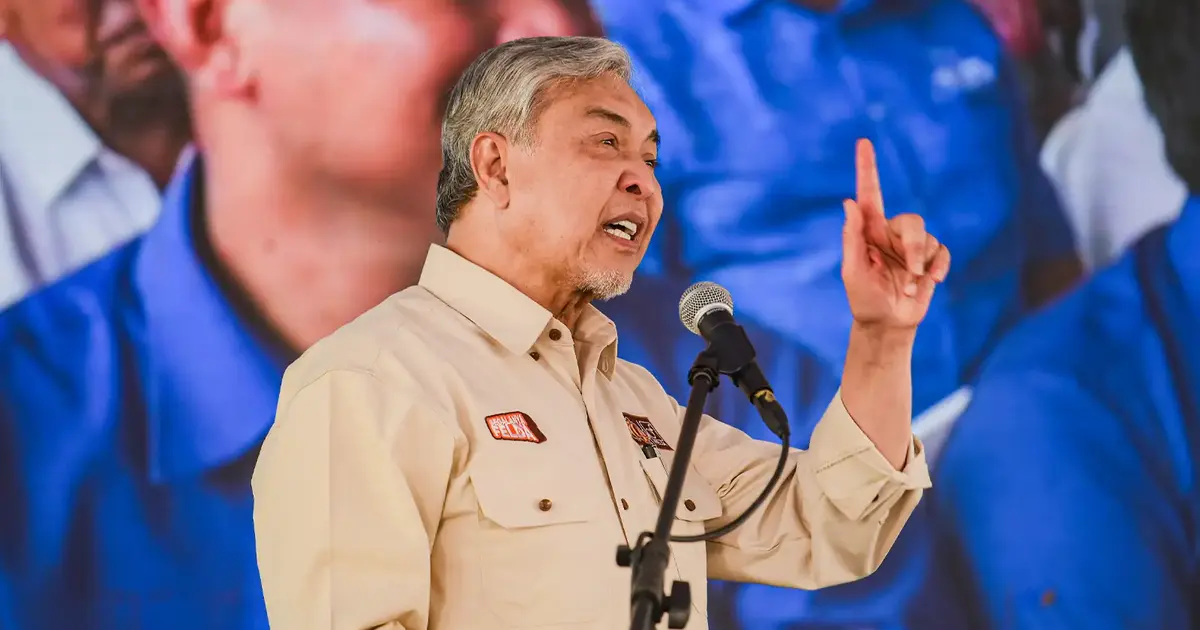
Ahmad Zahid Hamidi, the chairman of Barisan Nasional, has signalled that the outcomes of forthcoming elections in Negeri Sembilan will serve as a crucial bellwether for the future trajectory of the BN-PN alliance. The remarks underscore the delicate calculus underpinning the two coalitions' current electoral understanding, with implications extending well beyond the central state to shape national political realignments ahead of the next general election.
The "electoral understanding" between BN and Perikatan Nasional—a phrase that has become increasingly familiar in Malaysian political discourse since 2022—essentially permits the two coalitions to field candidates in certain contests without directly competing against each other. This arrangement, born from the complexity of Malaysia's multi-coalition landscape and the fragmentation of Malay-Muslim political representation, has allowed both BN and PN to contest elections while avoiding the vote-splitting that might otherwise benefit opposition parties. However, such understandings are inherently provisional and contingent on perceived mutual benefit.
Zahid's statement carries particular weight because it acknowledges what political analysts have long understood: electoral alliances in Malaysia are pragmatic arrangements rather than ideological partnerships. The BN chairman's willingness to publicly link the Negeri Sembilan results to the future of the alliance suggests that either coalition's poor performance could trigger a reassessment of the entire relationship. For BN, which has historically dominated Malaysian politics but faced significant erosion of support since 2018, any indication that the alliance is failing to deliver seats or prevent opposition victories would likely prompt a strategic pivot.
The Negeri Sembilan context is particularly significant because the state has historically been a BN stronghold, though recent electoral trends have shown cracks in that dominance. A disappointing showing in Negeri Sembilan would send ripples through both coalitions, signalling that their combined machinery is insufficient to maintain traditional support bases even in friendly territory. Conversely, a strong joint performance would validate the logic of continued cooperation and provide momentum heading into the Melaka state elections, a much smaller contest that nonetheless carries symbolic importance as a test of coalition cohesion.
The decision to extend—or withdraw—the electoral understanding from Melaka onwards represents a critical juncture. Melaka, despite its diminutive size in terms of state seats, has become a politically volatile state where BN has struggled to consolidate control in recent years. A failed alliance in Melaka could foreshadow difficulties at the national level, while success would bolster confidence in the BN-PN arrangement as the general election approaches. The stakes are therefore higher than raw seat counts might suggest.
For the 16th general election, currently anticipated within the next 18-24 months, the question of whether BN and PN contest as aligned or competing entities could substantially affect the distribution of seats in parliament. The Malaysian electoral system, with its first-past-the-post mechanics in individual constituencies, punishes vote-splitting among ideologically similar parties. Should BN and PN be competing directly against each other nationwide, the opposition—whether the Pakatan Harapan coalition or independents—could gain significant advantage by consolidating their voter base. This reality has driven both coalitions toward accommodation, but accommodation requires constant reassurance that the partnership serves both parties' interests.
Zahid's framing of Negeri Sembilan as a test case reflects a broader pattern in Malaysian politics where state-level contests function as laboratories for national strategy. The coalition that performs poorly in Negeri Sembilan might interpret the results as evidence that the alliance is constraining their potential rather than enhancing it, leading to calls for a more confrontational approach. Conversely, strong results provide political cover for party leaders to defend the controversial decision to work alongside former rivals, particularly important given the ideological distances between some BN and PN components.
The practical implications for Malaysian voters are substantial. An alliance breakdown before the general election would fundamentally reshape the electoral landscape, likely resulting in a fractured Malay-Muslim vote that could hand significant advantages to non-Malay dominated opposition parties or shift the balance of power toward whichever coalition manages to maintain internal cohesion. Given that Malaysian politics has increasingly crystallised along communal lines since 2018, the ability of Malay-majority coalitions to cooperate—rather than cannibalize each other—has become one of the defining variables in national elections.
Beyond the immediate electoral calculations, Zahid's comments reveal the precarious nature of post-2022 Malaysian political alignments. The BN-PN understanding was never intended as a permanent merger but rather as a temporary operational convenience. Both coalitions retain distinct party structures, leadership hierarchies, and in some cases fundamentally incompatible policy positions. What keeps them aligned is mutual recognition that fragmentation benefits their common opponents. Should that calculus shift—should either coalition conclude that breaking the alliance would position them more advantageously—the entire edifice could crumble.
The Negeri Sembilan elections therefore represent more than a local contest; they constitute a referendum on the viability of the current political settlement. Zahid's explicit linkage of these results to future coalition strategy suggests that both BN and PN are genuinely uncertain about whether their arrangement serves them well, and are using upcoming state polls as a diagnostic tool to inform higher-stakes decisions. For Malaysian political observers and voters alike, watching how both coalitions interpret and respond to the Negeri Sembilan outcomes will provide crucial insights into the shape of Malaysian politics heading toward the next general election.

