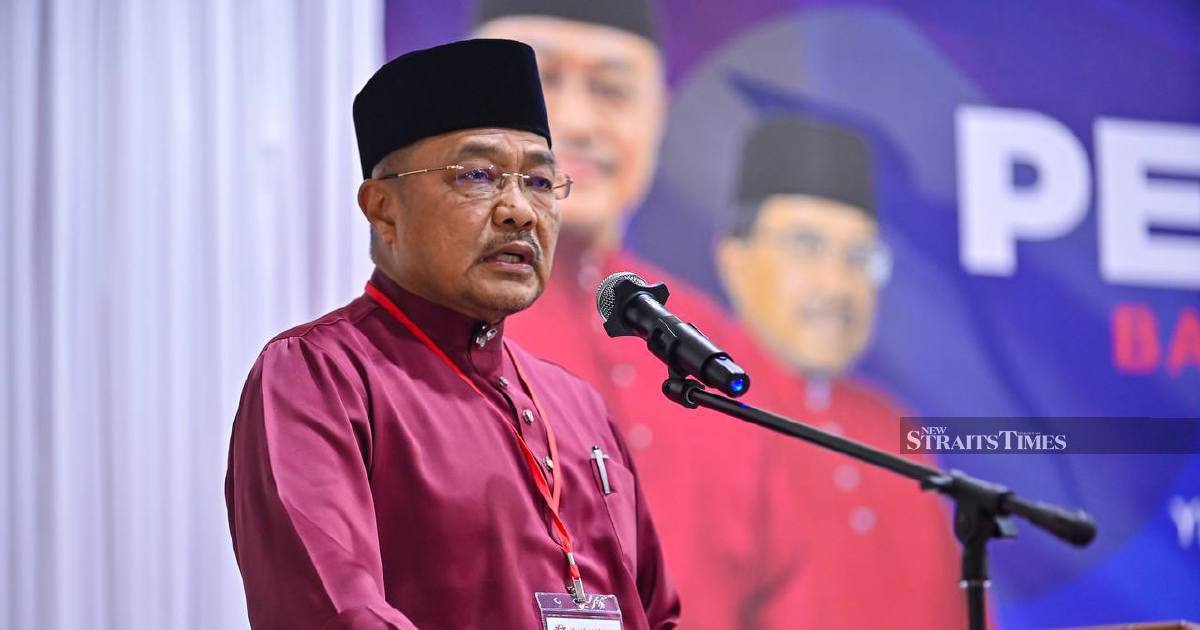
An UMNO Supreme Council member has stressed that electoral alliances cannot be transplanted wholesale across Malaysia, explaining that the Barisan Nasional-Perikatan Nasional arrangement forged in Negeri Sembilan reflects conditions unique to that state and would not necessarily work in other territories. The remarks, made in Kuantan, underscore the complex and fragmented nature of coalition-building in Malaysia's multi-layered political system, where state-level calculations frequently diverge from national party strategies.
The cautionary note comes amid speculation about whether the Negeri Sembilan model—under which BN and PN agreed to work together in the state elections—could be extended to upcoming contests in other states. Such questions reflect the continuing fluidity within Malaysia's political landscape, particularly as traditional party alignments continue to shift following the realignment that followed the 2022 general election. State governments often operate independently of federal coalition arrangements, creating multiple competing power centres within the same parties.
Sharkar's intervention highlights a fundamental reality of Malaysian politics: what succeeds in one state's context may prove counterproductive elsewhere. Negeri Sembilan's specific composition of political forces, voter preferences, and inter-party relationships created conditions favourable to the BN-PN compact. Other states may possess entirely different competitive dynamics, with alternative parties holding greater sway or possessing different negotiating leverage. A workable compromise in one location could generate internal party tensions or electoral disadvantages if imposed in another.
The BN-PN alliance framework in Negeri Sembilan represents a pragmatic response to local circumstances rather than a carefully crafted template for national application. Both coalitions recognised mutual benefits in collaboration within that particular state, but those calculations depend heavily on factors such as incumbent strength, regional party machinery capability, and existing voter allegiances. Transplanting the arrangement without accounting for these variations could backfire, potentially fracturing either coalition or confusing voters about which parties stand for what in different regions.
UMNO's internal positioning further complicates any blanket approach. As the dominant component of Barisan Nasional, UMNO maintains significant discretion over coalition strategy, yet it also faces pressure from multiple directions—from PAS within Perikatan Nasional at the federal level, from Pakatan Harapan in opposition, and from regional power brokers in individual states. State-level UMNO chapters sometimes possess their own political interests that diverge from national party leadership, creating additional layers of negotiation and potential conflict.
From a Malaysian perspective, such divergence underscores why federal-level coalition arrangements rarely dictate state-level outcomes cleanly. Voters frequently employ different decision-making criteria when selecting state representatives versus national ones, and local constituencies may have grievances or priorities that eclipse national political narratives. This creates space for parties to form different partnerships at different governance levels—a strategy that can maximize electoral success but also generates confusion about coherent party positioning.
The Negeri Sembilan case also reflects broader shifts in Malaysian coalition politics following the 2022 federal election. The previous two-party paradigm of BN versus Pakatan Harapan fragmented substantially, with Perikatan Nasional emerging as a significant third force. This three-way competition has required multiple parties to reassess traditional alliances and explore novel configurations. States serve as laboratories where parties test whether such new arrangements can deliver electoral victories and functional governance.
For other states considering similar pacts, Sharkar's caution suggests that any BN-PN cooperation would require ground-level assessment specific to local conditions. Selangor, for instance, operates under fundamentally different dynamics than Negeri Sembilan, with Pakatan Harapan maintaining strong institutional roots and a different party composition. Sabah and Sarawak follow entirely distinct political logic, shaped by state-level personalities and indigenous political movements that often supersede peninsular party rivalries.
The timing of Sharkar's remarks also matters. As several Malaysian states move toward elections in coming years, parties face pressure to clarify their coalition strategies. National leaders benefit from preserving flexibility by avoiding rigid commitments while state-level actors push for clarity about likely partnerships. This tension between national discretion and state-level certainty will likely intensify as election dates draw closer, creating further opportunities for competing factions within parties to advocate for their preferred approaches.
Ultimately, Sharkar's position reflects recognition that Malaysia's federal structure permits—and arguably requires—different political arrangements at different governance levels. Rather than viewing this as a weakness requiring centralised control, sophisticated political operators understand that allowing state parties appropriate autonomy can actually enhance overall coalition performance. The BN-PN alliance in Negeri Sembilan succeeded because both parties tailored their approach to local reality. Mechanically copying that arrangement elsewhere, without similar analysis and adaptation, would likely diminish rather than enhance either coalition's electoral prospects across the country.

