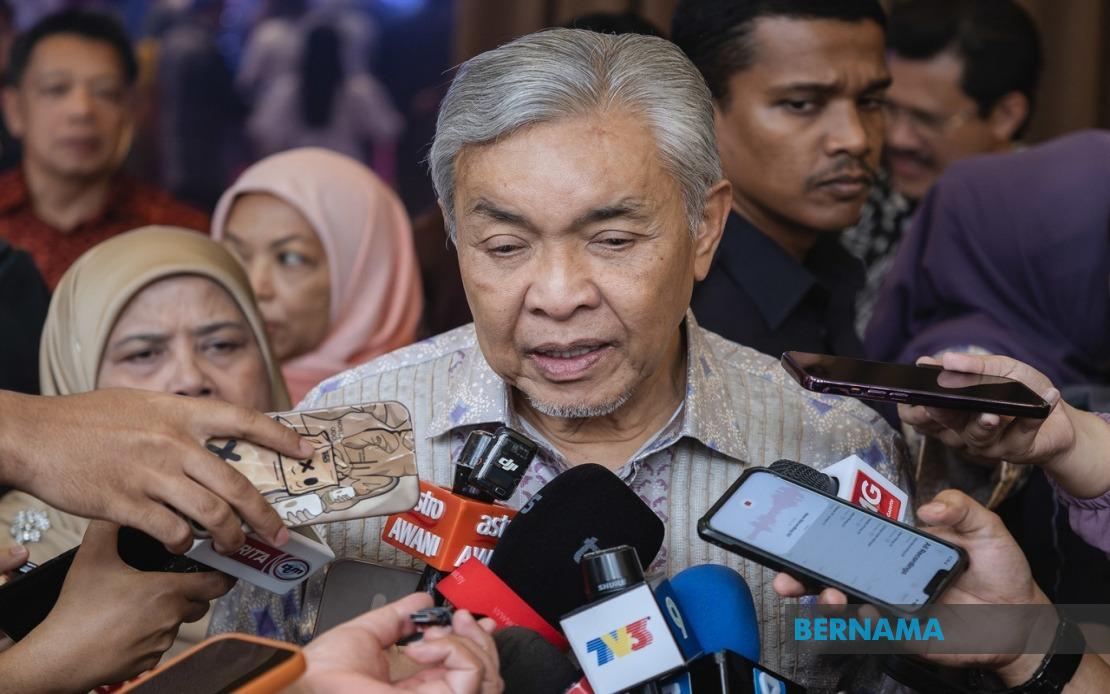
Barisan Nasional has committed to maintaining a clear distance from matters pertaining to the Negeri Sembilan royal institution and the state's Council of Justice and Laws (DKU), Deputy Prime Minister Datuk Seri Dr Ahmad Zahid Hamidi announced this week. The undertaking comes as the coalition coalition prepares for the 16th Negeri Sembilan state election scheduled for August 1, which will determine control of 36 state assembly seats. Ahmad Zahid, who holds the concurrent position of UMNO president, made the declaration following discussions with the party's state leadership aimed at strategic planning for the forthcoming electoral contest.
The commitment to non-interference represents a deliberate positioning by BN as it navigates what promises to be a substantially different political landscape compared to the previous state election cycle. By establishing clear boundaries around sensitive institutional matters, BN appears to be signalling an intent to keep electoral competition focused on policy and party organisation rather than constitutional or legal questions. This approach may reflect lessons learned from previous electoral contests and acknowledgement that intervention in such matters could prove politically costly.
The emphasis on staying outside the sphere of royal and legal matters suggests awareness within BN circles that the state's political environment contains complexities that could prove divisive if party leaders became entangled. Negeri Sembilan's governance structures, including the unique role of the Council of Justice and Laws in state affairs, require careful navigation by any political entity seeking to maintain credibility with both the traditional institutions and the broader electorate. Ahmad Zahid's explicit instruction that the party "must remain outside of that sphere" underscores the seriousness with which the coalition is treating this boundary.
Instead of focusing on institutional matters, Ahmad Zahid identified party unity as BN's central priority heading into the contest. Cohesion among party leaders and members at all organisational levels represents the foundation upon which the coalition hopes to build its electoral campaign. This refocusing of attention toward internal consolidation reflects recognition that electoral success depends fundamentally on presenting a unified front rather than becoming distracted by matters beyond party control. The emphasis on unity across hierarchical levels suggests that BN views potential fragmentation as a genuine threat that requires proactive management.
A significant shift in BN's political positioning for this election involves its approach to coalition arrangements. During the 15th Negeri Sembilan state polls, BN adopted a collaborative strategy with component parties of the Pakatan Harapan coalition, effectively working together despite representing different political blocs at the national level. This cross-coalition cooperation proved feasible in that particular context, though it created complex political dynamics. For the upcoming contest, however, BN has signalled that such arrangements will not be repeated, indicating a return to more traditional competitive positioning where BN stands independently rather than seeking accommodation with other major coalitions.
This strategic recalibration reflects broader shifts in Malaysia's political landscape since the previous state election. The calculus that made cross-coalition cooperation rational at that time no longer applies, suggesting that national political conditions have evolved sufficiently to warrant a different approach at the state level. BN's decision to contest independently creates a three-way or multi-way competitive dynamic rather than the previous binary arrangement. Such positioning may energise BN's base supporters while complicating campaign messaging to swing voters who previously expected pragmatic power-sharing arrangements.
For Malaysian readers and observers of regional politics, BN's strategic choices in Negeri Sembilan carry implications beyond the state itself. The coalition's approach to maintaining institutional neutrality while pursuing aggressive electoral competition offers insights into how traditional political actors navigate complex governance structures in Malaysia's federal system. The state serves as a testing ground for political strategies and coalition arrangements that could influence approaches in other states and potentially at the national level.
The August 1 polling date provides a definitive deadline for BN's preparatory efforts. With the election less than two months away at the time of Ahmad Zahid's announcement, the timeframe for building internal party cohesion and executing campaign plans remains compressed. BN's focus on unity rather than external institutional conflicts suggests the coalition is concentrating resources on activities directly within its control. This pragmatic approach prioritises the mobilisable levers of electoral success, including candidate selection, ground organisation, and message discipline.
The presence of Deputy Minister Rubiah Wang at the announcement ceremony, alongside Ahmad Zahid's remarks at a Ministry of Rural and Regional Development function, underscores government backing for BN's electoral preparations. Such visible support from serving ministers reinforces organisational messages and provides institutional platforms for campaign activities. The positioning of BN's state election campaign within government structures and ceremonies, while remaining technically separate entities, reflects the practical realities of incumbent party electoral management in Malaysia's political system.
For Negeri Sembilan's electorate and broader Malaysian political observers, the clarity provided by BN's institutional non-interference position and return to independent contestation establishes clearer parameters for the upcoming campaign. Voters will encounter a more straightforwardly competitive environment where different political blocs present distinct visions without complicating cross-coalition arrangements. Whether BN's renewed focus on internal unity and institutional distance from royal and legal matters proves electorally successful will depend on execution and broader political currents beyond the coalition's immediate control.

