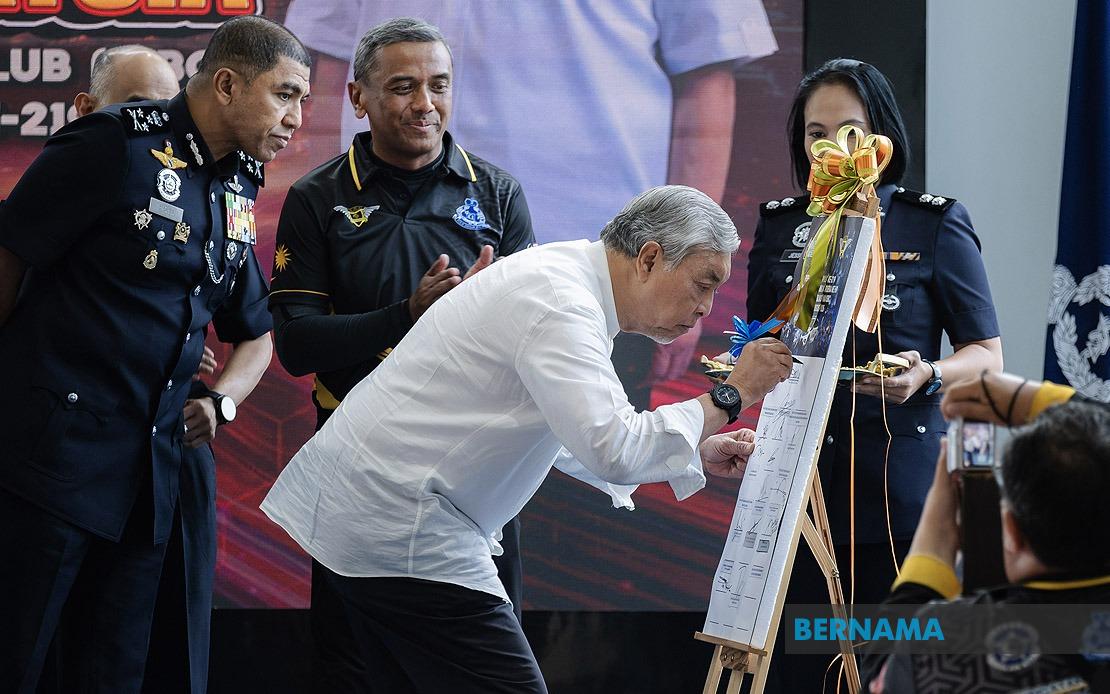
Barisan Nasional requires an electoral and governing strategy specifically calibrated to Melaka's unique political environment ahead of the state election, according to coalition chairman Datuk Seri Dr Ahmad Zahid Hamidi. Speaking in Kuala Lumpur on August 21, the Deputy Prime Minister stressed that the formula for Melaka cannot simply replicate the approaches that delivered decisive victories in neighbouring Johor and Negeri Sembilan, signalling a more nuanced approach to state-level politics within the broader coalition framework.
Ahmad Zahid's remarks underscore a critical challenge facing BN as it prepares for electoral contests across multiple states with varying political compositions and historical voting patterns. Rather than apply a one-size-fits-all template, the Deputy Prime Minister indicated that each state requires careful consideration of its particular geopolitical landscape—a recognition that Malaysian electoral politics operates within distinct regional contexts with different power bases, community compositions, and established political alignments. This approach reflects the growing sophistication within BN's strategic thinking, acknowledging that what works in one state may generate complications or reduced returns in another.
The question of coalition architecture has become increasingly important for BN following the formation of the federal Unity Government. The coalition must simultaneously manage its own internal partnerships while navigating negotiations with potential allies at the state level. Ahmad Zahid framed this challenge through two key criteria that should guide any political negotiations: the balance between benefits and potential drawbacks. He emphasized that anticipated gains must substantially outweigh any risks or costs incurred through coalition arrangements, a principle that extends beyond simple seat calculations to encompass longer-term stability and governance effectiveness.
Integrity in political dealings emerged as another central theme in Ahmad Zahid's statement. He called for honesty and sincerity in negotiations, emphasizing that coalition partners must honour their commitments rather than reverse course once agreements are finalized. This emphasis on trustworthiness carries particular resonance in Malaysian politics, where shifting alliances and broken promises have eroded public confidence in political institutions. By publicly articulating these principles, Ahmad Zahid appears to be signalling to both internal BN constituencies and potential external partners that the coalition intends to conduct negotiations according to clearly defined ethical standards.
The operational structure for Melaka's negotiations reflects BN's hierarchical decision-making process. Datuk Seri Ab Rauf Yusoh, who serves concurrently as Melaka Chief Minister and BN's state chairman, has received the mandate to lead preliminary negotiations with interested parties. Critically, any arrangements emerging from these state-level discussions will be escalated to the national level for comprehensive review and final authorization. This two-tier process ensures that state-level deals remain aligned with broader national political strategy and do not create complications for the federal government's stability or international standing.
Ahmad Zahid contextualized state-level cooperation within the larger framework of national political stability. He argued that coalition arrangements at the state level should be understood not merely as tactical moves to secure parliamentary majorities, but as components of a comprehensive strategy to reinforce political stability nationally. This represents an important shift from viewing state elections primarily through a competitive lens, instead emphasizing how state-level governance models can either strengthen or undermine the federal government's ability to implement its agenda and maintain institutional coherence.
Coordination between BN and other political entities extends beyond Cabinet-level interactions, according to Ahmad Zahid. He highlighted that political cooperation at the national level is reinforced through systematic coordination among ministerial portfolios and implementation of whole-of-government approaches. These mechanisms ensure that national interests are consistently prioritized and that political stability translates into effective governance. The implication is that state elections should produce governing arrangements that facilitate rather than obstruct coordinated action across multiple levels of government.
Melaka's existing state government configuration already demonstrates the Unity Government model in miniature. BN secured 21 of 28 seats in the 15th state election, with Pakatan Harapan winning five seats and Perikatan Nasional obtaining two. The state executive council, however, includes assemblymen from both BN and PH, mirroring the power-sharing arrangement visible at the federal level. This structure became necessary given the composition of the federal parliament and the government's desire to maintain consistency across state and national platforms. The upcoming election will determine whether this model proves sustainable or requires modification.
The mandate of the Melaka state government expires on December 31, creating a defined timeline for electoral planning and coalition negotiations. This deadline concentrates political activity into a compressed period, requiring swift decision-making from both BN leadership and potential coalition partners regarding their respective positions and negotiating objectives. The temporal constraint may either facilitate expedited agreement-making or intensify bargaining pressures depending on how various parties assess their strategic interests and electoral prospects.
For Malaysian politics more broadly, Ahmad Zahid's statement reflects the ongoing tension between centralizing impulses within BN and the operational realities of managing coalition governance across thirteen states with diverse political configurations. Melaka occupies particular importance given its historical significance as a BN stronghold and its strategic location within the broader peninsular political geography. The coalition's approach to this state election will likely signal its capacity to manage complexity without sacrificing coherence—a critical test for any broad-based coalition navigating multiple simultaneous electoral contests across a diverse national landscape.
The emphasis on state-specific formulas also acknowledges that Malaysian voters, while influenced by national trends, respond to localized political dynamics and regional considerations. A formula suited to Melaka's circumstances may account for different ethnic compositions, economic structures, historical grievances, or established community relationships compared to other states. This granular approach to coalition politics, if executed successfully, could strengthen BN's electoral positioning by demonstrating responsive governance that respects regional diversity while maintaining national coherence—a balance that has eluded many governing coalitions throughout Southeast Asia.

