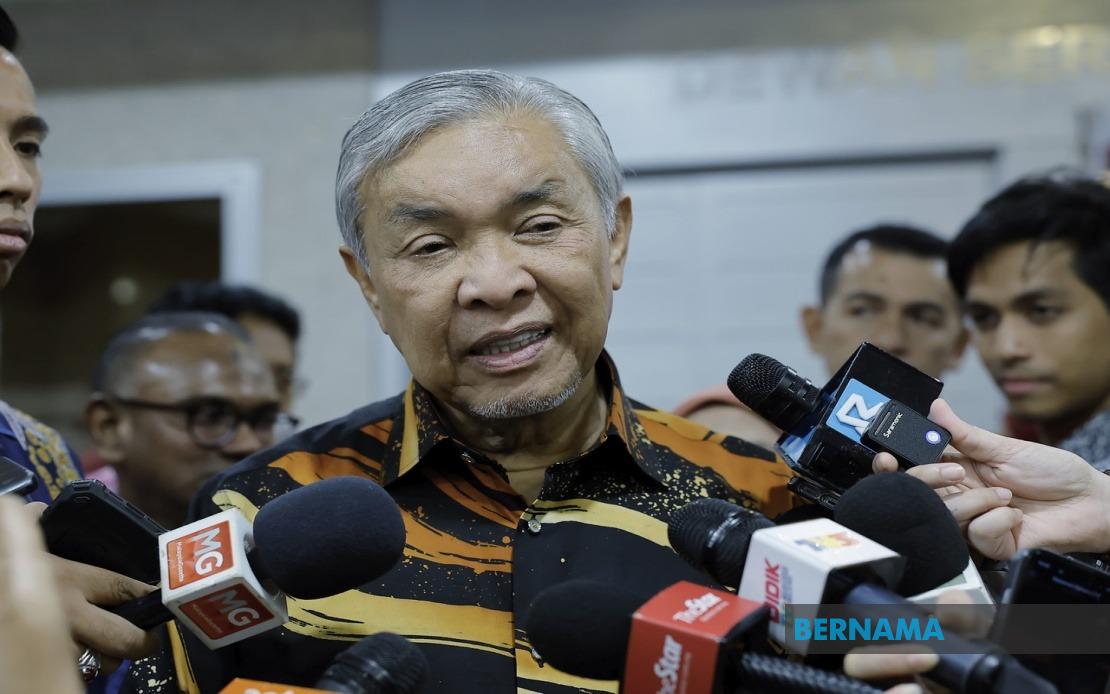
Deputy Prime Minister Datuk Seri Dr Ahmad Zahid Hamidi, speaking in his capacity as Barisan Nasional chairman, has issued a stark warning that neither the coalition nor UMNO will accept misconduct or poor stewardship affecting Lembaga Tabung Haji, signalling the government's intent to pursue accountability in the ongoing crisis surrounding the pilgrimage fund. The declaration came during remarks to reporters following a monthly gathering convened by the Rural and Regional Development Ministry in Putrajaya on August 6, underscoring the political sensitivity surrounding Tabung Haji's deteriorating financial position and the management failures that preceded it.
Ahmad Zahid emphasised that all individuals implicated in irregularities or mismanagement within government agencies and statutory bodies must face consequences proportional to their actions. His unequivocal statement—that compromise on such matters is neither acceptable nor contemplated—reflects mounting pressure within the ruling coalition to demonstrate decisive leadership after months of damaging revelations about how one of Malaysia's most important institutions for Muslim pilgrims was steered into crisis. The implicit message carries particular weight given that UMNO, as the dominant force within Barisan Nasional, faces electoral vulnerability if voters perceive laxity toward institutional corruption.
The backdrop to these declarations is the Royal Commission of Inquiry report into Tabung Haji's management and operations, which was released publicly on July 29 after investigating the period between 2014 and 2020. That investigation uncovered evidence of suspicious transactions, deliberate concealment of material information, and investment decisions whose flawed execution precipitated a substantial erosion of the fund's asset base. The cumulative impact of these failures has intensified scrutiny of how Tabung Haji leadership was selected, supervised, and held answerable for their stewardship of billions of ringgit entrusted to the institution.
Parliament has scheduled a special session for August 11 specifically to debate the RCI's comprehensive findings and recommendations. This parliamentary forum represents a critical juncture where lawmakers from both government and opposition benches will interrogate the quality of governance and oversight mechanisms that allowed Tabung Haji's difficulties to compound over several years. The debate will likely scrutinise not only the actions of individual officials but also the systemic weaknesses that permitted misconduct to persist and investment blunders to accumulate without adequate checks and remedial intervention.
Among the RCI's key recommendations is a forensic audit targeting Tabung Haji's investment decisions made during the period under investigation. This forensic examination will dig beneath surface explanations to establish chains of accountability, identify decision-making processes that deviated from established protocols, and potentially uncover documentary evidence of intentional wrongdoing or gross negligence. For Malaysian investors and potential pilgrims who have contributed to Tabung Haji's schemes, such an audit represents a mechanism through which their interests might be vindicated and the institution's integrity restored through transparency and corrective action.
The government's public positioning on Tabung Haji matters considerably to Barisan Nasional's political prospects, particularly among the Malay-Muslim constituencies whose support remains vital for electoral success. Tabung Haji enjoys symbolic and practical importance within these communities, serving not merely as a savings vehicle but as a trusted institution embedded in the hajj pilgrimage tradition. When management failures threaten contributors' savings or create perceptions of elite capture or negligence, public confidence erodes—a dynamic that can influence voting behaviour and broader assessments of institutional competence.
Ahmad Zahid's language emphasising non-negotiable accountability also reflects international pressure and Malaysia's standing as a nation committed to combating corruption and advancing governance standards. The MACC, parliamentary oversight mechanisms, and public scrutiny through media reporting all converge to create an environment where regulatory half-measures or selective enforcement would damage rather than enhance the coalition's credibility. The Deputy Prime Minister's statement thus serves multiple audiences: reassuring aggrieved Tabung Haji contributors, signalling resolve to international observers, and reinforcing the coalition's anti-corruption positioning ahead of future electoral contests.
The investigation period of 2014 to 2020 spans transitions in political leadership and institutional management at Tabung Haji, potentially implicating officials appointed under different administrations. This temporal scope may complicate accountability narratives but also provides opportunity for bipartisan focus on institutional reform rather than partisan blame allocation. However, political dynamics could still intrude if opposition politicians leverage parliamentary debate to highlight failures they attribute to particular individuals or government periods, even as Barisan Nasional emphasises systemic correction over personalised recrimination.
Looking forward, the substance of parliamentary debate and subsequent enforcement of accountability will substantially shape whether Ahmad Zahid's declaration registers as meaningful commitment or rhetorical performance. Concrete outcomes—prosecutions where warranted, disciplinary action against implicated officials, compensation for affected contributors, and structural reforms preventing recurrence—will determine whether this moment catalyses genuine institutional renewal or merely punctuates a pattern of announced intentions followed by insufficient implementation. For Southeast Asia's broader governance environment, Malaysia's handling of the Tabung Haji crisis carries implications for how emerging markets manage crises within important state institutions and whether regional practices converge toward higher accountability standards or diverge toward continued opacity.

