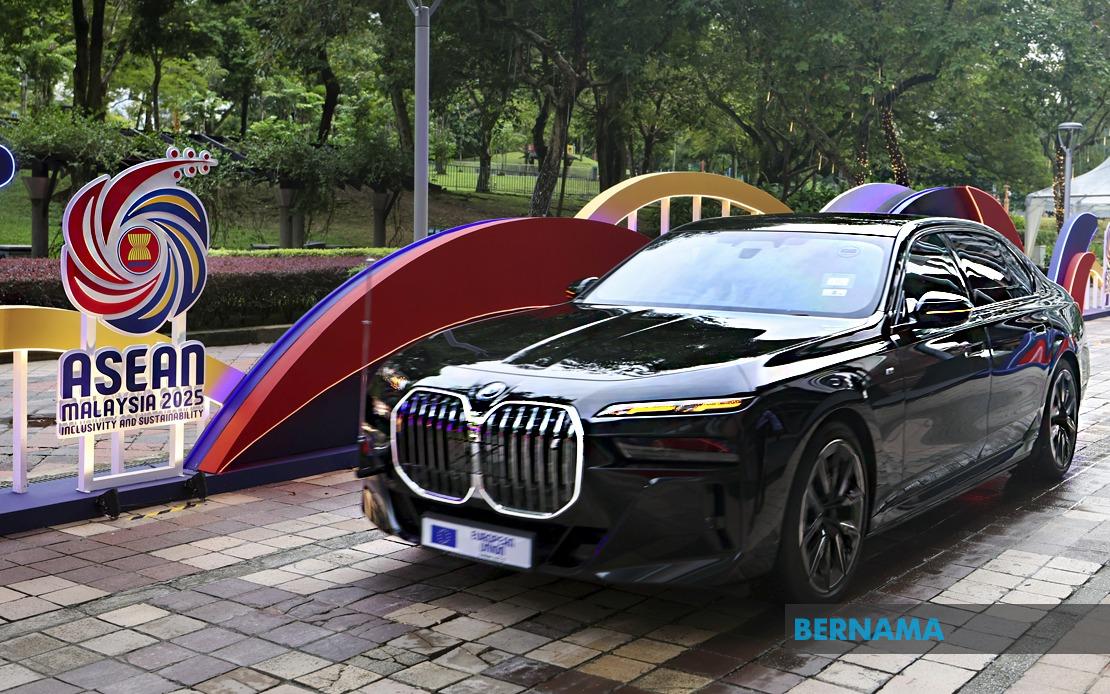
The Prime Minister's Department (JPM) has moved to address mounting speculation on social media by confirming that a BMW luxury vehicle recently seen accompanying Prime Minister Datuk Seri Anwar Ibrahim is not a new acquisition but rather an existing asset already held within government inventories.
In a statement released on Facebook, JPM working alongside the Ceremonial and International Conference Secretariat Division (BIUPA) explained that the vehicle belongs to BIUPA's supervisory purview and is designated exclusively for official state logistics operations. The clarification sought to counter rumours and allegations that had circulated widely across digital platforms questioning whether public funds had been used to procure the high-end automobile.
The government asset serves a specific and highly regulated purpose within Malaysia's diplomatic machinery. The vehicle is deployed to fulfil stringent international security requirements that apply whenever Malaysia hosts official state visits from foreign heads of state or government-level leaders. These protocols exist to ensure the safety and seamless movement of such dignitaries during their time on Malaysian soil, reflecting the country's commitment to meeting globally recognised standards for executive security.
The BMW vehicle itself has been engineered to stringent defensive specifications that extend well beyond the capabilities of standard automobiles. The protective measures incorporated into its construction are designed to withstand ballistic threats from high-calibre weapons, explosive devices, and contemporary security challenges including unmanned aerial systems. These advanced safety features represent an essential investment for any nation conducting regular diplomatic engagement at the highest levels, ensuring that state visits proceed without compromising the personal security of visiting leaders.
The temporary deployment of this vehicle for the Prime Minister's own use, JPM emphasised, was not a permanent reassignment nor a matter of preference but rather a practical decision recommended by the Royal Malaysian Police (PDRM) based on security assessments specific to current conditions. The police force's input reflects standard operational protocols whereby dedicated security agencies evaluate threat environments and recommend appropriate protective measures for the nation's chief executive.
The necessity for this temporary arrangement arose because Anwar Ibrahim's principal official vehicle, a gift bestowed by the Yang di-Pertuan Agong, is currently unavailable due to scheduled routine maintenance. The use of the BIUPA-supervised asset therefore represents a logical interim solution that maintains continuity of secure transportation while the primary vehicle undergoes essential servicing. This explanation underscores that the decision was driven by practical necessity rather than any expansion of executive privileges.
The social media speculation that prompted the clarification reflects broader public interest in how government resources are allocated and deployed, particularly regarding expenditures associated with the highest office. In contemporary Malaysia's political landscape, transparency regarding state asset usage carries significant weight with citizens increasingly attentive to fiscal responsibility and the appropriate use of public resources. The JPM's rapid public response demonstrates official awareness of this heightened scrutiny and a commitment to countering misinformation promptly.
For Malaysian observers and the wider Southeast Asian region, the incident illustrates the operational complexities underlying state-level security and diplomatic protocol. The existence of specially armoured vehicles within government inventories reflects not extravagance but pragmatic recognition that Malaysia's status as a regional hub for international diplomacy necessitates infrastructure meeting globally accepted security standards. Similar fleets exist within the security apparatus of comparable nations and international organisations.
The clarification also highlights the distinction between permanent capital expenditure and the deployment of existing assets. By confirming that the BMW represents an asset already acquired and maintained within government accounts, JPM effectively separated the question of current resource allocation from broader debates about procurement decisions made in previous fiscal periods. This distinction matters to public discourse regarding financial accountability.
Moving forward, the incident serves as a reminder of how rapidly misinformation spreads across digital channels in Malaysia's increasingly connected society. Official departments responding swiftly with factual clarifications represents an important mechanism for maintaining public trust and preventing false narratives from crystallising into accepted truth. The JPM's statement demonstrates responsiveness to public concern, even regarding matters that might have previously been considered routine operational details beneath the threshold of formal announcement.

