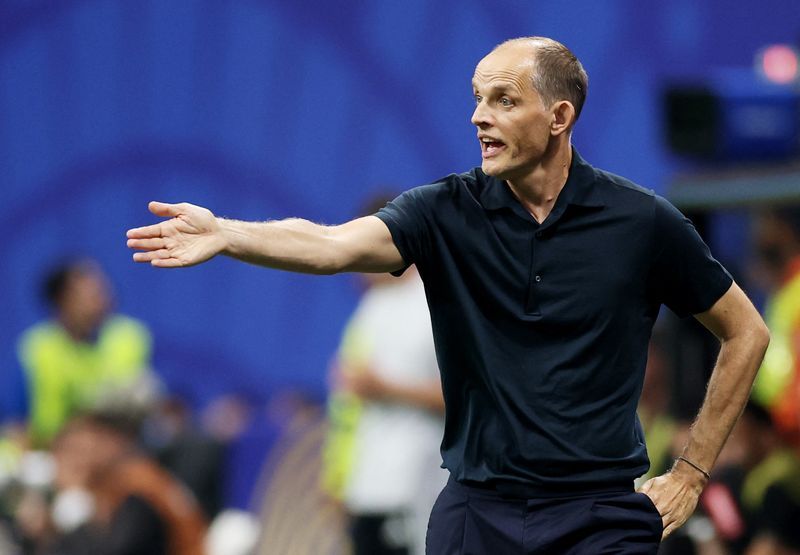
Thomas Tuchel arrived at the Football Association as English football's messiah, a serial winner at club level tasked with delivering the nation's second World Cup title in 2026. Yet his tenure ended in the semi-final heartbreak that has become painfully familiar to England supporters, prompting a wave of criticism that focuses heavily on his defensive reorganisation during the second half against Argentina. The narrative, however, obscures a more complex reality: Tuchel's downfall stemmed partly from tactical misjudgement but equally from confronting an opponent that represents perhaps the tournament's most formidable challenge and an England team whose fundamental approach to international football may be fundamentally misaligned with modern tournament football.
When FA Chief Executive Mark Bullingham unveiled Tuchel in October 2024, the appointment was framed as a transformative moment. Here was the man who had won the Champions League with Chelsea, guided Bayern Munich to continental glory, and constructed some of European football's most efficient defensive systems. Bullingham articulated the vision clearly: Tuchel would build on decades of near-misses and finally deliver what England had been chasing since 1966. The German himself echoed this ambition when he took the job in January, pledging to "get a second star on our shirt." The promise was substantive, backed by genuine pedigree and strategic coherence.
Yet the semi-final against Argentina unveiled uncomfortable truths about both the limitations of managerial change and the profound challenges of tournament football. After Anthony Gordon's opener gave England hope, Tuchel switched his formation defensively. The tactical retreat that followed proved catastrophic, as Argentina's brilliance in the closing stages, particularly through the orchestrating genius of Lionel Messi, exploited the space created by England's increasingly passive approach. The statistics told a damning story: from the 72nd minute onwards, England attempted merely two passes in Argentina's half compared to Argentina's 111, a disparity that reflected not just tactical timidity but strategic surrender.
The immediate blame landed squarely on Tuchel, with television pundits and social media critics questioning whether a manager of his experience should have gambled so catastrophically at such a crucial juncture. Former West Ham and Crystal Palace manager Alan Pardew offered one of the more measured critiques, suggesting that Tuchel had "fed a negative mindset" into the team and allowed "fear, mistakes and rational organisation" to crumble. Yet Tuchel himself identified a more fundamental problem, one that transcends tactical choices made in real time. The German manager pointed to structural deficiencies in how English football conceives of possession and control, suggesting that ball retention and midfield dominance were not culturally embedded in England's football DNA in the way they were institutionalised in Spain, Argentina, or Brazil.
This admission reveals a critical dimension often overlooked in the rush to assign blame. Tuchel was coaching at his first major international tournament, a fact that should have tempered expectations somewhat given the unique pressures and variables inherent in World Cup football. The learning curve is steep even for the most accomplished club managers. Didier Deschamps required six years as France coach before winning the 2018 World Cup, while his predecessor Aimé Jacquet invested five years in building the 1998 championship-winning squad. Tuchel's semi-final appearance at least matched Gareth Southgate's achievement from 2018 and represented respectable progress, yet the manner of defeat obscured this relative success.
Equally significant was the opponent England faced: Argentina represented defending champions driven by arguably the finest footballer alive. Lionel Messi, at 39 years old, remained the tournament's gravitational centre, a player whose mere presence elevated his teammates' performance and whose individual brilliance could override conventional tactical frameworks. The Argentine great had already demonstrated his capacity to will his team through seemingly impossible situations. Against Cape Verde in the group stage, Argentina survived a serious scare. In the knockout rounds, late heroics rescued them against Egypt, while extra time was required to overcome a stubborn Swiss defence even with a numerical advantage. Each narrow escape seemed to strengthen rather than weaken Scaloni's squad, lending them a psychological resilience that England struggled to match.
Messi's performance against England encapsulated his extraordinary capacity to transcend system and organisation. As Thierry Henry, who spent three seasons alongside the Argentine at Barcelona, eloquently explained, Messi operates in a different register when his team requires it. Henry described witnessing Messi "switch" in training, transforming from a player at rest into an unstoppable force capable of scoring goals in rapid succession through sheer force of will and technical supremacy. Against England, Messi drifted to the right flank to avoid the packed defensive formation, creating space for late goals from Enzo Fernandez and Lautaro Martinez that ultimately decided the match. No amount of defensive organisation could have fully negated such brilliance, yet England's increasingly passive approach offered Argentina the platform to showcase exactly this quality.
The structural issue Tuchel identified—England's difficulty controlling possession and dictating tempo—represents a deeper malady within English football. The domestic league has evolved to reward directness, athleticism, and defensive solidity over the intricate possession-based football that dominates international tournament success. This creates a mismatch between what succeeds in domestic competition and what wins World Cups, a problem that cannot be solved through managerial appointment alone. To address this would require changes in how young players are developed, how club football is constructed, and how England's football culture conceives of what constitutes intelligent play. Tuchel inherited a system geared toward different priorities, and the semi-final exposed this fundamental misalignment.
Arguably, the criticism of Tuchel also underestimates Argentina's determination and hunger. This was a team seeking to become the first since Brazil in 1962 to retain the World Cup title, a historic achievement that motivated every decision and every moment of their campaign. Lionel Scaloni's management, operating without the external pressure that Tuchel faced as a new appointment, had moulded a squad capable of converting desperation into excellence. They scraped through group stages with relative ease but found themselves tested repeatedly in the knockout stages, each challenge seemingly sharpening rather than dulling their competitive edge.
Tuchel's two-year contract extension signed in February suggests the FA retained confidence in his project despite the semi-final disappointment. This patience may prove warranted if the German can address the structural issues he identified, implement deeper changes to how English players are developed and deployed, and continue building toward 2026 with a clearer understanding of tournament football's unique demands. Yet his path forward requires not merely tactical sophistication but a wholesale reorientation of English football's fundamental approach to the game. The semi-final loss was not simply a manager's failure but a collision between England's domestic football culture and the sophisticated requirements of World Cup competition, a gap that cannot be closed through clever positioning alone.

