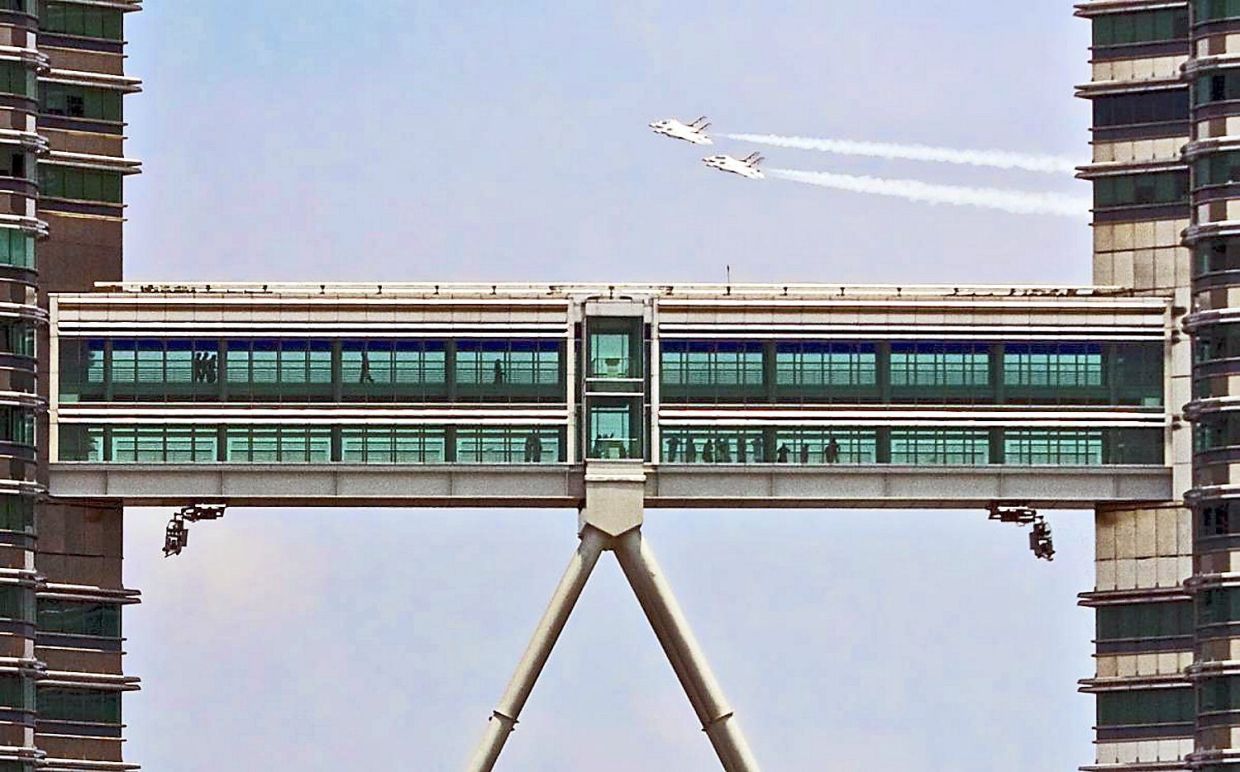
The PETRONAS Twin Towers welcome more than 2,000 visitors daily, with groups of 42 people admitted every 15 minutes to cross the iconic Skybridge. What began as a purely functional office complex has evolved into one of Malaysia's most valuable property assets, deriving substantial income from paid access to its observation facilities, souvenir sales and ancillary spending throughout the KLCC precinct. This transformation reflects a broader shift in how Malaysian developers conceptualise high-rise buildings, viewing them no longer as static income-generating structures that finish earning once constructed, but as dynamic platforms capable of sustaining multiple revenue channels over decades.
The monetisation of architectural landmarks represents a fundamental evolution in real estate strategy. Traditionally, developers extracted value through office leases, retail rentals, hotel operations or residential sales, then focused on maintaining occupancy and preserving asset worth. Today's approach differs markedly: developers increasingly treat the visitor experience itself as a primary commercial asset, separate from and complementary to conventional property uses. This shift acknowledges that people will pay premium prices not merely for a view, but for exclusivity, adrenaline, social validation and the cultural currency attached to having conquered or visited a famous structure. The distinction carries profound implications for financial returns, as experience-based attractions typically command significantly higher profit margins than square-footage rental models alone can achieve.
Malaysia's growing competition among major developments makes such differentiation increasingly critical. With office tenants having numerous options, retail spending becoming more dispersed and new mixed-use projects continuously entering the market, developers require distinctive features that cannot be easily replicated by neighbouring buildings. The Merdeka 118 project exemplifies this strategy, positioning Malaysia's tallest building as both a commercial office tower and a tourism product through planned observation facilities and its signature Spire Climb experience. This dual-purpose positioning mirrors international precedents in New York, Dubai and Singapore, where access to landmark heights has become a premium ticketed experience rivalling traditional attractions. The Exchange TRX takes a different approach, offering free public access to its rooftop park while generating value through extended visitor dwell time that drives retail spending and dining revenue, demonstrating that monetisation need not always involve ticket sales.
The commercial logic supporting experience-led real estate extends beyond direct admission fees. Observation decks generate recurring tourism income, tiered ticket pricing for premium access packages, merchandise sales, photography services and food and beverage concessions. International benchmarks illustrate the magnitude: Dubai's Burj Khalifa and Singapore's Marina Bay Sands SkyPark have become major tourism businesses integral to their larger mixed-use developments, creating platforms for multiple simultaneous income streams that individually and collectively rival traditional property returns. For Malaysian developers, this model offers particular appeal given the region's growing tourism sector and increasing international visitor volumes to Kuala Lumpur and other major cities.
The psychological dimension of experience-seeking behaviour fundamentally differs from conventional property consumption. Visitors purchasing access to a tower observation deck or climbing experience are not purchasing functional space but rather a narrative they can subsequently share. This distinction matters because social media amplification has rendered personal architectural experiences into de facto marketing assets. Visitors posting skyline photographs, rooftop selfies or videos of climbing challenges become unpaid brand ambassadors, generating exposure that possesses genuine commercial value in an era where social media visibility demonstrably influences travel decisions and consumer behaviour. The PETRONAS Twin Towers have effectively leveraged this dynamic for decades, benefiting from global iconic status that attracts photography tourism and social media content creation.
Operational considerations temper the apparent simplicity of this revenue model. Dedicated visitor infrastructure including specialised lift systems, security screening, staffing, insurance, cleaning and maintenance represent substantial ongoing expenses. Crowd management presents daily operational challenges particularly for high-profile landmarks, requiring sophisticated systems to maintain visitor experience quality while maximising throughput. The KL Tower's long history of combining telecommunications infrastructure with tourism through its observation deck, Sky Box and Tower Walk attractions demonstrates that successful experience monetisation demands sustained operational excellence and capital investment beyond the initial construction phase. These requirements distinguish genuinely profitable experience-led developments from those where visitor amenities become marginal cost centres generating insufficient revenue to justify their operational burden.
The strategic value proposition extends beyond immediate visitor revenue to encompass broader asset enhancement. A signature attraction strengthens a development's brand identity and makes associated office and retail space more desirable to tenants willing to pay premium rates for prestigious addresses. The rooftop park at The Exchange TRX illustrates this multiplication effect: free public access creates extended dwell time, driving ancillary retail and dining sales while simultaneously enhancing the development's appeal to commercial tenants seeking locations associated with vibrant public spaces and high foot traffic. This interdependency between experiential amenity and traditional property values represents perhaps the most sophisticated aspect of experience-led real estate strategy, as it transforms visitor attractions from standalone ventures into integrated components of comprehensive asset value maximisation.
Malaysian property consultants increasingly reference experience-led real estate as a fundamental strategic framework where placemaking transcends urban design exercises to become explicit commercial strategy. This conceptual reorientation reflects recognition that competitive property markets reward developers capable of synthesising multiple value creation pathways rather than relying on single revenue sources. As Malaysian cities intensify their competition for both business investment and tourism dollars, distinctive experiential offerings provide differentiation that purely functional architecture cannot match. The correlation between architectural memorability and financial performance has become sufficiently established that major development companies now budget for visitor experience infrastructure alongside traditional building systems, treating it as essential rather than supplementary.
For Malaysian readers and property sector participants, these developments signal important implications for future capital deployment and asset positioning. Landmark buildings increasingly function as hybrid assets requiring expertise spanning traditional property management, hospitality operations, tourism marketing and crowd management. Investors assessing potential acquisitions of completed mixed-use developments should evaluate not merely occupancy rates and rental performance but the breadth and quality of experience-based revenue streams and their contribution to overall financial returns. Furthermore, the successful internationalisation of Malaysian architectural landmarks depends substantially on their capacity to deliver distinctive visitor experiences that justify the premium pricing and travel investment required from international tourists choosing among competing Asian destinations.
The trajectory evident from the PETRONAS Twin Towers through to Merdeka 118 suggests that Malaysia's most significant new developments will increasingly incorporate experiential monetisation as core rather than peripheral strategy. This approach aligns with broader global urbanisation patterns favouring mixed-use development over single-purpose buildings and recognises that modern property value derives from comprehensive place creation rather than mere space provision. For developers, this requires integrated thinking from initial design stages through to operational implementation, ensuring that visitor experiences are neither afterthoughts nor marginal amenities but integral to architectural and commercial planning. The Malaysian property sector's growing sophistication in executing this model will significantly influence competitive positioning among regional financial centres competing to attract international capital, talent and tourism.

