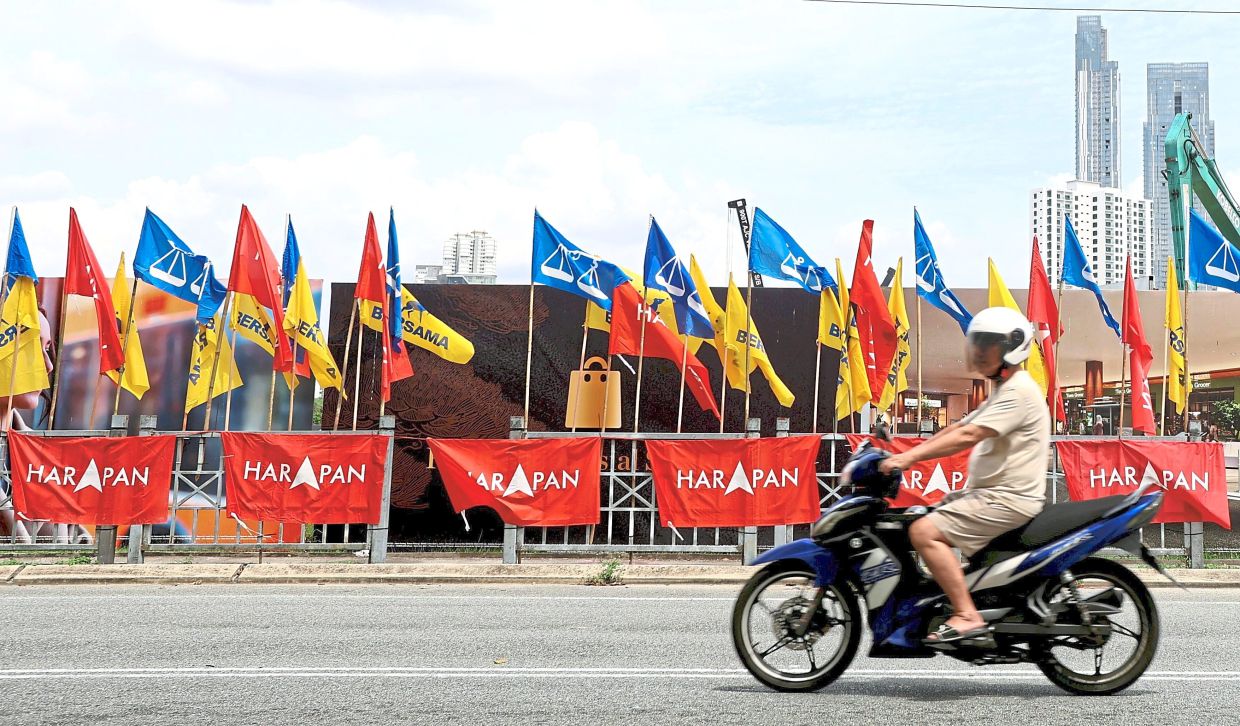
The upcoming Negri Sembilan state election has dominated political discourse with discussion of the crucial 36-seat figure needed to control the State Legislative Assembly, with a 29-seat 2/3 majority also commanding significant attention. Yet observers increasingly contend that this electoral focus obscures a more consequential national conversation: whether Malaysia should consider raising the retirement age to 65, a threshold that will ultimately determine the financial security and quality of life for millions across the country for decades to come.
The number 36 undoubtedly carries political weight. A clean sweep by either Barisan Nasional or an opposition coalition would signal definitive voter preference and reshape factional dynamics within the ruling coalition, particularly the collaborative arrangements between Barisan, Perikatan Nasional and PAS. However, elections transpire within relatively compressed timeframes and their effects dissipate as governments face new challenges and political landscapes shift. Retirement policy, by contrast, operates across the lifespan of entire populations, determining whether individuals can afford dignified later years, whether families must stretch resources across multiple generations, and whether national pension systems remain fiscally sustainable.
The pandemic years between 2020 and 2024 fundamentally disrupted retirement security across Malaysia. Household savings were depleted as families navigated lockdowns, income disruptions, and healthcare expenses. Countless small businesses struggled to remain viable, compelling owners to liquidate retirement reserves simply to keep operations afloat. Civil servants and private-sector workers postponed savings contributions and investment plans they had meticulously constructed over decades, creating a deficit that subsequent years have yet to fully resolve. The immediate health crisis may have subsided, yet the economic aftershocks continue reverberating through Malaysian household finances.
The recovery proved neither swift nor straightforward. Throughout 2025, geopolitical tensions in the Strait of Hormuz elevated energy prices, which cascaded into higher transportation and logistics costs that pushed food prices upward across Southeast Asia. Malaysian consumers, having only recently begun rebuilding depleted savings accounts, encountered a fresh wave of cost-of-living pressures precisely when their financial positions remained fragile. Fuel surcharges, imported goods tariffs, and supply chain uncertainties compounded the burden on wage-earners and pensioners already struggling with accumulated debt.
Within this economic reality, Negri Sembilan occupies a unique vantage point. The state seamlessly bridges traditional Malaysian social institutions with contemporary economic aspirations. Its geographic proximity to Kuala Lumpur, Putrajaya, and the Klang Valley means substantial portions of its workforce commute to federal territories for professional employment or maintain sophisticated economic ties to the nation's principal growth corridors. Simultaneously, Negri Sembilan retains robust community structures where extended families operate as integrated economic units, with multiple generations routinely supporting one another financially and practically. These demographic realities transform retirement policy from mere administrative technicality into something fundamentally affecting how families organize themselves and pool resources.
Many Malaysians now approaching their late fifties have belonged to a generation subjected to extraordinary economic disruption. They navigated the 1997 Asian Financial Crisis when young professionals, survived the 2008 Global Financial Crisis when mid-career, endured the 2020 pandemic when approaching retirement, and now contend with 2025 geopolitical upheavals threatening global supply chains. Their careers have experienced repeated interruptions from events entirely beyond individual control. Asking whether they should receive the opportunity, rather than mandatory obligation, to continue working until 65 represents a legitimate policy question grounded in practical reality rather than ideological assumption.
Critics sometimes dismiss extended working lives as punitive, yet technological transformation complicates this reflexive opposition. Artificial intelligence and automation will progressively absorb routine, repetitive tasks, yet simultaneously heighten organisational dependence upon precisely those qualities that accumulate across decades: institutional memory, ethical judgment, strategic mentorship, and nuanced decision-making in ambiguous circumstances. Paradoxically, advancing automation may strengthen the economic case for retaining experienced professionals rather than prematurely discarding their accumulated expertise.
Younger Malaysians entering the workforce confront an substantially different landscape. Generation Z faces volatile skill requirements, abbreviated employment cycles, and intensifying competition from digital technologies and artificial intelligence. Rather than adopting adversarial framing where older workers monopolize limited positions, Malaysian families might discover that sustained employment among parents and grandparents provides crucial financial anchoring while younger household members navigate turbulent labour market transitions. This intergenerational cooperation could become Malaysia's distinctive competitive advantage rather than remaining an underdeveloped potential.
Practically, continued productive employment by older workers strengthens national finances. Individuals remaining economically active persistently contribute income taxes, continue accumulating retirement savings, and sustain consumption expenditure that circulates through domestic economies. This expanded tax base simultaneously reduces immediate pressure on government pension systems and social assistance programmes that would otherwise absorb greater proportions of public budgets. The fiscal mathematics favour extended working lives when structured flexibly rather than rigidly.
Crucially, retirement at 65 should never become compulsory. The overarching framework must emphasize flexibility and individual circumstance. Malaysians employed in physically demanding occupations—construction workers, agricultural labourers, manufacturing employees—may legitimately prefer retiring earlier, while professionals, academics, healthcare providers, engineers, educators, and administrators might wish to continue contributing if health permits. Public policy should accommodate this diversity rather than imposing uniform mandates.
This is precisely where bipartisan cooperation becomes essential. Retirement policy transcends partisan loyalty because it affects all Malaysian families regardless of political affiliation. Negri Sembilan voters contemplating the state election might reasonably expect their elected representatives—whatever their party—to engage seriously with retirement security questions alongside electoral arithmetic. The number 36 determines which political faction governs temporarily; the number 65 determines whether millions of Malaysians can retire with dignity and financial security. One deserves no less attention than the other.

