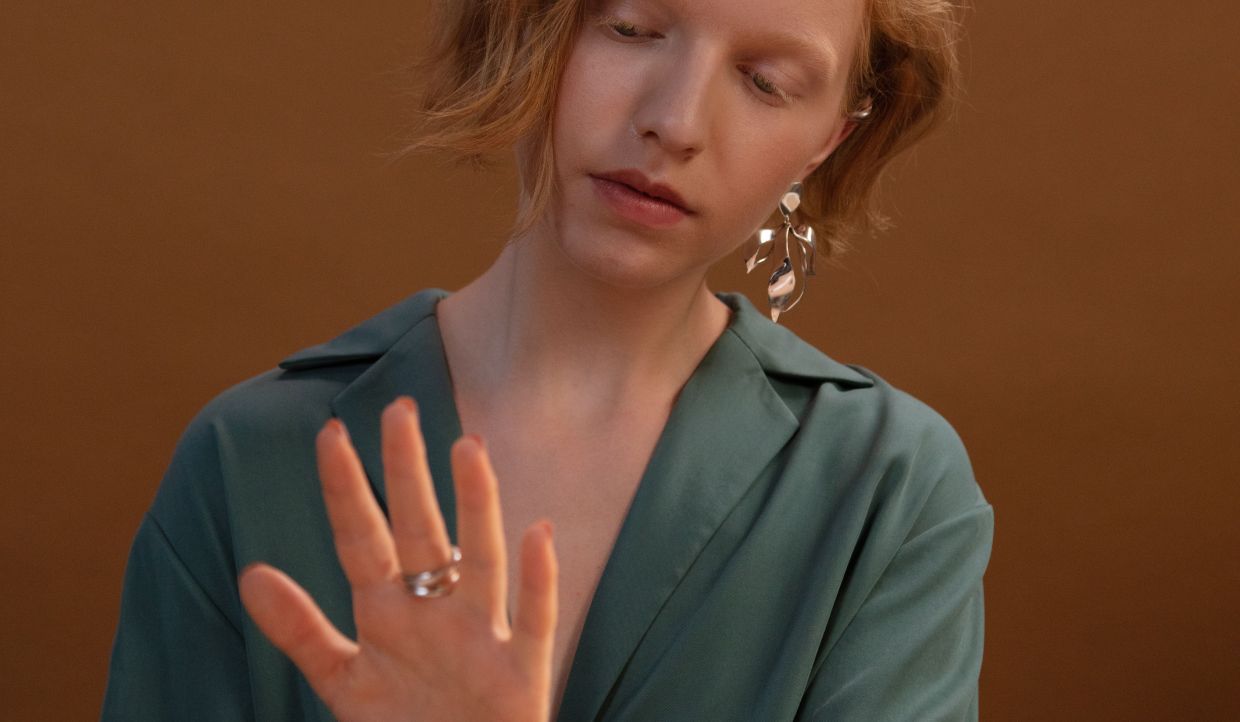
The fashion world is experiencing a quiet rebellion against decades of convention. Where previous generations viewed their most prized jewellery as vault-bound treasures to be unveiled only at weddings and galas, contemporary style arbiters are dismantling that logic entirely. This shift represents far more than a casual attitude toward accessories—it reflects a fundamental change in how we think about personal aesthetics, self-expression, and the role of beauty in everyday life.
The roots of this movement trace back to iconoclasts like Coco Chanel, whose 1935 portrait by Man Ray captures the philosophy perfectly. In that now-famous image, Chanel appears dressed in deliberately understated clothing—a simple black dress, a black hat, her hands casually positioned in her pockets as though ready for an ordinary day. Yet she is simultaneously draped in multiple strands of pearls and adorned with enormous bejewelled cuffs on each wrist, a juxtaposition that would seem incongruous by twentieth-century logic. Her own assertion that jewellery's purpose was not to signal wealth but to enhance a woman's appearance served as a manifesto for generations to come. Chanel modelled this belief throughout her life, refusing to compartmentalise elegance into special-occasion categories.
Today's fashion professionals are carrying that torch forward, though with updated interpretations. The stringent rules that once governed accessory choices—white shoes only between Memorial Day and Labour Day, the prohibition of mixing silver and gold, the arbitrary limit of three pieces at a time—now seem quaintly restrictive to a generation raised on visual abundance and personal authenticity. These regulations belonged to an era of scarcity mentality, where fashion itself was rationed and compartmentalised. Contemporary style embraces a more fluid, individualistic approach that prizes expression over conformity.
French stylist Carlyne Cerf De Dudzeele exemplifies this new philosophy through her deliberately contradictory aesthetic. Working in an industry where glamour is ostensibly paramount, Cerf De Dudzeele has built a distinctive personal brand by pairing humble basics—simple jeans, casual sweatshirts—with elaborate gold chains and multiple layers of significant jewellery. Her deliberate policy is straightforward: more sparkle is always better, whether pieces are crafted from precious metals or costume materials. The material value becomes irrelevant; what matters is the visual impact and the joy it brings. She maintains this approach regardless of context, whether backstage preparing for a fashion show or at a photo shoot, suggesting that such aesthetic choices are not situational but foundational to identity.
For many professionals like Cerf De Dudzeele, the contrast between glamorous jewellery and humble clothing creates a particularly modern visual narrative. Rather than viewing this combination as incongruous, contemporary fashion celebrates the tension itself. The juxtaposition speaks to contemporary life's actual texture—we move between contexts, between work and leisure, between presentation and authenticity. The approach refuses the false divide between elegant and casual, suggesting instead that these categories can coexist meaningfully.
Yet this philosophy encounters real-world complications that extend beyond mere fashion preference. Jewellery carries psychological and social weight that other clothing items do not. Perhaps more than any other accessory, it triggers deep-seated assumptions and judgements. It reads immediately as signifiers of wealth, leisure, and social position. In cultures or communities where visible jewellery is uncommon or where it draws significant attention, wearing substantial pieces requires a willingness to stand apart, to accept that others will notice and potentially comment. This is not a comfortable position for individuals accustomed to blending in, and it touches on genuine psychological considerations about visibility and belonging.
Moreover, practical safety concerns complicate the everyday-jewellery philosophy in ways that fashion commentary often overlooks. Cerf De Dudzeele has become increasingly conscious of her surroundings in recent years, making deliberate choices about when and where to wear her most eye-catching pieces. She no longer wears substantial jewellery on public transportation, acknowledging that visibility can create vulnerability. This reality reflects broader urban and regional differences that readers in Malaysian cities understand intimately. The feasibility of wearing valuable jewellery openly varies dramatically depending on location, neighbourhood, and time of day. A philosophy that works in a secure residential area or controlled professional environment may require significant modification in contexts where such visibility could invite theft or unwanted attention.
Beyond these practical considerations lies a more philosophical argument rooted in childhood intuition. Before socialisation imposes restrictions, children wear tiaras to school without self-consciousness, costume jewellery with genuine pride, choosing adornment based purely on joy rather than occasion or appropriateness. This innocent approach to beauty contains wisdom that adult anxieties obscure. The question becomes: what have we lost by accepting that certain beautiful things belong only to special moments? If a particular bracelet brings you pleasure, if seeing it makes you smile, then relegating it to a vault for rare occasions means sacrificing daily happiness for an unclear benefit.
The most compelling argument for everyday jewellery may be the simplest: its capacity to function as a small daily gift to yourself. Wearing a piece that genuinely delights you during ordinary moments—while commuting, working at your desk, running errands—creates unexpected moments of beauty that interrupt mundane routine. That bracelet becomes a subtle reminder that colour, magic, and aesthetic pleasure remain accessible within regular life, not restricted to formal events. It transforms the ordinary through deliberate choice, suggesting that we deserve beauty not as reward for special occasions but as a baseline component of living well.
For readers navigating bustling Malaysian cities and varied cultural contexts, this philosophy requires thoughtful adaptation rather than wholesale adoption. The principle—that jewellery's value lies partly in the joy it brings, not only in its vault-worthiness—can inform personal choices without requiring the security risks that unmodified everyday-luxury practices might create. Perhaps the real revolution is not wearing all your finest jewellery all the time, but deliberately choosing to wear pieces that matter to you whenever circumstances permit, rejecting the notion that beauty must be saved for future moments that may never arrive.

