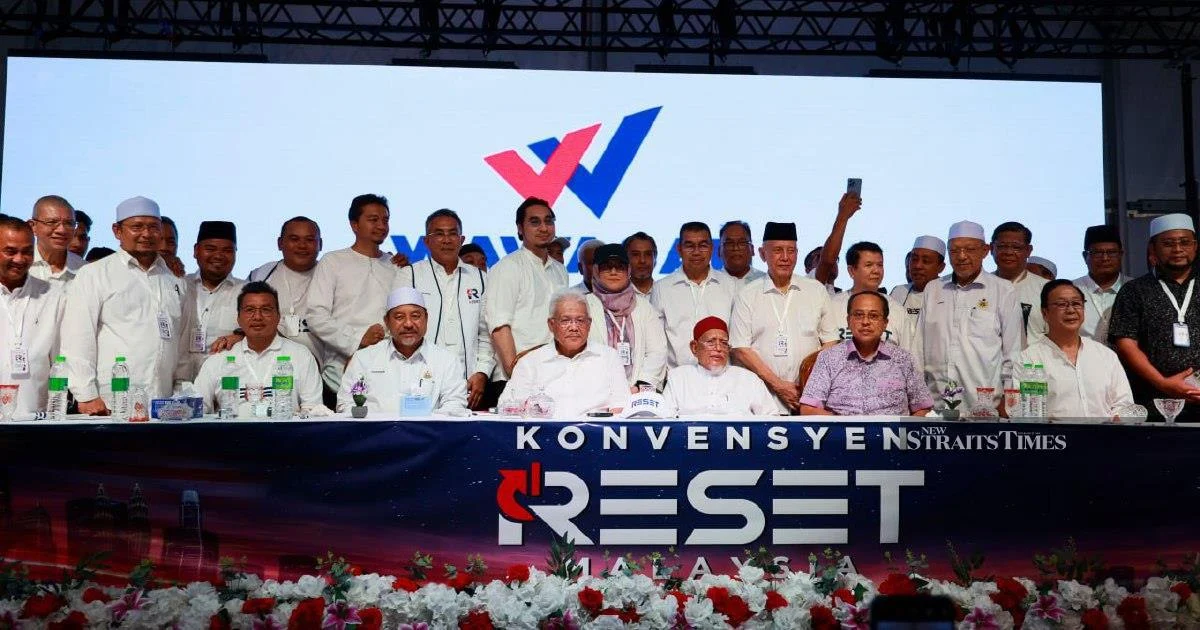
Perikatan Nasional (PN) faced internal turmoil on Tuesday when Bersatu mounted a direct challenge to the constitutional propriety of the coalition's leadership in approving Wawasan Osman's entry into the political alliance. The dispute centres on an emergency meeting of PN's Supreme Council convened late Monday evening, which Bersatu now contends was conducted without proper observance of the coalition's governing procedures.
The controversy exposes simmering tensions within PN, Malaysia's main opposition bloc, over questions of centralised decision-making and the balance of power between component parties. Bersatu's challenge signals that smaller coalition members are increasingly willing to publicly contest decisions made by the PN chairman, even when those decisions are formally ratified by the Supreme Council. This defiance marks a notable shift from the deference traditionally shown to coalition leadership in Malaysian politics.
Wawasan Osman, led by former Perak menteri besar Wee Ka Siong's political rival faction, represents a strategic addition that could reshape PN's electoral mathematics and internal dynamics. The coalition has sought to consolidate its position ahead of upcoming state elections and the anticipated 2026 general election. However, accelerating this entry through an emergency mechanism rather than through standard deliberation has triggered accusations of overreach.
Bersatu's formal complaint specifically targets the procedural irregularities surrounding the Monday night session. Coalition rules typically require advance notice and comprehensive documentation for major decisions, particularly those involving admission of new members. By convening an emergency meeting, PN's leadership circumvented these safeguards, according to Bersatu's interpretation of the coalition constitution. This manoeuvre suggests urgency driven by factors beyond the formal record—possibly tactical positioning ahead of electoral calendars or pre-emptive moves against rival coalitions.
The timing of Wawasan Osman's admission holds significance for Malaysian political observers. The party's entry strengthens PN's presence in Peninsular Malaysia, particularly in states where the coalition has struggled to build viable challengers to Pakatan Harapan. However, such expansion also dilutes the voting power of existing coalition members within decision-making structures, a concern that likely underpins Bersatu's resistance.
Bersatu's grievance reflects broader anxieties about PN's governance model. As the coalition has grown to encompass diverse political interests—from PAS's Islamist base to UMNO dissidents within Bersatu, to newly acquired parties like Wawasan—maintaining unity through consensus has become increasingly difficult. Emergency procedures designed to handle urgent matters can easily become instruments of factional control when deployed to circumvent minority input.
The response from Bersatu also underscores its particular vulnerability within PN. As a younger party lacking the organisational depth of PAS or historical weight of UMNO, Bersatu depends on procedural protections and strategic relevance to maintain influence. Decisions made without its adequate participation threaten to marginalise a founding coalition member whose cooperation remains essential for PN's electoral viability in key constituencies.
For Malaysian voters and analysts, this internal PN dispute carries implications beyond coalition management. It demonstrates that opposition coalitions face identical structural challenges to the ruling federal coalition: balancing different parties' interests, managing ambitious leaders, and sustaining unity across ideological divides. The frequency and intensity of such disputes could ultimately affect PN's capacity to project a coherent alternative government platform when election season arrives.
The controversy also highlights how procedural mechanisms—theoretically neutral administrative tools—become politically charged when coalition survival depends on factional balance. What PN leadership presented as pragmatic emergency action, Bersatu frames as a power grab that disrespects coalition protocols. Both interpretations contain validity, reflecting genuine ambiguity in the situation.
Moving forward, PN leadership faces pressure to either modify its decision-making procedures to accommodate concerns from component parties, or to assert the prerogatives that PN's constitution grants to the Supreme Council. Neither path offers obvious advantages. Reversing course would humiliate the chairman and signal weakness in PN's leadership hierarchy. Proceeding unchanged risks further alienating Bersatu and emboldening other parties to challenge future decisions through similar constitutional arguments.
The resolution of this dispute will shape PN's internal culture as the coalition approaches its most electorally consequential period. Will PN resolve disagreements through negotiation and compromise, or will stronger parties increasingly impose decisions on weaker ones? The answer carries significance not merely for coalition management but for the broader health of Malaysia's multiparty democratic competition.