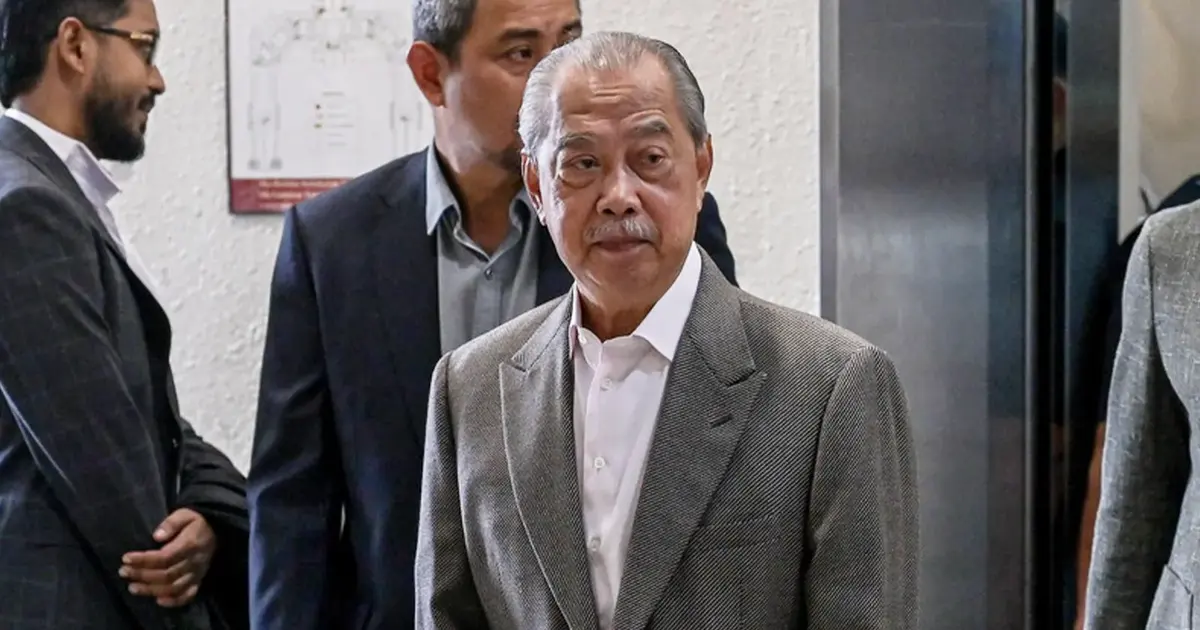
Questions about the real distribution of power within Bersatu intensified during High Court proceedings when the party's financial officer provided testimony that challenged conventional understandings of how the organisation managed its money. The deposition by Zulhelmi Zaulkafly before the judge centred on whether financial decision-making rested with a single person or was instead dispersed among multiple office-holders, a distinction that carries significant implications for understanding the party's governance structure.
The deputy public prosecutor's line of questioning suggested deep scepticism about whether former party chairman Muhyiddin Yassin actually wielded meaningful control over Bersatu's financial apparatus. By probing whether any individual held exclusive authority over monetary matters, prosecutors appeared to be building a narrative that portrayed Muhyiddin's position as potentially ceremonial rather than substantive. This inquiry reflects a broader investigative focus on determining who genuinely made decisions within the party hierarchy versus who simply rubber-stamped decisions made by others.
Zulhelmi's testimony revealed a more distributed financial governance model than might be expected in a hierarchically organised political party. When financial officials distribute decision-making power across multiple positions rather than concentrating it at the top, questions naturally arise about leadership effectiveness and personal accountability. For Muhyiddin, whose tenure as Bersatu chairman spanned a period of significant political upheaval, such testimony potentially undermines any claim that he maintained tight oversight of party operations.
The significance of this testimony extends beyond mere procedural matters. Understanding how Bersatu's finances flowed and who authorised expenditures becomes crucial when investigating potential irregularities or misconduct within the party structure. If the financial officer's account is accurate, then attributing financial decisions solely to the party chairman would be inaccurate, potentially deflecting responsibility away from others who held genuine decision-making power.
For Malaysian political observers, the broader context matters considerably. Bersatu has occupied a pivotal position in Malaysian politics since its formation, serving as a coalition partner in various government arrangements. The internal dynamics of how such a strategically important party manages its affairs directly affect the stability and nature of political coalitions at the national level. Questions about leadership authority and financial control speak to whether the party operates as a unified entity or as a collection of factions with competing interests.
The prosecutor's apparent scepticism about Muhyiddin's exclusive financial control aligns with patterns observed in Malaysian political dynamics, where party chairmen sometimes find their authority constrained by powerful faction leaders or finance committees. This reality reflects Malaysia's complex political culture, where nominal leadership positions do not necessarily translate into absolute control. The High Court testimony suggests investigators are probing whether Muhyiddin's position fell into this category.
Zulhelmi's statement that no individual exercised sole authority over party finances could support arguments that Muhyiddin bore limited personal responsibility for financial decisions made during his tenure. Conversely, it could also suggest that multiple individuals shared culpability if irregularities occurred. The implications differ substantially depending on what specific financial matters are under investigation and whether other witnesses provide corroborating testimony.
Such testimony also reflects how political parties in Malaysia often struggle with establishing clear financial governance frameworks. The existence of decentralised financial decision-making, while potentially reducing the concentration of power, can also create confusion about lines of responsibility and enable improper conduct to proceed unchecked. The High Court proceedings appear designed to clarify precisely who held authority over what types of financial transactions.
For other political parties operating in Malaysia, the Bersatu case offers cautionary lessons about the importance of transparent, well-documented financial procedures. Ambiguity about who makes decisions and on what authority creates vulnerabilities to investigation and undermines public confidence in party governance. The testimony underscores how contemporary Malaysian politics increasingly faces judicial scrutiny of internal party management.
The deputy public prosecutor's questioning strategy suggests investigators are building a case that attributes significant responsibility to individuals other than Muhyiddin for specific financial decisions or transactions. By establishing through testimony that the party chairman did not hold exclusive control, prosecutors may be laying groundwork to direct accountability toward other office-holders. This tactical approach reflects sophisticated understanding of Malaysian corporate and party governance structures.
Muhyiddin's position as a former prime minister added particular intensity to these proceedings, as his tenure in high office and subsequent fall from power have made him a focal point of intense political scrutiny. The distinction between ceremonial authority and actual decision-making power becomes especially significant when examining the conduct of someone who held such senior national office. High Court testimony about his actual role within Bersatu contributes to the broader public record regarding his leadership and accountability.
As the trial progresses, subsequent testimony from other party officials will likely clarify which individuals actually made financial decisions and on what grounds. The emerging picture suggests Bersatu operated with a more collegial or faction-based decision-making structure than a simple hierarchical model would predict. Understanding this reality remains essential for properly attributing responsibility for any financial impropriety that occurred during the relevant period.

