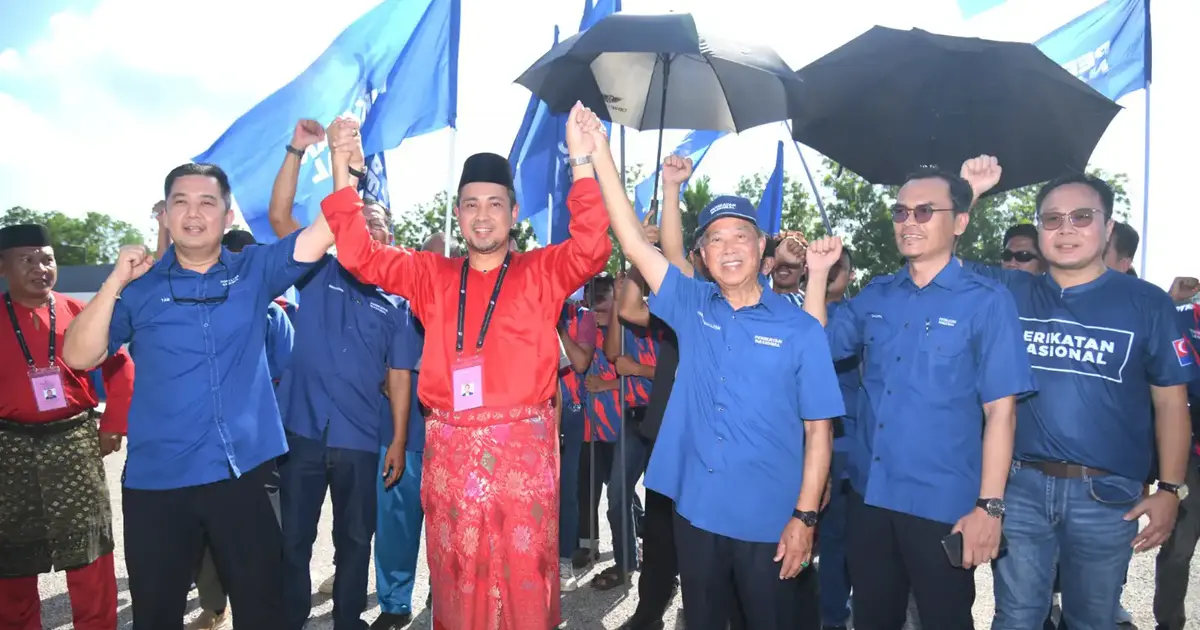
Bersatu's leadership has responded with restraint to PAS's decision to withhold its organisational apparatus from joint initiatives, with party president Tan Sri Muhyiddin Yassin signalling that forced participation contradicts the underlying philosophy of the Perikatan Nasional coalition. The measured response underscores ongoing tensions within the opposition alliance whilst projecting an image of political maturity and commitment to consensual governance.
Muhyiddin's statement reflects a strategic recalibration within PN, which has been navigating increasingly complex internal dynamics as component parties balance coalition loyalty against competing organisational and electoral interests. His refusal to escalate rhetoric or threaten consequences for PAS's stance suggests both confidence in Bersatu's independent capabilities and pragmatic acceptance of the realities constraining a multi-party alliance. The positioning allows Bersatu to maintain moral high ground whilst avoiding public ruptures that could undermine the coalition's broader appeal to voters.
The disagreement over machinery deployment carries significant implications for ground-level campaign effectiveness. Party machinery encompasses critical functions including voter registration drives, grassroots mobilisation, campaign logistics, and community engagement—resources that meaningfully enhance electoral competitiveness. PAS's decision to restrict these assets represents a substantive constraint on joint operations, yet Muhyiddin's uncontentious reception of this limitation suggests Bersatu either possesses alternative operational capacity or has recalibrated expectations regarding interparty resource-sharing within PN.
The incident illuminates broader questions about coalition coherence within Perikatan Nasional. Formed as a counterweight to the governing Pakatan Harapan alliance, PN comprises parties with distinct ideological orientations, geographic strongholds, and organisational priorities. These structural differences inevitably generate friction when negotiations involve resource commitments or strategic decision-making that might benefit one component disproportionately. PAS's reluctance to deploy machinery likely reflects calculations about protecting its organisational autonomy and preserving resources for its own electoral contests.
For Malaysian political observers, the episode reveals how even opposition coalitions must grapple with the tension between collective action and individual party interests. Unlike governing coalitions where cabinet positions and ministerial prerogatives create binding incentives for cooperation, opposition alliances rely more heavily on ideological alignment and shared electoral interests. When these prove insufficient motivation, component parties retain considerable latitude to pursue independent courses. Muhyiddin's acceptance of this reality demonstrates institutional maturity, though it also exposes limitations inherent in loose coalition structures.
The Perikatan Nasional's effectiveness as a political force depends substantially on whether its three primary components—Bersatu, PAS, and the Malaysian United Indigenous Party—can coordinate sufficiently to present a unified challenge to the government without triggering the kind of internal conflicts that erode public confidence. Muhyiddin's statement appears calibrated to prevent escalation whilst gently signalling that such coordination cannot be one-sided. By publicly accepting PAS's decision without rancour, he reinforces the message that mutual voluntary cooperation forms the only sustainable basis for PN collaboration.
The machinery question also intersects with broader party-building strategies entering Malaysia's next electoral cycle. PN parties, like their Pakatan Harapan counterparts, recognise that election victories increasingly depend on sophisticated voter outreach, data analytics, and ground operations that robust party machinery enables. PAS's decision to guard its organisational resources suggests confidence in its independent electoral prospects whilst reflecting ambivalence about ceding control over campaign functions to coalition partners. This protective stance may limit immediate joint effectiveness but preserves PAS's autonomy in future coalition negotiations.
Regionally, PN's experience managing internal disputes carries relevance for other Southeast Asian opposition coalitions wrestling with similar coordination challenges. Thailand, Indonesia, and the Philippines have all experienced opposition alliances fracturing under pressure when component parties perceived unequal benefit distribution or threatened autonomy. Malaysia's opposition coalitions navigating these tensions relatively peacefully—at least publicly—offers lessons in managing diversity within alliance structures, though Muhyiddin's patient response masks underlying strains that could eventually resurface.
Looking forward, the significance of this episode may lie less in the immediate machinery question than in what it reveals about PN's governance model. If the coalition continues allowing individual parties broad latitude in withholding support for joint initiatives whilst maintaining overall organisational alignment, it may emerge stronger by respecting component autonomy. Conversely, if such incidents proliferate, they could signal progressive erosion of coalition cohesion that ultimately benefits the government. Muhyiddin's diplomatic handling suggests the former trajectory remains possible, though sustained consensus will require ongoing negotiation and calibrated expectations about what unified opposition coalitions can realistically achieve.

