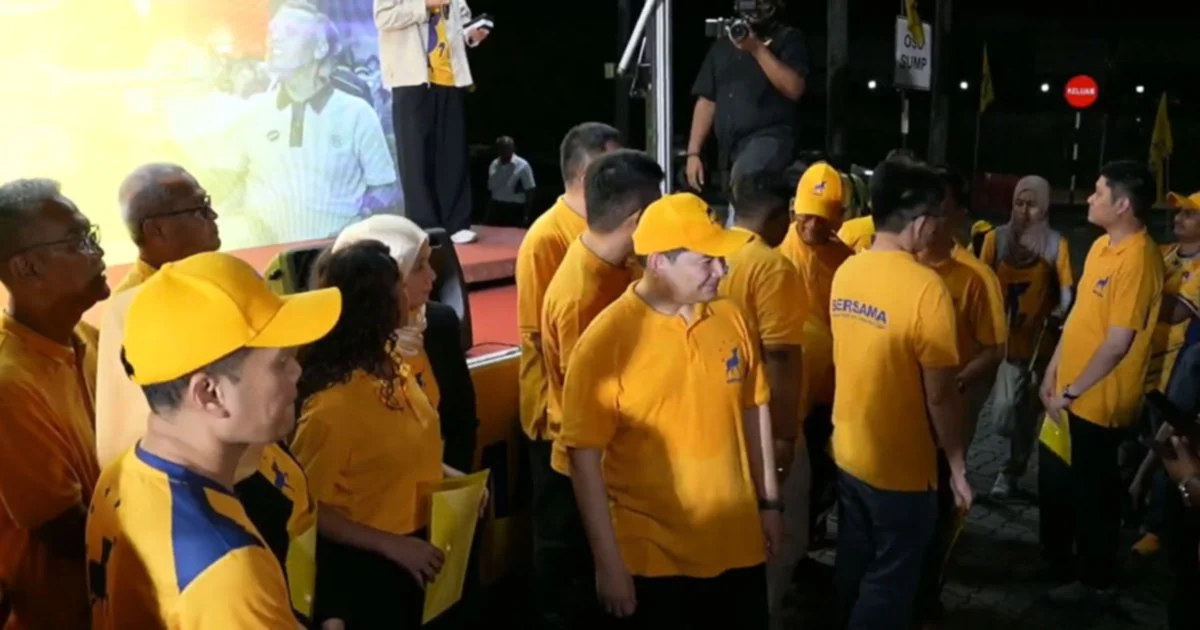
Parti Bersama Malaysia has stepped into Johor's crowded political arena with a carefully curated slate of 15 candidates for the 16th state election, signalling an attempt to appeal across demographic divides by nominating representatives from varied occupational backgrounds. The announcement on Friday showcased a roster that includes business entrepreneurs, retail sector managers, and workers from the logistics industry, positioning the party as one that draws talent from multiple layers of Malaysian society rather than relying solely on established political figures or professional politicians.
The party's strategy of fielding candidates from the private sector reflects a broader trend among newer political entities seeking to differentiate themselves from more established coalitions. By recruiting individuals with direct experience in commerce, supply chains, and consumer-facing retail operations, Bersama appears to be banking on the notion that voters increasingly value practical expertise and real-world business acumen over purely political credentials. This approach carries particular resonance in Johor, a state with significant commercial and industrial hubs that depend on efficient logistics networks and thriving small and medium-sized enterprises.
The inclusion of logistics workers in the party's lineup deserves particular attention given Malaysia's growing dependence on supply chain efficiency and the gig economy. These candidates bring perspectives from sectors that have been underrepresented in traditional political discourse, potentially giving voice to labour concerns that might otherwise be overlooked. As Malaysia's economy becomes increasingly integrated with regional and global supply networks, having representatives who understand first-hand the pressures facing workers in these industries could translate into policy positions more attuned to ground-level realities.
Retail management positions occupy another significant segment of Bersama's candidate roster, reflecting the importance of the consumer economy in modern Malaysian politics. Supermarket managers and similar retail figures typically possess direct knowledge of inflation, consumer spending patterns, and employment practices within the service sector. Their candidacy suggests Bersama intends to campaign on cost-of-living issues and economic accessibility, themes that resonate powerfully with ordinary Malaysian households regardless of their political affiliation.
The entrepreneur contingent within the lineup appeals to a different electoral segment altogether. Business owners and venture creators traditionally command respect in Southeast Asian societies where economic self-determination remains a deeply valued aspiration. By fielding entrepreneurs, Bersama positions itself as supportive of private enterprise and wealth creation, distinguishing itself from coalitions sometimes perceived as more interventionist or state-centric in their economic philosophies.
Johor's political dynamics have been notably fluid in recent years, with voters demonstrating willingness to shift allegiances and support newcomers or previously marginal political entities. The 2022 state election saw significant changes in the distribution of seats among various coalitions, and emerging parties have found opportunities to make inroads by offering fresh faces and locally relevant messaging. Bersama's candidate selection appears designed to exploit this openness to new political options while avoiding the perception of being an inexperienced fringe movement.
The diversity of the candidate lineup also carries implications for gender representation and generational renewal in Malaysian politics. If the 15-candidate slate includes meaningful female participation and younger representatives, Bersama could be positioning itself as a modernising force in state politics. Johor, as Malaysia's third-largest state by population and a critical economic zone, deserves particular attention from parties seeking to demonstrate they can appeal beyond narrow demographic silos.
For Malaysian voters observing Bersama's entry into Johor elections, the candidate selection process reveals much about how the party intends to govern should it gain seats. Rather than relying on established party apparatchiks or individuals whose primary qualification is loyalty to senior leadership, Bersama has chosen to recruit practitioners—people whose professional identities are rooted outside traditional politics. This approach suggests the party's leaders believe that governance effectiveness matters more to voters than party machinery efficiency, a potentially risky but also potentially refreshing gamble.
The timing of Bersama's announcement aligns with broader patterns of political consolidation and fragmentation that continue to characterise Malaysian electoral politics. Neither Pakatan Harapan nor Barisan Nasional operates with the dominance they once commanded, creating space for alternative political voices. Whether Bersama can translate its diverse candidate roster into electoral gains remains uncertain, but the party's evident intention to build bridges across occupational and class lines suggests sophisticated understanding of contemporary Malaysian voter concerns and aspirations.

