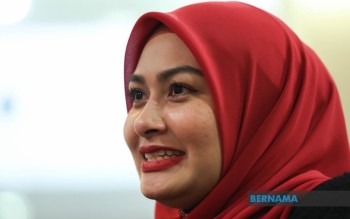
Bentong MP Young Syefura Othman has raised alarm over Lembaga Tabung Haji's (TH) substantial financial dependence on sukuk income generated through Urusharta Jamaah Sdn Bhd (UJSB), demanding that the government spell out concrete strategies to lessen this vulnerability. Speaking during a special parliamentary sitting dedicated to the Royal Commission of Inquiry (RCI) Report into the pilgrimage fund, she highlighted that the sukuk arrangement currently underwrites approximately 26 per cent of TH's total annual income—a concentration of revenue that exposes the institution to unacceptable risk.
The concern raised by Young Syefura reflects a broader anxiety among parliamentarians regarding TH's financial architecture following the damaging revelations contained in the RCI Report. Her intervention during the briefing delivered by Minister in the Prime Minister's Department (Religious Affairs) Dr Zulkifli Hasan underscores the parliament's determination to scrutinize not merely the scale of past failures, but the structural weaknesses that continue to threaten the institution's stability. For Malaysian pilgrims and potential hajj savers, this dependency represents a systemic risk that could affect the reliability and security of their savings held within TH's portfolio.
Central to Young Syefura's questioning is the mechanism for early redemption of the sukuk itself. She pressed the government to furnish detailed explanations about how and when TH intends to disentangle itself from this reliance, and what timeline the authorities have established for achieving greater financial independence. This line of inquiry suggests that the current arrangement—while generating substantial returns—may be unsustainable or strategically misaligned with TH's core mission as a trusted savings vehicle for the Muslim community.
Beyond the sukuk question, Young Syefura directed parliamentary attention toward the litany of investment failures documented by the RCI. The commission identified 14 significant investment decisions warranting forensic auditing, each characterised by substantial asset depreciation. These investments span multiple companies, among them TH Plantations Bhd, TH Properties, and FGV Holdings—entities that together represent a portfolio of catastrophic misjudgement or worse. The cumulative losses from these decisions remain opaque to parliament and the public, with no clear accounting of the total damage inflicted on TH's asset base or recovery prospects.
The absence of transparent loss quantification raises uncomfortable questions about accountability within TH's management and board structures. Young Syefura pressed the government to disclose precisely how much value has been eroded through these 14 transactions and what portion, if any, might realistically be recovered through ongoing forensic investigations or asset recovery efforts. Without such figures, parliament cannot properly assess the depth of institutional damage or the adequacy of remedial measures already undertaken.
Young Syefura's line of questioning also ventured into the murky territory of potential malfeasance. She specifically asked the government to investigate whether any of the identified investment failures stemmed from negligence, misuse of authority, or breach of fiduciary duty on the part of decision-makers. If evidence emerges implicating named individuals in wrongdoing, she insisted that appropriate action—presumably including civil or criminal prosecution—must follow. This demand reflects a parliamentary consensus that accountability cannot end with institutional restructuring; it must extend to those responsible for the losses.
To arrest TH's continued vulnerability, Young Syefura advanced several governance reforms worthy of serious consideration. She advocated for substantially strengthened financial and investment supervision, achieved through deeper involvement from regulatory institutions including Bank Negara Malaysia and the Securities Commission Malaysia. This proposal would effectively create additional layers of institutional oversight, reducing the autonomy that may have permitted earlier investment disasters.
Alongside enhanced regulatory participation, Young Syefura proposed that every material investment decision be subjected to rigorous independent risk assessment before approval. This mechanism would establish an external check on internal management enthusiasm, introducing discipline and objectivity into the investment process. The forensic analysis and due diligence protocols she envisioned would be considerably more stringent than procedures evidently in place when TH poured resources into FGV, properties portfolios, and plantation ventures that subsequently hemorrhaged value.
The appointment process for TH's board members and senior executives also featured in her reform blueprint. Young Syefura advocated anchoring all such appointments to transparent application of the "fit and proper" principle—a governance standard that emphasizes professional qualifications, ethical standing, and absence of conflicts of interest. Under such a framework, individuals appointed to steward TH's assets would demonstrably possess the competence and integrity requisite for managing a trust of nearly five million Malaysian pilgrims' savings.
Young Syefura's intervention reflects a parliamentary desire to transform TH from a financially fragile institution plagued by governance failures into one capable of fulfilling its foundational mission with renewed confidence. Her emphasis on reducing sukuk reliance, quantifying losses, investigating misconduct, and implementing systematic oversight reforms articulates a comprehensive vision of institutional rehabilitation. For TH members, these demands signal that their elected representatives are determined to prevent repetition of the institutional mismanagement documented by the RCI.
The government's response to Young Syefura's questions will signal its seriousness about restoring TH to financial health and public trust. The clarity with which authorities can explain sukuk redemption timelines, loss quantification, forensic audit progress, and governance reform implementation will substantially shape parliament's confidence in the administration's capacity to manage TH's recovery. As the pilgrimage fund continues its reconstruction, accountability and transparency must become defining institutional characteristics.

