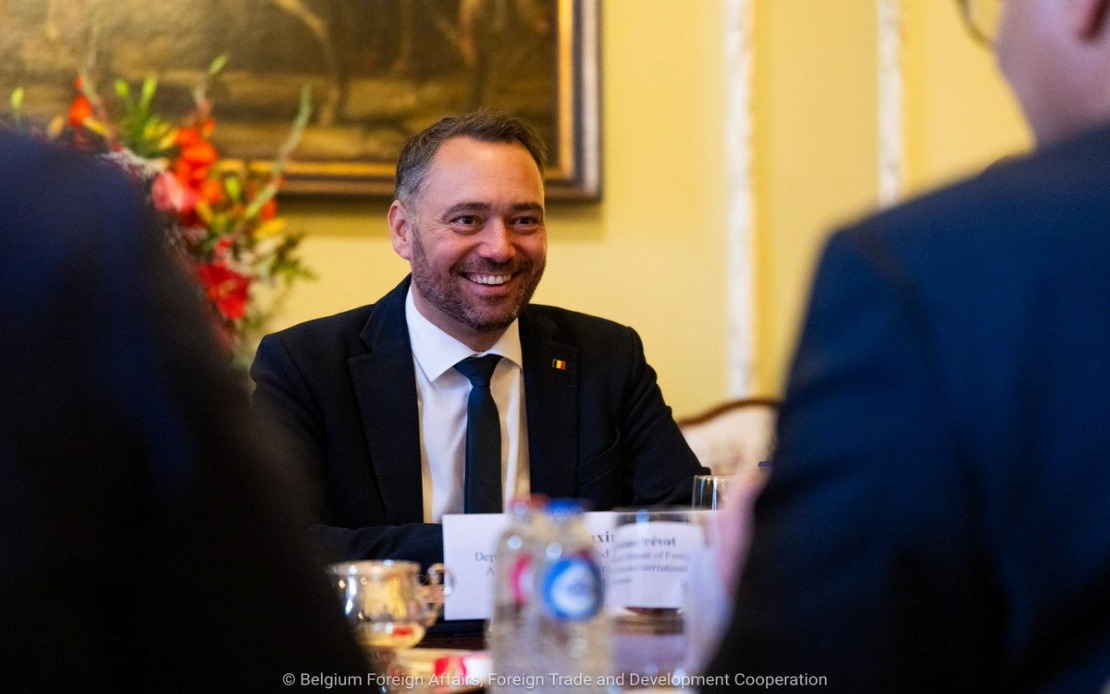
Belgium's Deputy Prime Minister and Foreign Minister Maxime Prévot is arriving in Malaysia for a two-day working visit beginning Thursday, carrying an agenda focused on deepening bilateral cooperation in renewable energy, rare earth elements, and the halal industry. The visit, confirmed by Malaysia's Foreign Ministry, underscores growing interest from European governments in partnering with Malaysia on the energy transition—a priority area as both Europe and Southeast Asia race to meet climate targets and secure supply chains for critical minerals.
This marks Prévot's inaugural visit to Malaysia since assuming his ministerial portfolio in February 2025, signalling that the country remains a strategic focus for Belgian foreign policy in Southeast Asia. The timing is particularly significant given the global push towards decarbonisation and the escalating competition for rare earth resources essential to renewable energy infrastructure. Prévot will meet with Deputy Prime Minister Datuk Seri Fadillah Yusof, who holds the additional portfolio of Energy Transition and Water Transformation Minister, a pairing that reflects Malaysia's institutional commitment to sustainable development.
The bilateral agenda extends beyond energy into geopolitical and economic dimensions. Both nations will review the current state of Malaysia–Belgium relations and explore fresh avenues of cooperation, with particular emphasis on how Malaysia's competitive advantages in renewable technology manufacturing and rare earth processing can align with European demand. The discussions will also encompass Malaysia-European Union relations writ large, positioning this visit within the broader context of ASEAN-EU engagement as the bloc deepens its Indo-Pacific strategy.
Regional and international developments of mutual interest will also feature in conversations, likely encompassing supply chain resilience, semiconductor manufacturing, and the strategic importance of Southeast Asian stability. For Malaysia, securing European commitment to renewable energy partnerships can diversify its technology suppliers and investment sources beyond traditional Asian partners, while offering Malaysian expertise in tropical renewable deployment and grid management to a continent eager to learn from emerging market solutions.
Beyond official meetings, Prévot's schedule includes a ministerial address at the 39th Asia-Pacific Roundtable organised by the Institute of Strategic and International Studies (ISIS) Malaysia, one of the region's premier think tanks. This platform will allow him to articulate Belgium's vision for European engagement in Asia and potentially address business leaders and policymakers on investment opportunities. He is also expected to meet with the Sultan of Perak, Sultan Nazrin Muizzuddin Shah, a courtesy audience that underscores the diplomatic importance placed on this engagement.
Malaysia-Belgium economic relations have shown steady growth, with total bilateral trade reaching RM9.74 billion in 2025. Malaysian exports dominated the exchange at RM6.85 billion, reflecting the country's position as a supplier of manufactured goods, electrical components, and palm-based products to the European market. Belgian imports of RM2.89 billion include chemicals, machinery, and pharmaceutical products. This trade pattern suggests complementarity in supply chains, particularly in sectors aligned with the energy transition and industrial chemicals used in renewable technology manufacturing.
Investment flows underscore deeper economic integration. As of 2025, Belgian companies had backed 67 approved projects in Malaysia, representing RM5.1 billion in committed capital and potential job creation of 4,605 positions. These figures indicate substantive Belgian industrial interest beyond simple commodity trade, with investments likely concentrated in manufacturing, chemicals, and technology sectors. For context, this level of commitment places Belgium among significant European investors in Malaysia, comparable to other Western European nations engaged in the region.
The renewable energy focus of this visit aligns with Malaysia's broader energy transition strategy. The country has set ambitious targets for renewable capacity expansion, targeting 40 percent electricity from renewable sources by 2035. Belgium, despite its small size, has developed sophisticated capabilities in solar panel manufacturing, energy storage solutions, and grid management technologies. Collaboration could involve knowledge transfer, joint ventures in renewable manufacturing, and potentially positioning Malaysia as a manufacturing hub for European renewable technology exports to Southeast Asia.
Rare earth elements represent another critical cooperation area. Malaysia possesses historical expertise in rare earth processing and remains strategically positioned in global supply chains. Belgium, as part of the European Union pursuing strategic autonomy in critical minerals, has strong incentives to diversify sourcing away from China and establish partnerships with reliable suppliers. Discussions likely extend to processing technology, environmental standards, and value-added production that keeps more economic benefit within Malaysia rather than exporting raw materials.
The halal industry dimension reflects Malaysia's unique global position as a centre for Islamic commerce and certification. With growing European Muslim populations and halal product demand expanding beyond food into cosmetics, pharmaceuticals, and logistics, Belgian companies view Malaysia as both a source of halal-certified products and a gateway to regional halal standards-setting. Belgian chemical and pharmaceutical manufacturers may seek halal certification pathways to access growing Middle Eastern and Southeast Asian markets through Malaysia-based operations.
For Malaysia, this visit reinforces the country's relevance to global power competition and economic integration. By hosting senior European leadership focused on energy transition and rare earth elements, Malaysia strengthens its negotiating position with China on critical minerals, ensures access to European technology and capital, and positions itself as essential infrastructure in the clean energy supply chains reshaping global commerce. The visit demonstrates that Southeast Asia remains central to European strategic planning, particularly as climate commitments and supply chain security dominate the agenda.
Looking forward, this engagement may catalyse concrete agreements on renewable energy projects, joint research initiatives on rare earth processing, and possibly expanded investment frameworks. Such outcomes would deepen Malaysia-EU relations at a moment when both sides benefit from closer cooperation on shared strategic challenges. The visit exemplifies how bilateral diplomacy increasingly pivots on technological cooperation and supply chain partnership rather than traditional political alignment.

