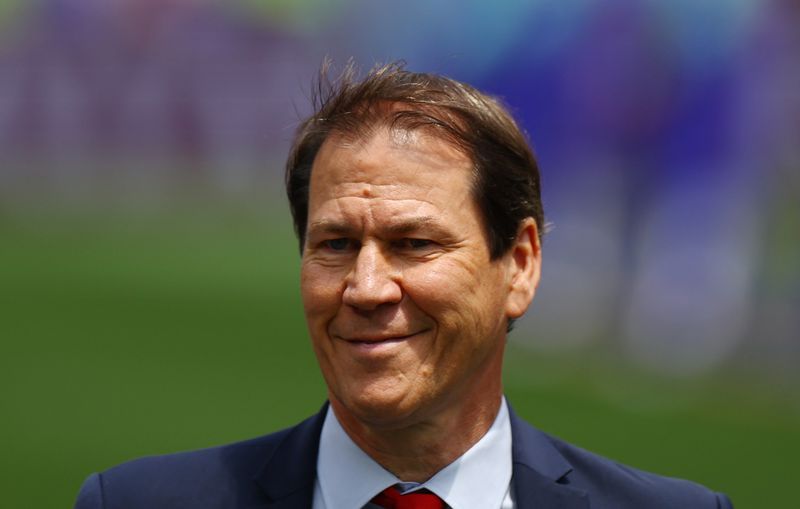
Rudi Garcia's tenure as Belgium national football coach will conclude at the end of July after the Belgian football association declined to renew his contract beyond its expiration date of July 31. The announcement on Monday came as a mutual agreement between Garcia and the federation, despite turbulent circumstances surrounding the team's recent World Cup campaign that saw mixed performances overshadowed by tactical controversy and an ultimately unsuccessful challenge for tournament glory.
Garcia's 18-month spell in charge culminated in a World Cup quarter-final appearance in which Belgium fell to eventual champions Spain. While reaching the knockout rounds represents a respectable tournament outcome, the path there proved far from convincing, generating substantial criticism of Garcia's approach throughout the group stage and beyond. Belgium's opening matches yielded draws against Egypt and Iran, results that prompted scathing commentary from Belgian media observers and fuelled doubts about the team's trajectory under Garcia's management.
The Belgian federation's sports director Vincent Mannaert issued a measured assessment of Garcia's contributions despite the turbulent circumstances surrounding his departure. According to Mannaert's statement, Garcia had successfully restored team cohesion and unity following his appointment to a position complicated by challenging sporting and financial conditions. Mannaert acknowledged that the Frenchman's experience and commitment had proved instrumental in achieving the World Cup quarter-final berth, framing the campaign as a success given the circumstances Garcia inherited upon taking the role.
Garcia's management style proved polarising throughout the tournament, particularly evident in his decision to defend his tactical choices through direct engagement with the Belgian media corps covering the World Cup. The intensity of criticism he faced early in the competition compelled him to arrange a meeting with journalists to explain his strategic thinking, an unusual step that underscored the severity of the backlash his initial team selections and in-game decisions had provoked among observers and supporters.
Belgium's World Cup journey oscillated between moments of redemption and renewed controversy. Against Senegal in the round of 32, the team engineered an extraordinary comeback from two goals down as time expired, benefiting from a goalkeeping error that allowed the revival to commence. The dramatic turnaround was completed when a disputed VAR penalty decision in the final minute of extra time secured a 3-2 victory, providing temporary vindication of Garcia's methods and strategies. However, this reprieve proved short-lived as Belgium subsequently impressed in a 4-1 demolition of hosts United States, only for Garcia to face renewed castigation following the subsequent elimination by Spain.
The decision to substitute goalkeeper Thibaut Courtois during the Spain quarter-final proved particularly controversial and generated speculation that Garcia's position had become untenable. Nevertheless, both the federation and Garcia characterised the non-renewal of his contract as a consensual outcome rather than a dismissal. This formulation allowed both parties to preserve their professional dignity whilst drawing a line under a relationship that had clearly become strained by the rigours and pressures of international football at the highest level.
Garcia's own farewell statement emphasised the positive aspects of his work with the Belgian squad, expressing gratitude toward his players whilst offering best wishes for their future progress through the generational transition he had helped establish. The coach's framing of his departure centred on the developmental trajectory he had initiated, positioning his tenure as part of a longer-term project rather than a failed enterprise, despite the turbulent reception his methods received.
The succession process now falls to Vincent Mannaert, who will oversee the selection of Garcia's replacement as Belgium embarks on its next competitive challenge. The Nations League competition looms as the next test for the Belgian programme, with fixtures against Italy in Rome scheduled for late September followed immediately by a home encounter with France. These matches will provide the new coaching regime with early opportunities to demonstrate tactical clarity and restore confidence following the World Cup's mixed narrative.
Garcia becomes one of numerous World Cup coaches departing their posts either during the tournament or immediately thereafter, reflecting the intense scrutiny and pressure inherent in international football management. The list of coaches departing their positions encompasses those from Croatia, Czech Republic, France, Germany, Ghana, Haiti, Jordan, Mexico, Netherlands, Portugal, Scotland, Senegal, Tunisia, and Uruguay. This exodus underscores the precarious nature of international football management, where tournament performance and public perception can rapidly determine a coach's future regardless of longer-term project goals or mitigating circumstances.

