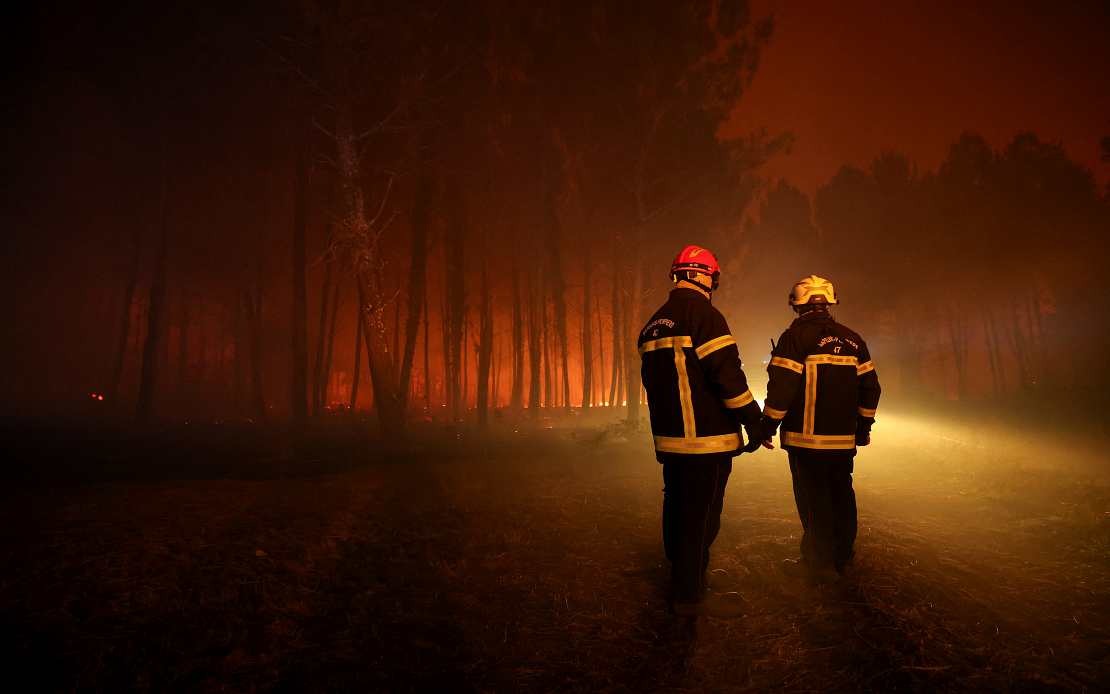
Eastern Belgium is confronting an unprecedented environmental crisis as a devastating wildfire tears through the High Fens nature reserve, charring approximately 2,700 hectares of landscape by Saturday evening. The blaze, which ignited around 2 pm on Friday near the German border, has already surpassed all previous fire records in the country, compelling authorities to evacuate roughly 600 residents from surrounding communities and triggering a multinational response that underscores the escalating fire risks gripping continental Europe.
The scale of destruction represents a stark milestone for Belgium's emergency services. Data maintained by the European Forest Fire Information System demonstrates that the previous major wildfire incident in 2011 affected nearly 1,400 hectares—meaning this latest conflagration has nearly doubled that benchmark. The Liege governor's office reported that the burned perimeter expanded dramatically from approximately 1,600 hectares earlier on Saturday, indicating the fire's ferocious momentum despite intensive suppression efforts. This rapid expansion reflects both the volatile conditions prevailing across the region and the inherent vulnerabilities of the High Fens terrain to catastrophic fire spread.
Local authorities and emergency responders face formidable obstacles as they attempt to contain the spreading flames. The distinctive geography of the High Fens nature reserve—characterised by rugged terrain and dense vegetation—severely constrains the deployment of conventional firefighting techniques. Ground crews find themselves unable to mount effective close-range operations, forcing them to rely upon alternative tactics whilst battling unpredictable wind patterns that alternatively fan the flames and redirect smoke across inhabited areas. These meteorological challenges have proven particularly vexing, as shifting air currents repeatedly threaten to propel the fire toward residential zones and critical infrastructure.
The humanitarian impact has been substantial and ongoing. Approximately 600 residents have been displaced from their homes, with local media reporting that both permanent residents and holidaymakers have been instructed to leave the threatened area. A children's summer camp operating in the vicinity has been evacuated, adding to the growing roster of vulnerable populations uprooted by the advancing flames. Tourism infrastructure and recreational facilities throughout the region have largely ceased operations as smoke visibility diminished and safety concerns mounted throughout Saturday's escalating crisis.
Recognizing the magnitude of the emergency, Belgium has activated the European Union Civil Protection Mechanism—a formal instrument designed to mobilize cross-border assistance during catastrophic emergencies. This invocation of collective European resources reflects both the severity of the situation and the recognition that domestic capabilities, whilst substantial, require supplementation. The European Commissioner for Preparedness and Crisis Management announced that firefighting aircraft arrived from three neighbouring nations: the Czech Republic, Sweden, and the Netherlands. These reinforcements represent a significant escalation in operational capacity, introducing aerial water-bombing and reconnaissance capabilities that ground-based resources cannot replicate.
The multinational composition of the firefighting effort extends beyond aircraft deployments. Firefighting personnel from across Belgium's regional authorities have converged upon the High Fens, joined by specialist crews from neighbouring Germany and Luxembourg. The Belgian military has mobilised personnel and equipment to augment civilian emergency services, whilst local agricultural communities have contributed their own resources and knowledge to support suppression operations. This unprecedented coordination reflects both the cross-border character of fire risk in densely populated continental Europe and the established protocols for mutual assistance when disasters transcend individual national capacities.
Underlying the immediate crisis sits a deeper environmental pattern that increasingly preoccupies European policymakers and climate scientists. Belgium experienced an intense heat wave this week, with temperatures ascending to 37 degrees Celsius in certain localities on Friday alone. These elevated temperatures combine with persistently dry conditions to create ideal circumstances for rapid fire ignition and explosive spread. The High Fens blaze did not emerge from isolated meteorological misfortune but rather from a broader climatic trajectory that is rendering large swathes of continental Europe susceptible to wildfire events previously considered exceptional or unlikely.
The implications for Malaysia and Southeast Asia warrant careful consideration, despite the geographic distance. European wildfire intensification represents a harbinger of climatic patterns that increasingly threaten tropical and subtropical regions worldwide. Southeast Asia has experienced its own escalating fire challenges, particularly during drought-affected years when peatland combustion generates transboundary smoke pollution affecting millions. The Belgian emergency response mechanisms—EU-coordinated aircraft support, cross-border personnel deployment, and pre-established civil protection frameworks—offer instructive models for ASEAN nations contemplating enhanced regional cooperation on fire management and transboundary pollution control.
The High Fens wildfire exemplifies the mounting costs of inadequate climate mitigation and adaptation. Belgium's record-setting conflagration will necessitate extensive ecological restoration efforts and substantial financial expenditure for reconstruction. The event further demonstrates that even wealthy, well-resourced European nations with advanced emergency management infrastructure face escalating challenges in containing fire emergencies amplified by heat and drought. For Southeast Asian governments seeking to bolster regional resilience against mounting fire risks, Belgium's current mobilisation of international resources and cross-border cooperation provides both cautionary lessons and practical templates for enhanced preparedness and coordinated response mechanisms in the coming decades.

