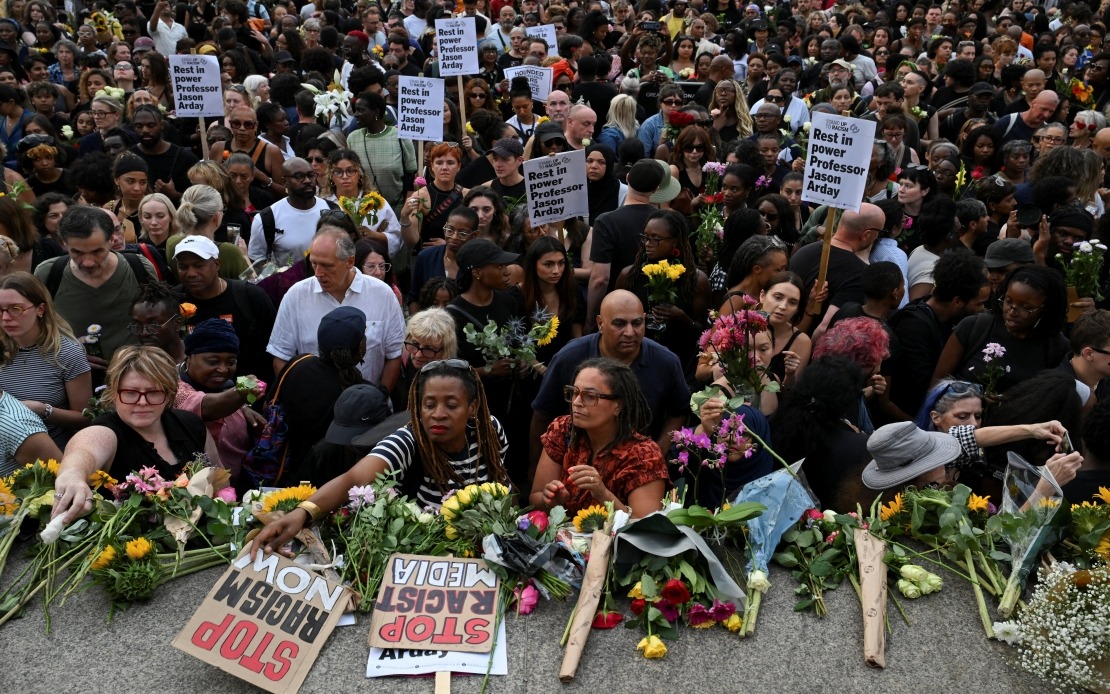
Ghent University in Belgium has suspended Nathan Cofnas, a postdoctoral researcher at the institution's philosophy and moral sciences department, following his role in plagiarism allegations that targeted Jason Arday, a prominent Cambridge University professor who died last month. The suspension marks an escalation in a controversy that has roiled European academic circles and sparked broader debates about the intersection of scholarly integrity, discrimination concerns, and intellectual freedom.
Cofnas, who identifies as an advocate for "race realism," had levelled plagiarism accusations against Arday in recent months. The allegations prompted significant institutional pressure on Arday, who subsequently resigned from his position at the University of Cambridge in early August. Cofnas subsequently disclosed his suspension through social media posts, suggesting he anticipated termination from his role at the Belgian institution. The sequence of events illustrates how academic misconduct investigations can unfold rapidly and with severe professional consequences for all involved parties.
Arday's death on August 14 came just nine days after his resignation and marked a tragic turning point in the controversy. The 41-year-old Cambridge professor was discovered at his south London residence, with authorities classifying his death as unexpected though not suspicious. His passing prompted immediate calls for institutional reflection within the academic community, with senior figures questioning whether the intensity of scrutiny he had faced contributed to his circumstances. His sudden death has cast the entire dispute into a sobering new light, forcing stakeholders to reckon with the human cost of academic conflicts.
In a joint statement, Ghent University's rector Petra De Sutter and vice-rector Herwig Reynaert characterised their response as balancing academic freedom with institutional responsibility. While the university reaffirmed its commitment to open debate and the protection of controversial viewpoints, it emphasised that such freedom carries limitations designed to safeguard the rights of others. The statement acknowledged taking Cofnas's recent public pronouncements "very seriously," though the institution declined to elaborate on the specific nature of the suspension or outline grounds for potential further disciplinary action.
Cofnas's public positioning has become increasingly contentious within academic settings. In 2024, he lost a research fellowship at Emmanuel College, Cambridge, following publication of a blog post arguing that Black populations possess lower average intelligence than white populations and that elite institutions such as Harvard would maintain near-zero Black faculty representation in a purely merit-based system. These assertions, rooted in discredited racial pseudoscience, prompted swift institutional backlash and raised questions about how universities should manage researchers whose stated positions conflict with institutional values around inclusivity.
Arday's rise to prominence had itself represented a significant achievement within British higher education. Appointed as Cambridge's youngest Black professor of sociology of education in 2023, he embodied a breakthrough for racial representation at one of the world's oldest and most prestigious institutions. The son of Ghanaian immigrants, Arday had grown up in working-class south London and had spoken openly about his autism, learning difficulties, and non-verbal communication until age eleven. His narrative of overcoming substantial educational barriers to reach the pinnacle of academic achievement resonated widely and contributed to his public prominence.
The plagiarism allegations that emerged in July fundamentally altered the trajectory of Arday's career and public standing. Beyond specific claims of textual borrowing without attribution, questions arose regarding aspects of his academic record and biographical narrative. The convergence of these concerns created an intense investigative climate that compressed his professional options dramatically. Within weeks, scrutiny escalated from internal university processes to media coverage, institutional inquiries, and ultimately to his resignation decision.
Arday's resignation statement attempted to frame his departure without conceding the underlying allegations. He declared that his decision "should not be mistaken for an acceptance of the narratives that have surrounded me," suggesting he maintained his position regarding the validity of the claims against him. However, the public nature of the controversy and the institutional momentum behind investigations left him with limited viable pathways forward within Cambridge, regardless of his personal assessment of the allegations' merits.
The institutional responses from both Cambridge and Ghent University reveal the complex pressures universities face when managing academic integrity concerns alongside discrimination and intellectual freedom considerations. Cambridge subsequently announced plans to investigate the circumstances of Arday's appointment, suggesting institutional scrutiny extended beyond the specific plagiarism allegations to encompass his recruitment and vetting processes. This broader investigative scope implied possible systemic questions about due diligence in high-profile hiring decisions.
Ghent University's handling of Cofnas presents a distinct but related challenge. By suspending a researcher whose published work articulates arguments many scholars view as based on flawed science and discriminatory premises, the institution navigates the tension between protecting academic freedom and preventing the platform-building of perspectives that contravene established scholarly consensus on human biological variation and capability. The university's refusal to detail specific grounds for suspension or outline its investigative framework maintains procedural opacity that may itself generate criticism from observers concerned about transparency in disciplinary processes.
For Malaysian and Southeast Asian academic observers, this controversy underscores the challenges facing institutions worldwide as they balance competing institutional values. Universities across the region increasingly confront questions about how to address allegations of academic misconduct while simultaneously protecting researchers from harassment or discrimination rooted in identity. The Arday case demonstrates that even elite institutions struggle to navigate these tensions gracefully, with tragic consequences potentially following from institutional failures to manage disputes with appropriate care and deliberation.
The broader implications extend to how academic communities establish and enforce standards around research integrity, intellectual diversity, and institutional responsibility. The simultaneous suspension of Cofnas by Ghent University, occurring in the aftermath of Arday's death, invites consideration of whether institutional responses adequately account for human welfare alongside institutional procedures. As universities worldwide grapple with similar dynamics, the precedent established through this case will likely influence how future allegations of misconduct are managed and how institutions balance competing stakeholder interests.

