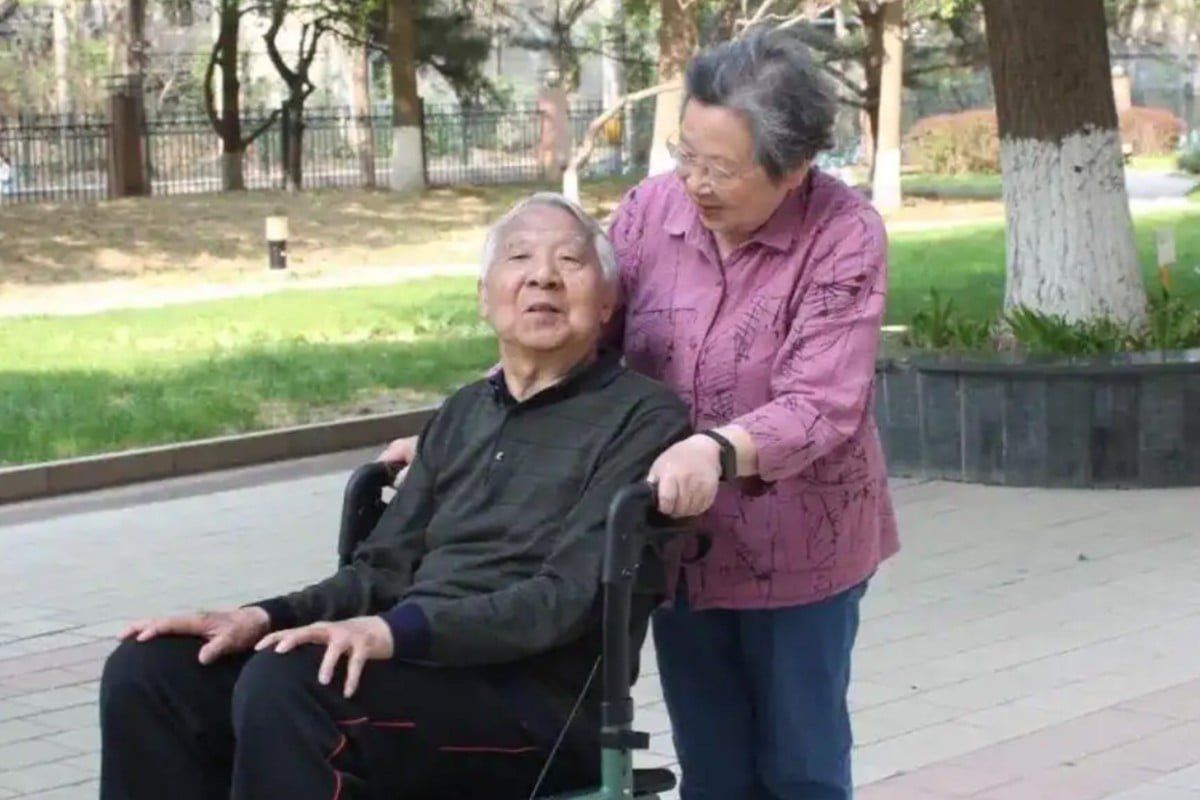
At 90 years old, Wen Bo has become an unlikely social media phenomenon in China, not through celebrity or influence, but through the intimate, daily work of caring for her husband as Alzheimer's disease slowly erodes his memory. Their story, shared on the social platform RedNote, has resonated with millions of Chinese citizens grappling with how their rapidly aging nation should approach elder care and dignity in decline.
Wen and her husband share a love story spanning nearly seven decades. Meeting as secondary school classmates, they endured years of long-distance courtship before marrying in 1960. The couple lived vibrantly together—swimming, walking, and traveling throughout China and abroad—raising two sons and building a partnership that would define their identities. But in 2023, their lives shifted irrevocably when her husband began losing his memory and experienced incontinence, eventually receiving an Alzheimer's diagnosis that would redefine their final chapter together.
Faced with a choice familiar to many aging families, Wen rejected the option of burdening her sons, both occupied with their own families and demanding careers. Instead, she committed to becoming her husband's full-time caregiver, a role that demands physical stamina, emotional resilience, and intellectual creativity. The couple maintains a household helper for cooking and domestic tasks while their children visit as schedules permit, a pragmatic arrangement that allows Wen to focus her considerable energy on aspects of care that medical professionals typically overlook.
When her husband's condition began deteriorating—forgetting his medications, losing mobility, ceasing to ask about grandchildren—Wen embarked on a self-directed education campaign. She consumed books and online materials about Alzheimer's, then systematically designed interventions to slow cognitive decline. Each day brings structured activities: arithmetic problems that challenge his remaining numerical reasoning, puzzles that exercise pattern recognition, painting sessions that access memory through creative expression, and physical training to maintain what mobility remains. This regimen reflects an understanding that Alzheimer's care extends far beyond pharmaceutical management.
The results, measured in small victories that would seem inconsequential to outsiders but are profound to those living with neurodegenerative disease, validate her approach. Her husband's condition has deteriorated measurably slower than typical Alzheimer's trajectories. When they venture outside, he still operates his electric wheelchair with independence. Occasionally, he reminds his wife to rest—a moment of role reversal that speaks to the preservation of his personhood even as his disease progresses.
Wen's documentation of this journey has transformed her into an unexpected voice in China's national conversation about aging. Through RedNote posts, she shares specific moments: a recent entry described her husband completing an arithmetic test, taking longer than usual but committing only a single error. This granular honesty—neither romanticizing nor despairing—has attracted millions of followers seeking authentic models for aging in an era of medical advancement but social fragmentation.
Her nightly ritual reveals the psychological architecture underlying her caregiving philosophy. Each evening before sleep, she reminds her husband to call her name, fighting against the disease's most existential threat: complete erasure from his memory. "He has to remember my name. I am his wife. I should be the last person he forgets," she declared in an interview, articulating a claim that is simultaneously intimate and universal. For Wen, identity preservation transcends sentimentality; it becomes the central goal of caregiving.
Beyond cognitive exercises, Wen assigns her husband simple household tasks, patiently allowing him to work at his own pace rather than rushing him toward completion. This approach reflects a philosophy increasingly recognized in geriatric care literature but rarely practiced: that people with Alzheimer's derive psychological sustenance from maintaining functional roles and experiencing the satisfaction of completion. Wen's conviction runs deeper than practical care management. "Self-respect, a sense of existence, and the feeling of being needed are essential for individuals with Alzheimer's disease," she insists, positioning dignity not as a luxury but as a prerequisite for humane care.
Wen's narrative arrives at a pivotal moment for China's demographic reality. The country's population aged 60 and older has surpassed 320 million individuals, representing more than one-fifth of the total population—a proportion rivaling or exceeding aging rates in developed Western nations. Unlike Japan or South Korea, which have organized extensive public health infrastructure around elder care, China's rapid aging has outpaced institutional responses, leaving families to improvise solutions. The absence of robust government-funded long-term care systems means that stories like Wen's carry policy implications alongside their emotional resonance.
For China's younger generations, Wen and her husband's journey presents a compelling counternarrative to prevailing anxieties about aging. One online commenter captured this sentiment: "Grandma Wen's posts always bring me comfort. She shows me what an ideal later life could look like: being with the person you love while living independently." Another observer noted that Wen's documentation had transformed their relationship with aging parents: "I used to fear not knowing how to care for my ageing parents, but her experiences have provided me with valuable guidance and increased confidence for the future."
This cascade of positive commentary reflects something deeper than admiration for an elderly woman's dedication. It suggests a hunger for models of aging that prioritize continuity, relational preservation, and purposeful engagement rather than pure survival. In an urbanizing nation where extended family structures have fractured and state pensions remain modest, Wen's example offers both practical techniques and philosophical orientation—a demonstration that technological or institutional solutions cannot substitute for sustained human attention to the emotional lives of those whose bodies and minds are failing.
Wen has contemplated the trajectory of her husband's decline with clear-eyed pragmatism. She has indicated that should his condition deteriorate significantly, she would consider hospice care—a statement that reveals her caregiving philosophy encompasses not just prolonging life but honoring its natural conclusion. This willingness to acknowledge limits, rather than resist them, resonates across generations confronting mortality in an age of medical extension. Her approach suggests that dignity in decline requires accepting diminishment even as one refuses to accelerate it.
As China confronts the structural challenges of an aging society—including inadequate long-term care infrastructure, insufficient geriatric healthcare training, and cultural shifts away from multigenerational households—Wen Bo's documented caregiving journey has become more than a family matter. It has evolved into a public conversation about what societies owe their aging members and what aging individuals owe themselves. In her persistent, unglamorous, daily work, she has articulated an alternative vision of later life centered not on medical management alone but on the preservation of dignity, autonomy, and human connection—values increasingly recognizable as foundational to any sustainable aging policy.

