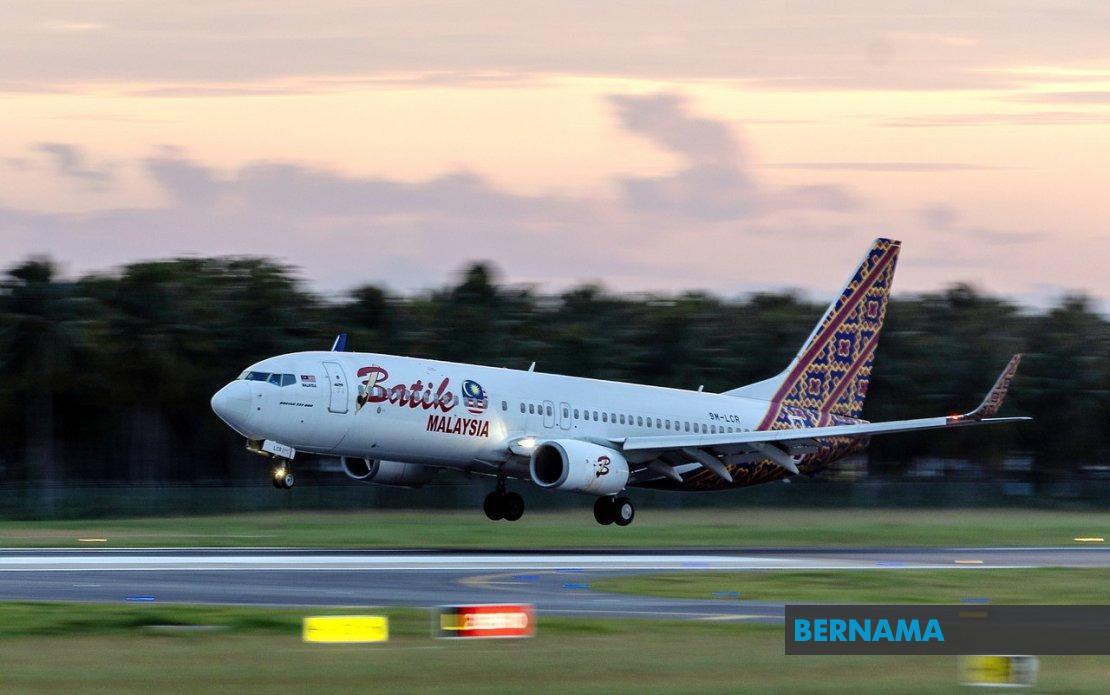
Batik Air is set to double its daily service on the Bintulu-Kuala Lumpur route beginning July 20, marking a significant expansion of capacity on a key regional air link. The decision follows sustained engagement between Malaysia's Tourism, Arts and Culture Minister Datuk Seri Tiong King Sing and the airline, addressing mounting public complaints about flight availability and ticket pricing that have plagued the route in recent months.
The expansion represents a partial victory for Tiong's push for enhanced connectivity. He had initially sought three daily flights, but the airline committed instead to implementing one additional service with the potential for further growth. This measured approach reflects the airline's assessment of operational feasibility while leaving room for escalation if demand warrants it. The minister indicated that if passenger numbers continue climbing, a third daily frequency could be evaluated and potentially introduced at a future date.
Under the new schedule, travellers departing Kuala Lumpur will have flights at 10 am and 2.30 pm, while those heading from Bintulu back to the capital can choose departures at 1.10 pm and 5.40 pm. These time slots have been specifically selected to provide practical travel windows for both business commuters and leisure passengers, reducing the constraints that the previous single-flight arrangement imposed on scheduling flexibility.
Bintulu's growing economic importance underpins the urgency of this expansion. As Sarawak's industrial hub, the port town has experienced accelerating development that has driven rising travel demand across multiple sectors—corporate operations, education, healthcare services, and tourism. Workers commuting between Bintulu and Peninsular Malaysia, students attending universities on the mainland, and patients seeking medical treatment in Kuala Lumpur have all faced bottlenecks under the limited flight capacity. The expansion addresses these practical pressures while signalling government confidence in Bintulu's continued growth trajectory.
Airfare pricing emerges as the second critical concern motivating the expansion. Previous sudden reductions in flight frequency had paradoxically driven ticket prices upward, creating an untenable situation where fewer seats chased the same demand. Tiong's engagement centred on persuading Batik Air to maintain reasonable pricing structures as capacity increased, framing affordable fares as essential both for public welfare and for the airline's long-term commercial health. His argument—that stable, competitively priced tickets would eventually expand passenger volumes to mutual benefit—represents a pragmatic appeal to the airline's financial self-interest rather than regulatory coercion.
The minister's public messaging emphasises the fragility of operational gains without pricing discipline. He has urged the airline to avoid the pattern of frequent cancellations and last-minute schedule disruptions that eroded passenger confidence under the previous tighter capacity regime. Operational reliability, in his framing, is inseparable from affordability; even expanded frequency loses value if flights remain unpredictable or if prices climb prohibitively. This reflects frustration among Bintulu residents and businesses over reliability issues that have compounded the connectivity problem.
Coordination between government actors and commercial carriers sits at the heart of this expansion model. Tiong's approach emphasises consultation and negotiation rather than heavy-handed intervention, seeking buy-in from Batik Air by acknowledging operational constraints while advocating forcefully for public interest outcomes. This consultative stance reflects Malaysia's broader approach to aviation policy, where government typically encourages competition and negotiation while stopping short of regulatory mandates on frequency or pricing.
For Malaysian readers in Sarawak's interior and peninsula-based Sarawakians, the practical implications are substantial. Business professionals can now access Kuala Lumpur within the same business day via morning departures and return via evening flights. Students and families gain greater flexibility in managing education and healthcare access across state boundaries. The expanded service potentially reduces the economic friction that has deterred some investment and talent migration from Peninsular Malaysia to Sarawak's growth centres.
The expansion also carries implications for regional air network competition. Batik Air's response demonstrates the airline's commitment to domestic connectivity, positioning it favourably against competitors. As Southeast Asia's aviation market recovers post-pandemic momentum, secondary routes like Bintulu-Kuala Lumpur serve as competitive battlegrounds where carriers can differentiate through frequency and pricing rather than long-haul capacity.
While the immediate outcome satisfies neither the minister's initial request for three daily flights nor perhaps the highest ambitions of Bintulu's business community, it represents the negotiated middle ground typical of aviation sector dialogue. The explicit provision for future evaluation of additional capacity injects dynamism into what might otherwise be a fixed commitment, allowing the service to scale with demonstrated demand rather than speculative projections.
The success of this arrangement ultimately hinges on passenger uptake and pricing execution. If Batik Air maintains competitive fares while capturing the pent-up demand from Bintulu's economic activity, the commercial case for a third daily frequency will strengthen naturally, creating positive feedback. Conversely, if pricing pressures persist or reliability issues resurface, the expansion's benefits will be severely constrained, potentially reigniting calls for more intensive government intervention.

