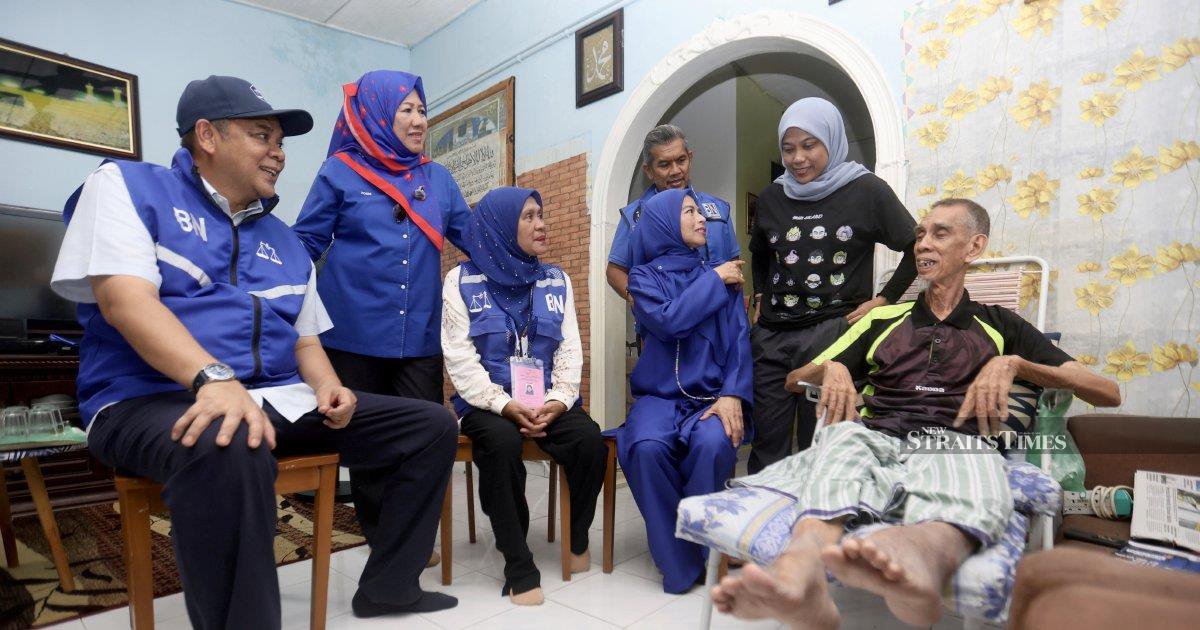
Barisan Nasional is pinning considerable hopes on replicating Johor's electoral prowess as it campaigns ahead of the Negri Sembilan state election, with the coalition's women's wing describing the southern state as a political blueprint for success. Speaking in Kuala Pilah, Wanita Umno chief Datuk Seri Dr Noraini Ahmad emphasized what party figures are calling the "Johor aura"—a reference to BN's remarkable resurgence in that state and its ability to rebuild voter confidence following years of political turbulence.
The strategic messaging reflects BN's broader effort to demonstrate its capacity to govern effectively and restore stability, qualities it attributes to recent developments in Johor. That state has become emblematic of the coalition's recovery across Malaysia, serving as both a political asset and a morale booster for party members engaging with constituencies elsewhere. By drawing parallels between Johor's trajectory and Negri Sembilan's current political landscape, BN is attempting to persuade undecided voters that backing the coalition delivers tangible benefits.
Negri Sembilan voters face a choice that extends beyond local governance considerations. The state election occurs within a broader context of national political realignment, where BN has sought to rebuild its standing after the dramatic setbacks of 2018. The coalition's renewed emphasis on Johor reflects recognition that voter confidence, once eroded, requires concrete evidence of reformed governance and economic competence before it can be fully restored. For many Negri Sembilan constituencies, observations from neighbouring states carry particular weight, especially when those states have experienced comparable political challenges.
Johor's significance to BN's narrative lies partly in demographic and economic similarities with other Malaysian states. As a major industrial and commercial hub, Johor faces pressures comparable to Negri Sembilan, and voters in both jurisdictions share concerns about employment, infrastructure, and service quality. BN's message essentially holds that the coalition has successfully addressed these concerns in Johor through consistent administration and business-friendly policies. This framing allows the party to argue that similar results are achievable in Negri Sembilan.
The "Johor aura" terminology itself signals BN's sophisticated approach to political communication. Rather than relying purely on policy announcements, party leaders are constructing a narrative around success and momentum. This emotional resonance can be particularly powerful in electoral campaigns, where voters sometimes assess parties on perceptions of viability and forward momentum rather than solely on administrative records. By emphasizing Johor's recent achievements, BN is attempting to shift the conversation toward its recovery and away from its historical weaknesses.
Wanita Umno's involvement in this messaging strategy underscores the coalition's recognition that women voters constitute a crucial constituency. As a significant portion of the electorate in Negri Sembilan and elsewhere, women voters evaluate parties partly through the lens of social policies, family support, and community development. By having the Wanita Umno chief articulate this campaign theme, BN is signalling its commitment to addressing women's concerns while simultaneously leveraging female party members as credible voices within their own communities.
The coalition's emphasis on Johor also carries implications for how BN positions itself against rival political groupings. In recent years, Perikatan Nasional and Pakatan Harapan have each cultivated narratives about their own strengths and the weaknesses of competitors. BN's invocation of Johor success is partly designed to counter narratives of irrelevance or decline that opposition parties may promote. By demonstrating concrete results in one state, the coalition provides voters with evidence that contradicts claims of terminal political dysfunction.
For Negri Sembilan specifically, the campaign represents an opportunity for BN to address concerns that state-level governance may suffer without strong federal backing. The state has traditionally relied on BN's administrative machinery and resource allocation from the federal government. By highlighting Johor's improved position and suggesting that similar stability is achievable in Negri Sembilan under BN stewardship, the coalition is reassuring voters about continuity and effective delivery of public services.
However, the effectiveness of this strategy depends on whether voters in Negri Sembilan perceive meaningful parallels between Johor's situation and their own. Political messaging, however carefully crafted, ultimately succeeds only when it resonates with voter experiences and aspirations. If Negri Sembilan constituencies face distinct challenges unaddressed by Johor's policy approaches, or if voters harbour skepticism about whether federal initiatives translating success in one state can replicate it elsewhere, the "Johor aura" may prove less persuasive.
The campaign strategy also reveals BN's tactical choices regarding which states and achievements it highlights. By featuring Johor prominently, the coalition is consciously selecting its narrative focus, emphasizing recent successes while downplaying setbacks in other jurisdictions. This selective storytelling is standard political practice, but it underscores that electoral competition increasingly revolves around managing voter perceptions and constructing compelling narratives around a party's record.
As polling approaches in Negri Sembilan, voters will ultimately weigh multiple factors: local governance quality, personality and track record of candidates, community-specific issues, and broader national political trends. BN's invocation of the Johor template provides one element of its broader campaign architecture, but success will require voters to believe both that Johor genuinely represents a model worth replicating and that BN possesses the political credibility to implement similar results in Negri Sembilan.

